
Last updated: June 18, 2026
This guide is educational and not veterinary advice. Use your veterinarian for vaccine, parasite, illness, diet, growth, skin, pain, and behavior decisions. See the health disclaimer, affiliate disclosure, and editorial policy.
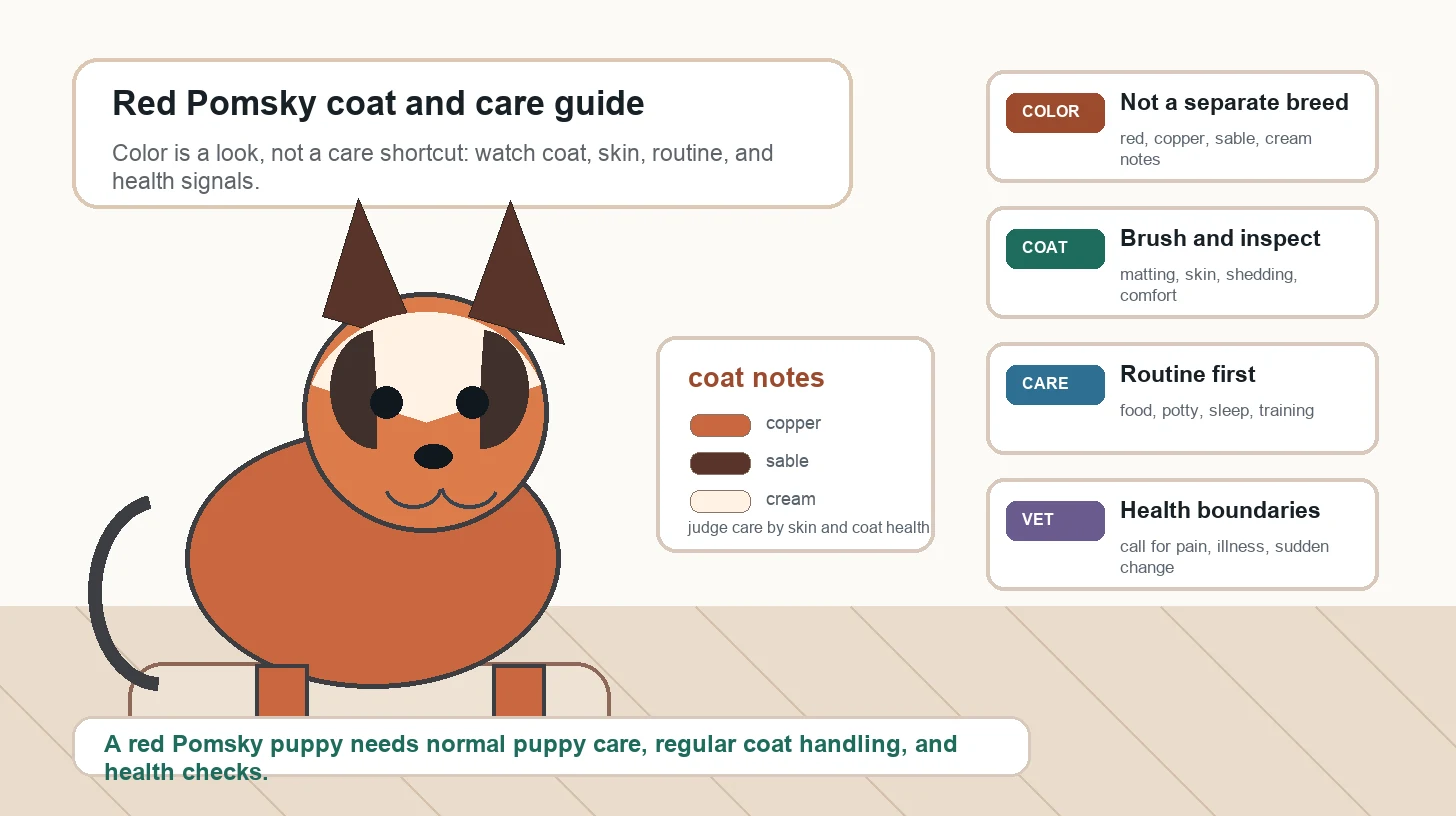
Quick answer: a red Pomsky puppy is a Pomsky with a red, copper, sable-red, or cream-red coat appearance. The color can be beautiful, but it does not change the core care plan: steady meals, potty structure, sleep, short training, safe socialization, coat handling, skin checks, teething support, and veterinarian-guided health decisions.
This rewrite treats color as an owner education topic, not as a puppy listing or a promise about adult appearance. A red Pomsky can still vary in size, coat density, mask, markings, energy, sensitivity, and training needs. The safest way to think about the color is simple: enjoy the look, but manage the puppy by health, behavior, and routine.
Red Pomsky Puppy at a Glance
Self-contained answer: a red Pomsky puppy is not a separate breed category. It is a Pomsky whose coat looks red, copper, orange-sable, red-sable, cream-red, or similar. The same puppy-care priorities still apply: nutrition, sleep, potty training, coat care, social learning, gentle handling, and health monitoring.
| Question | Practical answer | Owner priority |
| Is red a care type? | No. It is a coat description. | Do not let color override health and behavior needs. |
| Will the shade change? | It can. Puppy coats may shift as the adult coat grows. | Track photos over time instead of expecting one fixed shade. |
| Does color change grooming? | No. Coat density, matting, skin, and shedding matter more. | Brush gently and inspect skin. |
| Does color predict temperament? | No reliable color rule should be used that way. | Train the puppy in front of you. |
| Does color affect health checks? | Health red flags are the same. | Escalate illness, pain, skin problems, or sudden behavior change. |
What Counts as a Red Pomsky?
Owners often use “red Pomsky” for a range of warm coat shades. Some puppies look copper, orange, fox-red, red-sable, cream with red points, or tan-red with white markings. The exact words vary because Pomskies are mixed-breed companion dogs, not a single closed color category with one universal registry description.
Use color words as a visual description only. A red coat does not guarantee adult size, eye color, personality, training speed, grooming tolerance, or health. If you are tracking your puppy's appearance, take photos in natural light every few weeks and label what changed: shade, mask, white markings, undercoat, tail, and facial contrast.
Will a Red Pomsky Puppy Stay Red?
A red Pomsky puppy may stay warm-toned, but the shade, mask, undercoat, and contrast can change as the puppy coat transitions. Some puppies look darker early and lighter later. Others gain more cream, gray, sable, or white contrast as the adult coat develops. Photos from one week are not a contract for adulthood.
The practical owner move is to separate appearance from care. Keep coat photos for memories, but track health with weight trend, appetite, stool, energy, skin, hair loss, scratching, ear odor, and movement. If the coat changes along with itching, bald patches, redness, odor, or discomfort, that is a health question, not a color question.
How to Track Coat Changes Without Guessing
Use the same simple method every month. Take one side photo, one face photo, one back photo, and one tail photo in natural light. Note the date, age, lighting, recent bath, brushing, seasonal shedding, and whether the coat was dry or damp. This makes the record useful instead of just a gallery of cute pictures.
Describe what you can actually see: copper face, cream chest, darker ear tips, white paws, red-sable body, lighter undercoat, or a fading mask. Avoid turning the notes into predictions. The most honest sentence is often, “The coat looks warmer this month, but adult shade is still developing.” That is clearer than promising the puppy will stay one exact color.
Normal Coat Change vs. Possible Skin Problem
Normal puppy coat change is usually gradual. You may notice softer undercoat, a different face mask, more guard hair, lighter patches, or seasonal shedding. The puppy should still eat, play, rest, move comfortably, and tolerate gentle handling. The skin should not smell bad, ooze, bleed, or cause obvious pain.
A possible skin or health problem is different. Watch for repeated scratching, chewing at one spot, red skin, hot spots, flakes with odor, sudden bald patches, swelling, parasites, crusting, ear odor, or pain when touched. If those signs appear, stop treating it as a color change and ask your veterinarian what to do next.
Bathing a Red Pomsky Puppy
Bathing should be based on dirt, odor, skin comfort, and veterinary advice, not on keeping the red shade bright. Too much bathing or the wrong product can dry or irritate skin. Use puppy-safe products, rinse thoroughly, dry the coat well, and avoid getting water or product into ears and eyes.
If your puppy smells bad soon after bathing, scratches more after a product, or has red skin under the coat, the answer is not stronger shampoo. It may be product irritation, parasites, infection, allergies, moisture trapped in the coat, or another health issue. That is when a veterinarian or qualified grooming professional should guide the next step.
Red Coat, Skin, and Shedding Checks
For any Pomsky puppy, the skin under the coat matters more than the shade of the coat. During brushing, look for flakes, redness, scabs, hot spots, mats, parasites, thinning hair, odor, swelling, or painful reactions. VCA's coat and skin guidance is a useful reminder that coat appearance can reflect comfort and health, not just grooming style.
Use short checks instead of long battles. Touch one area, reward, brush a small section, reward, and stop before the puppy gets frantic. Check friction areas such as collar line, behind ears, armpits, belly, tail base, and legs. A fluffy red coat can hide mats and skin irritation until they become uncomfortable.
Grooming Routine for a Red Pomsky Puppy
A red Pomsky does not need special grooming products only because the coat is red. The routine should be gentle, consistent, and puppy-safe: regular brushing, calm handling, mat prevention, careful nail practice, ear observation, and bathing only when needed with appropriate products. Harsh products can irritate skin, especially if the puppy already scratches or has flakes.
If you are building your grooming kit, start with the Pomsky brush guide, Pomsky shampoo guide, and Pomsky supplies checklist. Keep sessions short. The goal is cooperation, not a perfect coat photo.
Should You Shave a Red Pomsky?
Do not shave a Pomsky coat for color, convenience, or a seasonal look without a strong reason and professional guidance. Pomskies often have spitz-type coat traits, and shaving can create comfort, skin, and regrowth concerns. If mats are severe or a medical issue exists, ask a veterinarian or qualified groomer about the safest path.
For more detail, use the Pomsky shaving and coat safety guide. A red coat may make shaved areas visually obvious, but the real issue is skin comfort and coat function, not color.
Feeding and Coat Quality
Coat quality is connected to overall health. A puppy needs complete nutrition, appropriate calories, water, parasite prevention, and veterinary care. Food alone will not turn a puppy a guaranteed shade of red, and supplements should not be used casually. If the coat becomes dull, brittle, patchy, oily, smelly, or itchy, ask a veterinarian before adding products.
For feeding basics, use the Pomsky puppy food guide and keep a steady meal routine. Treats used for training count toward daily intake. Sudden food changes can affect stool and make it harder to know whether a skin or coat issue is diet, parasites, grooming, stress, or illness.
Potty, Sleep, and Daily Structure
Red Pomsky puppies need the same daily structure as any other Pomsky puppy. Use potty trips after waking, meals, water, play, training, crate time, visitors, and before bed. Use naps before overtired biting escalates. Keep freedom limited until the puppy succeeds with potty, chewing, and settling in the current space.
The Pomsky puppy schedule, potty training guide, and 4-month Pomsky care guide give practical routines. Use those behavior patterns even if your puppy's coat color makes the puppy look more mature than the puppy really is.
Training a Red Pomsky Puppy
Coat color does not train the puppy; repetition does. Practice name response, recall, sit, down, touch, calm handling, leash comfort, crate entry, mat settling, and polite greetings in very short sessions. Reward early and often. If the puppy becomes frantic, mouthy, or unable to respond, reduce difficulty and add rest.
Use the Pomsky training hub, 3-month behavior guide, and 13-week training guide as the learning sequence. Add one difficulty at a time: distance, distraction, duration, or location. Do not add all four because a puppy looked confident in one room.
Household Setup for a Red Pomsky Puppy
A good home setup protects the coat and the routine. Use washable bedding, a crate or pen for rest, gates to limit freedom, safe chews for teething, a brush that does not scrape skin, and a quiet place for handling practice. Keep grooming tools where you can do short sessions instead of waiting for a long weekend project.
Also protect the puppy from preventable trouble. Pick up cords, small objects, socks, rich food, and anything that can be swallowed. Use a harness or collar that fits without rubbing. Check the collar line and armpit areas because warm-colored fur can hide irritation until the puppy starts scratching.
What to Avoid With a Red Pomsky Puppy
Avoid making decisions only because the coat is striking. Do not overbathe, use harsh whitening or brightening products, shave for appearance, skip health checks, overexercise a young puppy for photos, or allow uncontrolled greetings because strangers want to touch the coat. A beautiful puppy still needs calm management.
Also avoid changing food, shampoo, brush, walk length, social exposure, and house freedom all at once. If stool, skin, sleep, or behavior changes afterward, you will not know what caused the problem. Change one thing, observe for a few days, and keep notes.
Socialization Without Forcing Greetings
Socialization should mean safe exposure and recovery, not forced contact. A red Pomsky puppy may attract attention because the coat is eye-catching, but the puppy still needs choice and space. Let the puppy watch people, sounds, surfaces, vehicles, and calm dogs from a distance where the puppy can eat, think, and recover.
The AVMA socialization resource supports thoughtful early exposure, while your veterinarian should guide vaccine and parasite-risk decisions. If the puppy hides, freezes, refuses food, barks sharply, or tries to escape, increase distance and make the exposure easier.
Teething, Chewing, and Red Coat Handling
Many Pomsky puppies go through a chewy stage while teeth change. That can overlap with grooming practice. Keep safe chews near the couch, crate, leash, and grooming area. If the puppy bites the brush, leash, sleeves, or hands, pause, offer a legal chew, and lower the excitement level.
The AKC puppy teething resource is useful for understanding why chewing and nipping can rise during this stage. Do not turn coat handling into a wrestling match. Short, calm repetitions protect both training and grooming progress.
Common Red Pomsky Myths
Myth one: a red Pomsky is a different kind of Pomsky. In practice, red is a coat description. Myth two: a red puppy will always keep the same shade. Coat transitions can change the final look. Myth three: color predicts personality. Training history, environment, health, sleep, and temperament matter more.
Myth four: a striking coat means the puppy needs premium cosmetic products. Start with health, gentle grooming, and a complete diet. Myth five: beautiful color makes health checks less urgent. It does not. Vomiting, diarrhea, pain, lethargy, breathing trouble, skin infection signs, or sudden behavior change still need professional help.
Red Pomsky Care by Age
A young red Pomsky puppy needs the same age-based care as any Pomsky puppy. Early weeks focus on potty rhythm, sleep, safe social exposure, gentle handling, and basic food routines. Around three to four months, chewing, leash comfort, recall, grooming tolerance, and controlled freedom become more important.
Older puppies may need more coat maintenance as the adult coat develops, but more maintenance does not mean harsher handling. Keep the skill easy: one paw, one brush stroke, one ear touch, one reward, then a break. Calm repetition makes future grooming easier than waiting until the coat is tangled.
When to Call a Veterinarian
Call a veterinarian promptly for vomiting, diarrhea, refusal to eat, severe lethargy, collapse, coughing, trouble breathing, painful movement, repeated scratching, red or infected skin, hair loss, swelling, parasites, suspected toxin exposure, or sudden behavior change. This guide is educational and does not replace veterinary care.
Use the Pomsky health hub and health disclaimer for site boundaries. For routine care, keep vaccine, parasite prevention, dental, diet, weight, skin, and behavior questions in your veterinarian's lane.
Owner Checklist
- Describe the coat accurately: red, copper, red-sable, cream-red, white markings, mask, or changing shade.
- Take natural-light photos monthly to track coat transition without making promises about adult appearance.
- Brush gently and inspect skin under the coat.
- Use measured puppy food, normal water access, and careful treat portions.
- Keep potty, sleep, training, socialization, and handling routines predictable.
- Avoid shaving or harsh cosmetic products without professional guidance.
- Escalate illness, pain, skin problems, parasites, or sudden behavior changes to a veterinarian.
- Read the editorial policy, affiliate disclosure, and health disclaimer for site boundaries.
Sources
This guide uses conservative coat, grooming, puppy behavior, socialization, and health references. It is informational and not veterinary advice.
- Chewy - Pomsky breed guide
- Pomsky Kennel Club - breed standard
- VCA - coat and skin appearance in the healthy dog
- VCA - grooming and coat care for your dog
- AKC - how to groom a dog
- AKC - puppy teething and nipping
- AVMA - socialization of dogs and cats
- Merck Veterinary Manual - routine health care of dogs
- ASPCA - general dog care