
Quick answer: A useful Pomsky puppy schedule alternates sleep, toilet trips, measured meals, short play and training, calm socialization, and supervised freedom. Timing must be adjusted for age, health, feeding plan, and the puppy's actual elimination pattern.
\n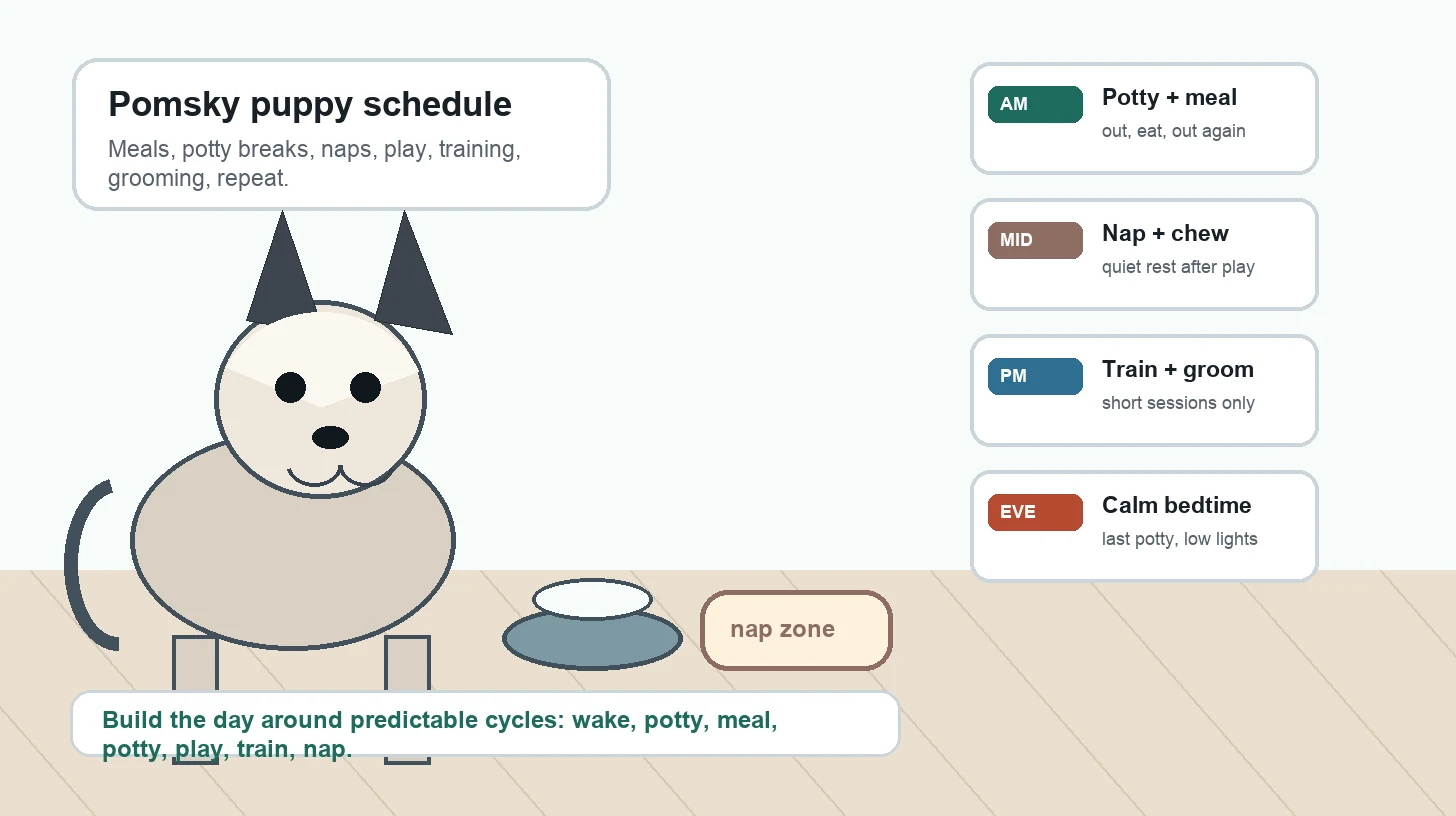
Written and reviewed by A Pomsky Editorial Team. Published 2026-06-18; last reviewed July 25, 2026.
This guide is educational and not veterinary advice. Use your veterinarian for diet, vaccine, parasite-prevention, illness, behavior, and emergency decisions. See the health disclaimer, affiliate disclosure, and editorial policy.
Quick answer: a Pomsky puppy schedule should repeat the same daily cycle: wake, potty, meal or water, potty again, short play or training, chew time, nap, and calm bedtime. Keep the routine predictable, then adjust it as your puppy grows and accidents become less frequent.
A schedule helps a Pomsky puppy learn the home faster because meals, potty breaks, crate rest, play, training, grooming, and sleep stop feeling random. This matters for Pomskies because many are alert, active, and easily overstimulated. Predictable routines reduce accidents, overtired biting, barking, and chaotic indoor wandering.
Pomsky Puppy Daily Schedule at a Glance
Self-contained answer: build a Pomsky puppy day around repeated short cycles, not one long block of activity. Each active period should usually lead to a potty break and a nap or quiet chew session.
| Time block | Routine | Owner focus |
| Morning | Wake, potty, breakfast, potty again, short training, nap. | Prevent early accidents and set the tone for the day. |
| Midday | Potty, play, handling, chew time, crate or pen rest. | Balance activity with sleep before the puppy gets frantic. |
| Afternoon | Potty, meal if age-appropriate, potty, leash practice, nap. | Use predictable trigger times for house training. |
| Evening | Potty, calm play, grooming practice, final meal if scheduled. | Lower stimulation before bedtime. |
| Night | Last potty trip, crate or pen, quiet overnight potty trips as needed. | Keep night boring so wake-ups do not become play sessions. |
How to Build a Pomsky Puppy Schedule
- Start with potty timing. Add trips after waking, meals, water, play, training, crate time, and before bed.
- Place meals consistently. Predictable meals make potty windows easier to read.
- Protect naps. Use a crate or pen for quiet rest between active blocks.
- Keep training short. Practice one or two skills for a few minutes, then stop before frustration.
- Add grooming gently. Touch ears, paws, collar area, brush, and comb in tiny sessions with rewards.
- Track what happens. Log meals, water, potty success, accidents, naps, and overstimulated behavior.
- Adjust weekly. Add freedom slowly after several successful days; tighten the schedule after setbacks.
Morning Routine
Take the puppy to the potty spot before greetings, play, or breakfast. After breakfast, offer another potty trip because meals often start the next elimination window. Then use a short training moment: name response, sit, hand target, or calm crate entry.
Do not let the puppy free-roam while you make coffee, answer messages, or prepare food. If you cannot watch closely, use a leash tether, gate, pen, or crate. For the potty-specific plan, use the Pomsky puppy potty training schedule.
Meal and Water Routine
Food and water should be predictable enough that potty timing becomes easier. Feed the food your puppy already tolerates unless your veterinarian advises a change. Sudden diet changes can make accidents, diarrhea, and schedule problems harder to interpret.
Measure meals, keep fresh water available, and ask your veterinarian about feeding frequency, body condition, and transition timing. For more detail, use the Pomsky puppy food guide.
Nap and Crate Routine
A tired Pomsky puppy is not always calm. Overtired puppies may bite, bark, zoom, dig, or ignore cues. Put rest into the schedule before behavior falls apart. Cornell's crate guidance emphasizes picking an appropriate crate and acclimating the dog rather than using the crate as punishment.
A practical pattern is active time, potty, chew or calm handling, then crate or pen nap. The crate should let the puppy stand, turn around, and lie down. For sizing, use the Pomsky crate size guide.
Play and Exercise Routine
Pomsky puppies need play, but long forced exercise is not the goal. Use short games, supervised exploration, leash practice, toy play, and brief training. Stop before the puppy is frantic, and include a potty break before and after active play.
If your puppy becomes mouthy, wild, or unable to settle, the schedule probably needs more rest, not more stimulation. VCA training guidance supports short, consistent, reward-based learning instead of long pressure-filled sessions.
Training Routine
Training should be built into normal moments. Ask for a sit before meals, reward eye contact during leash practice, reinforce calm crate entry, and use the same potty cue every day. Keep sessions short enough that the puppy can succeed.
Useful first skills are name response, sit, come, crate, touch, leash following, gentle handling, and calm waiting. Avoid stacking too many new cues into one block. A Pomsky puppy schedule works best when training is small, frequent, and predictable.
Grooming and Handling Routine
Pomsky coat care should start before tangles appear. Add a short grooming moment most days: touch paws, lift ears, handle the collar area, brush lightly, run a comb through easy areas, and reward calm behavior. Stop before the puppy fights the process.
For supplies, start with a gentle brush, comb, towels, and dog-safe shampoo. See the Pomsky supplies checklist and the Pomsky brush guide.
Safe Socialization Routine
Socialization is not random dog meetups. It is controlled exposure to normal life: surfaces, sounds, handling, car rides, visitors, crates, grooming tools, and calm observation. Ask your veterinarian what is safe for your puppy's vaccine and parasite-prevention status.
Good early exposure can be low-risk: hearing a vacuum from a distance, sitting in a parked car, meeting one calm visitor, walking on a towel or mat, hearing doorbells at low volume, or watching the world from a safe place.
Age-Adjusted Schedule Changes
| Stage | Schedule focus | Watch for |
| First week home | Small safe area, frequent potty trips, current food, naps, calm handling. | Stress, diarrhea, poor appetite, fear, sleep disruption. |
| Young puppy | Short training, many naps, crate practice, predictable meals and potty breaks. | Chewing, accidents, overtired biting, short attention span. |
| Older puppy | More supervised freedom, leash manners, grooming routine, longer calm periods. | Boundary testing, barking, pulling, coat changes. |
| Adolescent | Consistency, exercise outlets, impulse control, review of house rules. | Regression, distraction, selective listening, boredom. |
When to Tighten the Schedule
Make the schedule stricter after accidents, travel, illness, a diet change, a new home, visitors, weather disruption, or a sudden behavior regression. Return to a smaller area, more frequent potty trips, shorter play, and more nap structure for several days.
Call your veterinarian if schedule problems come with vomiting, diarrhea, blood in stool or urine, painful urination, repeated straining, sudden excessive thirst, refusal to eat, collapse, severe lethargy, or other illness signs. This page is educational; see the health disclaimer.
Common Schedule Mistakes
The most common mistake is giving the puppy adult-dog freedom too early. A Pomsky puppy may seem confident and still lack bladder control, impulse control, and the ability to settle without help. If the puppy disappears into another room, the schedule is no longer managing the behavior.
| Mistake | What it causes | Better routine |
| Long play without a potty break | Sudden accidents and overtired biting. | Pause play, potty, then resume or nap. |
| Random meal times | Unpredictable stool and potty windows. | Feed on a stable schedule unless your vet advises otherwise. |
| No protected nap time | Barking, mouthing, zooming, and poor focus. | Use crate or pen rest after active blocks. |
| Too many new outings | Stress, overstimulation, and schedule regression. | Add one safe exposure at a time. |
Adjusting the Schedule for Real Life
A good schedule should fit your household, not copy another owner's clock exactly. Apartment owners may need more leash trips and a backup pad plan. Work-from-home owners may need planned crate naps so the puppy does not expect constant attention. Families with children should assign one adult to supervise potty timing during busy transitions.
If you work outside the home, arrange age-appropriate midday care rather than expecting a young puppy to wait too long. If weather is extreme, keep trips short and practical, then return to calm indoor rest. The routine can be flexible, but the order should stay familiar: potty, food or water, potty, play or training, calm rest.
Frequently Asked Questions
What is a good daily schedule for a Pomsky puppy?
A good Pomsky puppy schedule repeats a simple cycle: wake, potty, meal or water, potty again, short play or training, chew time, and nap. The exact timing should change with age, health, sleep, and accident patterns.
How many naps does a Pomsky puppy need?
Pomsky puppies need frequent naps, especially after meals, play, training, grooming, or social exposure. Instead of counting a fixed number, protect quiet rest after each active block and reduce stimulation when the puppy becomes mouthy or frantic.
How often should a Pomsky puppy go potty during the day?
A Pomsky puppy should go outside after waking, eating, drinking, playing, training, and before crate or bedtime. If accidents happen, shorten the interval and reduce indoor freedom until the pattern is reliable again.
When should training fit into a Pomsky puppy schedule?
Training should fit into short daily moments rather than long lessons. Practice name response, sit, crate entry, handling, leash skills, and calm behavior for a few minutes at a time before naps or meals.
When should I change my Pomsky puppy schedule?
Change the schedule when your puppy has several accident-free days, sleeps longer, handles crate rest calmly, or seems ready for more supervised freedom. Tighten the schedule again after accidents, illness, travel, diet changes, or stressful events.
Related Pomsky Guides
- New Pomsky puppy care guide
- Pomsky puppy potty training schedule
- Pomsky puppy food guide
- Pomsky crate size guide
- Pomsky supplies checklist
- Pomsky training topic hub
- Affiliate disclosure
- Editorial policy
- Health disclaimer
Sources Reviewed
- AKC - Setting schedules and developing a routine for your new puppy
- AKC - Your first day at home with a new puppy
- AKC - Puppy potty training timeline and tips
- VCA Animal Hospitals - Puppy behavior and training basics
- VCA Animal Hospitals - How to potty train your puppy
- American Humane - What every new puppy parent should know
- Cornell Riney Canine Health Center - Dog crates
- Merck Veterinary Manual - Routine health care of dogs
Evidence and related Pomsky guides
These sources support only their stated claim scopes; they do not guarantee an individual Pomsky outcome.
Sources reviewed for this page
- American Veterinary Society of Animal Behavior: Puppy Socialization Position Statement
- World Small Animal Veterinary Association: Global Nutrition Guidelines
- American Animal Hospital Association: AAHA-AVMA Canine Preventive Healthcare Guidelines