
Quick answer: Potty-train a Pomsky puppy with frequent outdoor opportunities, close supervision, a consistent toilet location, immediate reward after elimination, and safe confinement when supervision is impossible. Do not punish accidents; clean them and adjust the schedule.
Written and reviewed by A Pomsky Editorial Team. Published 2026-06-18; last reviewed July 25, 2026.
This guide is educational and not veterinary or behavior-medical advice. Ask your veterinarian about illness signs, urinary changes, diarrhea, medication, parasite prevention, and diet. See the health disclaimer, affiliate disclosure, and editorial policy.
Quick answer: potty train a Pomsky puppy by using one outdoor spot, taking the puppy out after every trigger moment, rewarding immediately outside, limiting indoor freedom, cleaning accidents with enzyme cleaner, and adjusting the schedule based on real accident patterns.
Pomsky potty training is not about waiting for the puppy to "get it." It is about managing the environment until the habit is clear. Pomskies can be quick learners, but many are also busy, vocal, and easily distracted. A short, repeated routine works better than a long lecture after an accident.
Pomsky Puppy Potty Training Schedule
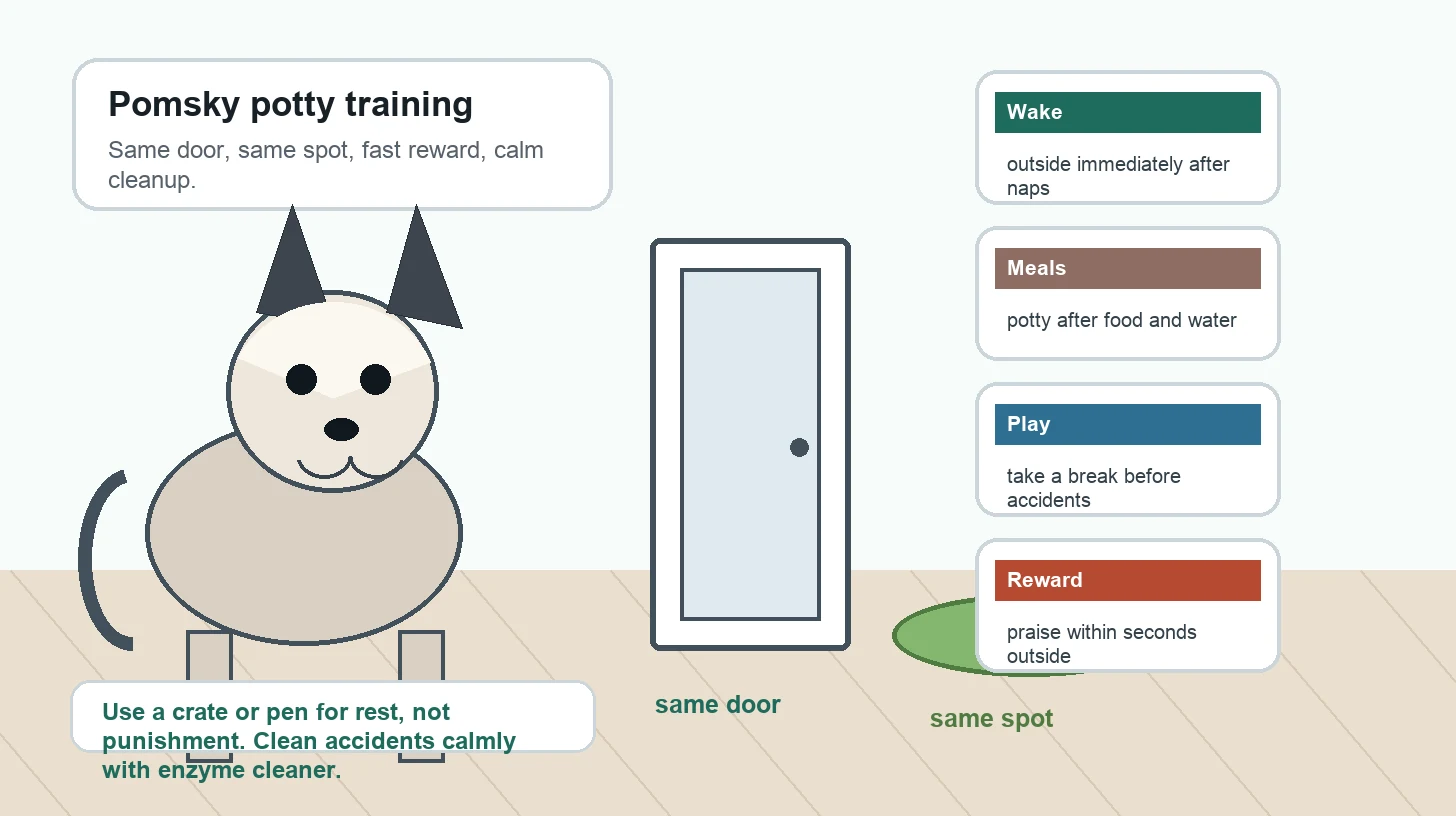
Self-contained answer: a Pomsky puppy should go to the same potty spot after waking, eating, drinking, playing, training, and before crate or bedtime. While the puppy is awake, start with frequent supervised breaks, then slowly increase time only after several accident-free days.
| Trigger | What to do | Why it helps |
| Wake-up | Carry or leash the puppy to the potty spot before play. | Many puppies need to go immediately after sleep. |
| Meals and water | Offer a trip after eating or drinking, then watch closely. | Food and water often start the next potty cycle. |
| Play or training | Pause the session and go outside before the puppy gets frantic. | Excitement can lead to sudden accidents. |
| Crate or pen time | Go outside before and after confinement. | This keeps the crate clean and predictable. |
| Evening | Use one calm final trip before bedtime. | A boring routine reduces night wake-ups for play. |
How to Potty Train a Pomsky Puppy Step by Step
- Choose one potty spot. Use the same door, route, cue, and outdoor area whenever possible.
- Go out after trigger moments. Waking, eating, drinking, playing, training, and crate time are the big ones.
- Reward outside immediately. Praise and treat within seconds after the puppy finishes, not after you return indoors.
- Supervise indoors. Use a leash tether, baby gate, pen, or crate so the puppy cannot wander off to practice accidents.
- Keep a written log. Note meals, water, potty trips, accidents, naps, and play so the real pattern is visible.
- Clean accidents without drama. Interrupt gently if caught in the act, go outside, then use an enzyme cleaner indoors.
- Expand freedom slowly. Add one room or a few extra minutes only after several successful days.
Set Up the House Before Training Starts
A Pomsky puppy should not have full-house freedom during potty training. Start with one easy-to-clean area, one door, one outdoor spot, and one rest space. The goal is to make the right choice obvious and the wrong choice hard to practice.
Useful setup items include a correctly sized crate or pen, a baby gate, leash, tiny treats, poop bags, paper towels, and enzyme cleaner. If you are still building the first-week kit, use the Pomsky supplies checklist and the Pomsky crate size guide.
Crate and Pen Setup for Potty Training
A crate can support potty training when it is used as a safe rest area, not as punishment. Cornell's dog crate guidance emphasizes appropriate sizing and acclimation. For housebreaking, the crate should allow standing, turning, and lying down, but it should not be so large that one end becomes a toilet corner.
Use the crate for naps, short rest periods, and times when you cannot supervise. Always give a potty trip before crate time and immediately after the puppy wakes. If the puppy soils the crate repeatedly, reassess crate size, timing, stress, bedding, and possible health issues.
Reward Timing Matters More Than the Reward Size
Reward outside success immediately. A tiny treat, calm praise, and a quick play moment can all work, but the timing matters. If you wait until you are back in the kitchen, the puppy may connect the reward with coming inside rather than finishing outside.
Keep rewards small because potty training may involve many repetitions. If your puppy has a sensitive stomach or is changing food, use small pieces of the daily food. See the Pomsky puppy food guide before making diet changes.
Common Signs a Pomsky Puppy Needs to Go
Some puppies give clear signals; others go from normal to accident quickly. Watch for pattern changes rather than waiting for a perfect signal.
- Sniffing the floor in tight circles.
- Suddenly leaving play or walking toward another room.
- Standing near the door, gate, or crate opening.
- Whining, pacing, or stopping mid-activity.
- Waking from a nap and immediately becoming restless.
- Repeated squatting, straining, diarrhea, or painful urination, which should be treated as a health warning.
What to Do When Accidents Happen
Accidents are information, not proof that the puppy is stubborn. If you catch the accident starting, interrupt with a neutral sound, take the puppy outside, and reward if the puppy finishes there. Do not yell, rub the puppy's nose in it, or chase the puppy; those reactions can make the puppy hide future accidents.
Clean the area with an enzyme cleaner, then adjust the plan. Shorten the interval, reduce indoor freedom, watch the post-meal window more closely, or return to a smaller safe zone for a few days.
Puppy Pads: Useful Tool or Mixed Message?
Puppy pads can be useful for apartment living, extreme weather, mobility limits, late-night emergencies, or veterinarian-directed situations. They can also slow outdoor training if the puppy learns that indoor fabric-like surfaces are acceptable.
If your long-term goal is outdoor potty training, keep the pad plan temporary and structured. Use one location, reward there only when necessary, and gradually move the routine toward the outdoor spot as your schedule and health plan allow.
Night Potty Training Without Creating a Play Routine
Night trips should be calm and boring. Use dim light, carry or leash the puppy if needed, go to the same spot, wait quietly, reward success calmly, and return to the rest area. Avoid turning night wake-ups into play, food, or long social time.
If a very young puppy wakes at night, that can be normal. If an older puppy suddenly wakes to urinate more often, drinks excessively, has diarrhea, cries in pain, or seems ill, contact your veterinarian.
Why a Pomsky Puppy May Still Have Accidents
| Problem | Likely cause | Adjustment |
| Accidents right after coming inside | The outdoor trip was too short or too distracting. | Wait quietly longer, then reward only after finishing. |
| Accidents in hidden corners | Too much indoor freedom. | Use a gate, leash tether, pen, or crate between breaks. |
| Crate accidents | Crate too large, interval too long, stress, or health issue. | Check size and timing; call a vet if repeated or abnormal. |
| Excitement urination | Over-arousal or greeting pressure. | Keep greetings calm and reduce crowding. |
| Regression after progress | Schedule change, illness, stress, or too much freedom. | Return to the last successful routine for several days. |
Vet Warning Signs During Potty Training
Most accidents are training issues, but some are health issues. Contact a veterinarian promptly if your Pomsky puppy has blood in urine or stool, repeated diarrhea, vomiting, painful urination, inability to urinate, repeated straining, sudden extreme thirst, sudden frequent urination, collapse, fever signs, loss of appetite, or lethargy.
This guide is educational and not a veterinary diagnosis. Keep the health disclaimer in mind and use your veterinarian for health, medication, parasite, diet, and emergency decisions.
How This Connects to First-Week Pomsky Care
Potty training is easier when the whole first-week routine is stable. Sleep, meals, water, crate rest, play, and grooming all affect accident timing. If you are still setting up the first week, use the new Pomsky puppy care guide as the hub.
For Pomskies, consistency also reduces barking, overtired biting, and chaotic indoor wandering. The puppy is not only learning where to potty; the puppy is learning what daily life feels like in your home.
Frequently Asked Questions
How often should I take a Pomsky puppy outside to potty?
Take a Pomsky puppy outside after waking, eating, drinking, playing, training, and before crate or bedtime. Young puppies also need frequent supervised breaks while awake. If accidents happen, shorten the interval instead of assuming the puppy understands.
How long does it take to potty train a Pomsky puppy?
Many puppies need several weeks of consistent scheduling before accidents become rare, and full reliability can take longer. Speed depends on age, health, supervision, timing, cleanup, owner consistency, and how much freedom the puppy gets indoors.
Should I use puppy pads for a Pomsky?
Puppy pads can help in apartments, severe weather, mobility limits, or medical situations, but they can also teach indoor potty habits. If your goal is outdoor potty training, use pads only as a temporary bridge and move toward one outdoor spot.
Why is my Pomsky puppy still having accidents?
Common causes include too much indoor freedom, missed trigger times, delayed rewards, incomplete odor cleanup, excitement, fear, or an unrealistic schedule. Repeated accidents with diarrhea, blood, pain, excessive thirst, or lethargy need veterinary input.
Can crate training help with Pomsky potty training?
Yes, a correctly sized crate can help by limiting unsupervised roaming and giving the puppy a safe rest space. It should not be used as punishment, and it does not replace frequent potty trips, rewards, supervision, or cleanup.
Related Pomsky Guides
- New Pomsky puppy care guide
- Pomsky supplies checklist
- Pomsky crate size guide
- Pomsky puppy food guide
- Pomsky training topic hub
- Affiliate disclosure
- Editorial policy
- Health disclaimer
Sources Reviewed
- AKC - Puppy potty training timeline and tips
- AKC - How to potty train a puppy
- AKC - How to crate train a puppy
- VCA Animal Hospitals - House training your puppy
- The Ohio State University Indoor Pet Initiative - Housetraining dogs
- Cornell Riney Canine Health Center - Dog crates
- American Humane - Housetraining puppies and dogs
- American Veterinary Society of Animal Behavior - Housetraining tips
Evidence and related Pomsky guides
These sources support only their stated claim scopes; they do not guarantee an individual Pomsky outcome.
Sources reviewed for this page
- American Veterinary Society of Animal Behavior: Humane Dog Training Position Statement
- American Veterinary Society of Animal Behavior: Puppy Socialization Position Statement