
Quick answer
Feed a complete and balanced diet appropriate for the dog's life stage and use measured portions to maintain a healthy body condition. Calorie needs vary widely, so package directions are only a starting point.
Ask a veterinarian before using supplements, homemade diets, or major diet changes, especially for a puppy or a dog with allergies, digestive signs, dental disease, or another medical condition. Keep fresh water available and change foods gradually unless a veterinarian advises otherwise.
What to verify
- Choose a complete and balanced diet for the dog's life stage.
- Use measured portions and monitor body condition rather than following a fixed serving blindly.
- Ask a veterinarian before homemade diets, supplements, or major diet changes.
Sources and further reading
Last updated: June 18, 2026
This puppy nutrition guide is informational and is not a substitute for veterinary advice. Puppies with poor growth, vomiting, repeated diarrhea, weight concerns, or suspected allergies need individualized veterinary guidance. See the health disclaimer.
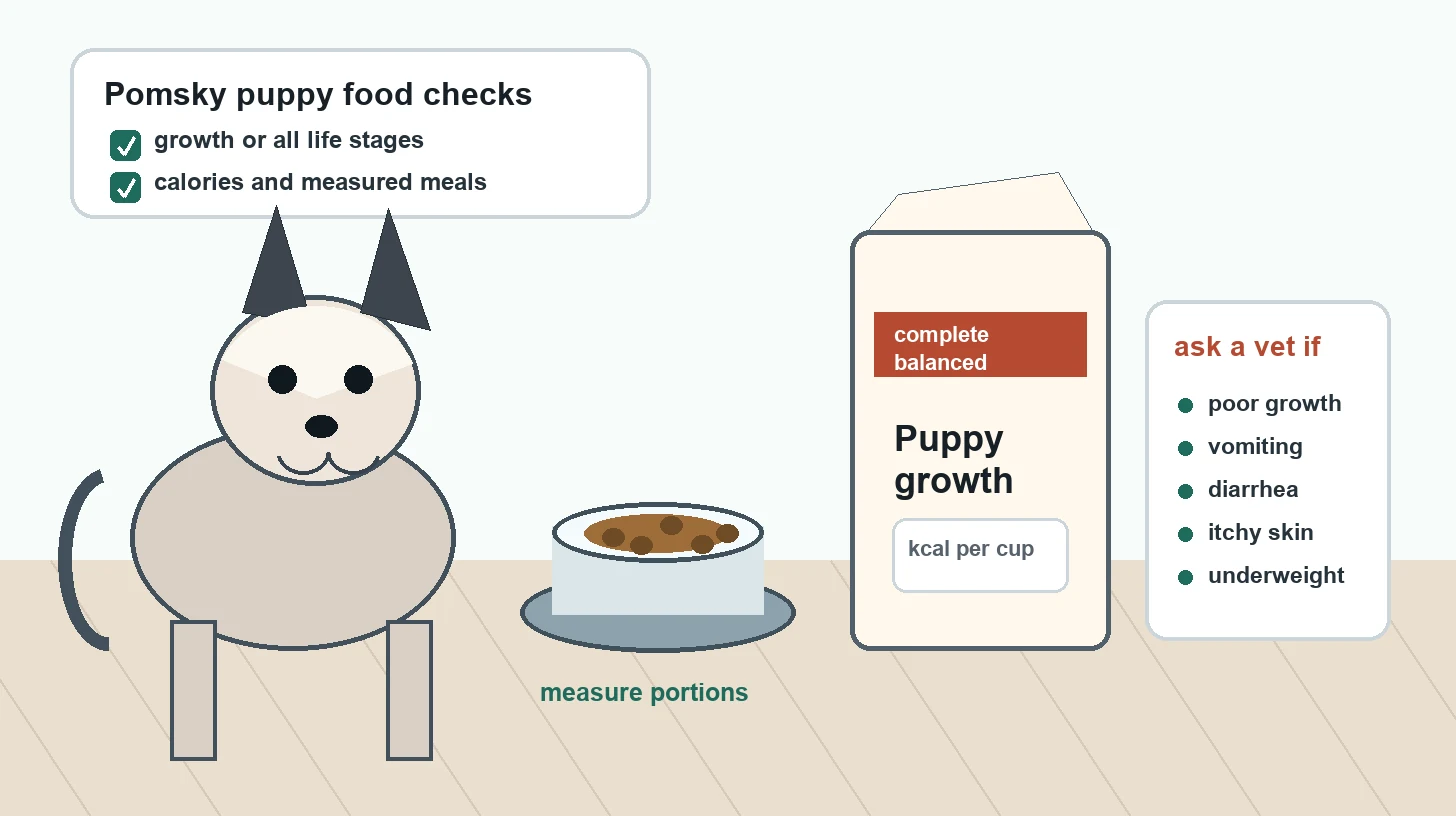
Quick answer: the best dog food for a healthy Pomsky puppy is a complete and balanced puppy food labeled for growth or all life stages. Use the label's feeding guide as a starting point, measure every meal, track body condition, and ask a veterinarian before using adult food, raw food, homemade diets, or supplements.
A Pomsky puppy can grow into a small or medium-sized adult, and individual size can vary by breeding line. That makes puppy food selection more about life-stage nutrition, calories, measured meals, and growth monitoring than about picking a single trendy brand. The safest starting point is a food that clearly matches puppies and a feeding routine that can be adjusted as your puppy grows.
Best Dog Food for Pomsky Puppies: The Short Standard
Choose a dog food that says it is complete and balanced for growth or all life stages. AAFCO and FDA label guidance make the nutritional adequacy statement the key label section because it connects the food to the dog's species and life stage.
| Label wording | Meaning for a Pomsky puppy | Use caution when |
| Growth | Formulated for puppies and growing dogs | Your puppy has a medical issue or unusual growth pattern |
| All life stages | Can meet puppy growth needs if the label is for dogs | The food is too calorie dense for your puppy's body condition |
| Adult maintenance | Usually for mature dogs, not young puppies | You are switching before your veterinarian confirms timing |
| Supplemental feeding only | Not a complete daily diet | It is being used as the main food |
How to Read a Puppy Food Label
The front of the bag is marketing; the back or side label is where the important checks usually live. Read the species, nutritional adequacy statement, life stage, calorie content, feeding directions, and manufacturer information before choosing a puppy food.
- Confirm dog food: do not use cat food or treats as the main diet.
- Find the adequacy statement: it should say complete and balanced for growth or all life stages.
- Check calories: look for kcal per cup, can, pouch, or kilogram.
- Read feeding directions: use them as a starting point, not a permanent rule.
- Check manufacturer contact details: useful for nutrient details, lot questions, and quality-control questions.
- Save the package: keep the lot code and date in case your veterinarian asks for exact product details.
Puppy Food vs Adult Dog Food
A Pomsky puppy generally needs growth nutrition until it is mature enough to transition. Adult maintenance food may not match the nutrient and energy needs of a growing puppy. A fixed age is less reliable than growth trend, adult-size expectation, body condition, and veterinary guidance.
| Stage | Food starting point | What to monitor |
| Young puppy | Growth or all-life-stages food | Appetite, stool quality, weight gain, and energy |
| Adolescent puppy | Continue growth food until switch timing is clear | Body condition, treats, and whether growth is slowing |
| Near adult size | Ask about adult maintenance transition | Weight trend after the food change |
| Adult Pomsky | Adult maintenance, adjusted by calories | Weight gain, weight loss, and activity changes |
How Much Should You Feed a Pomsky Puppy?
Start with the feeding guide on the puppy food package and measure the food. Then adjust based on your puppy's weight trend, body condition, activity, treats, stool quality, and veterinarian feedback. A feeding chart is a starting point, not a substitute for watching the puppy in front of you.
- Use a real measuring cup or kitchen scale.
- Split the daily amount into several measured meals.
- Count treats, chews, toppers, and training rewards as calories.
- Track weight weekly during rapid growth if your veterinarian agrees.
- Bring the food label or package photo to puppy wellness visits.
How Many Meals a Day?
Many puppies do better with multiple smaller meals rather than one large meal. Merck's small-animal feeding guidance notes that some small-breed puppies may need more than three meals per day. For a Pomsky, the right schedule depends on age, size, appetite, stool quality, and veterinarian guidance.
Keep meal timing steady. Consistent meals make it easier to notice appetite changes, digestive upset, or weight changes before they become bigger problems.
Dry Food vs Wet Food vs Fresh Food for Puppies
Dry, wet, and commercial fresh-cooked puppy foods can all be appropriate if they are complete and balanced for growth or all life stages. Choose the format by calories, storage, measuring accuracy, digestion, dental comfort, and how consistently your puppy eats.
| Format | Potential fit | Main caution |
| Dry puppy food | Easy to measure and use for training portions | Can be calorie dense if scooped loosely |
| Wet puppy food | Moisture and strong palatability | Portion cost and calorie comparison can be harder |
| Commercial fresh-cooked | May suit picky texture preferences | Must still state complete and balanced for growth or all life stages |
| Homemade cooked | Can be tailored only with professional formulation | High imbalance risk without veterinary nutrition guidance |
| Raw or freeze-dried raw | Preferred by some owners | Foodborne bacteria risk for puppies and people handling the food |
Safe Food Transition Plan
Most Pomsky puppies should change foods gradually unless a veterinarian says otherwise. A slow transition protects digestion and helps you identify whether the new food is working.
- Days 1 to 2: mostly old food with a small amount of new food.
- Days 3 to 4: move toward an even mix if stool and appetite are normal.
- Days 5 to 6: mostly new food.
- Day 7 and after: new food only if your puppy is doing well.
Slow down if stool softens. Stop and ask a veterinarian if your puppy vomits repeatedly, has ongoing diarrhea, refuses food, seems weak, or acts ill.
Treats, Toppers, and Supplements
Treats are useful for training, but they can quietly unbalance a puppy's diet if they take over too many calories. Keep treats small, choose simple rewards, and reduce meal portions if training calories are significant.
Do not add calcium, multivitamins, oils, or growth supplements to a complete and balanced puppy food unless your veterinarian recommends them. Merck notes that supplementing complete and balanced commercial diets should be done carefully and only with appropriate justification.
When to Ask a Veterinarian Before Changing Food
Ask a veterinarian before changing food if your Pomsky puppy is underweight, growing poorly, vomiting, having repeated diarrhea, very itchy, losing hair, drinking or urinating more than expected, refusing meals, or taking medication. Puppy diet changes should be conservative when growth or illness is involved.
Also ask for guidance if your puppy may mature larger than expected. Pomskies vary, and growth nutrition should be matched to the individual puppy rather than assumed from breed name alone.
Best Puppy Food Buying Checklist
- Dog food for puppies, not treats or supplemental-only products.
- Complete and balanced nutritional adequacy statement.
- Growth or all-life-stages label wording.
- Calories listed per cup, can, pouch, or kilogram.
- Feeding directions that can be measured and adjusted.
- Manufacturer contact details and product lot/date code.
- No promise that one food fixes every coat, allergy, behavior, or growth issue.
Future Product Picks and Affiliate Safety
This page is intentionally a puppy nutrition checklist, not a paid product roundup. Future retail or CPS modules can be added only after product-vetting, price checks, disclosure placement, and affiliate click tracking are ready. Puppy recommendations must prioritize growth adequacy, calories, label clarity, and safety over commission rate.
Frequently Asked Questions
What is the best dog food for a Pomsky puppy?
The best dog food for a healthy Pomsky puppy is a complete and balanced food labeled for growth or all life stages. It should list calories, include feeding directions, and fit your puppy's body condition and growth trend.
Can a Pomsky puppy eat adult dog food?
A Pomsky puppy should not move to adult maintenance food too early unless a veterinarian recommends it. Adult maintenance diets are designed for mature dogs, while growth diets are designed for puppies and growing dogs.
How many times a day should I feed a Pomsky puppy?
Many Pomsky puppies do well with several measured meals per day. Very young or small puppies may need more frequent meals. Ask your veterinarian for a schedule that matches your puppy's age, size, and health.
When should a Pomsky puppy switch to adult food?
Switch after growth slows and your veterinarian confirms the timing. Because Pomskies vary in adult size, do not rely on a single age rule without considering body condition, weight trend, and expected adult size.
Is grain-free food best for Pomsky puppies?
Grain-free food is not automatically best for puppies. Nutritional adequacy, growth life stage, calories, digestibility, quality control, and veterinary guidance matter more than a grain-free claim on the front of the package.
Is raw food safe for Pomsky puppies?
Raw diets can expose puppies and people to foodborne bacteria. If you are considering raw feeding, talk with a veterinarian first and do not use raw food as a casual puppy growth plan.
Related Pomsky Nutrition Guides
- Pomsky nutrition and supplements hub
- Best dog food for Pomskies
- Pomsky feeding chart
- Food guide for Pomskies
- Health disclaimer
- Affiliate disclosure
- Editorial policy
Sources Reviewed
- FDA - Complete and Balanced Pet Food
- AAFCO - Reading Pet Food Labels
- AAFCO - Selecting the Right Pet Food
- WSAVA - Global Nutrition Guidelines
- Merck Veterinary Manual - Nutritional Requirements of Small Animals
- Merck Veterinary Manual - Feeding Practices in Small Animals
- FDA - Raw Pet Food Diets Can Be Dangerous