
This grooming guide is informational and is not a substitute for veterinary or professional grooming advice. See the health disclaimer for details.
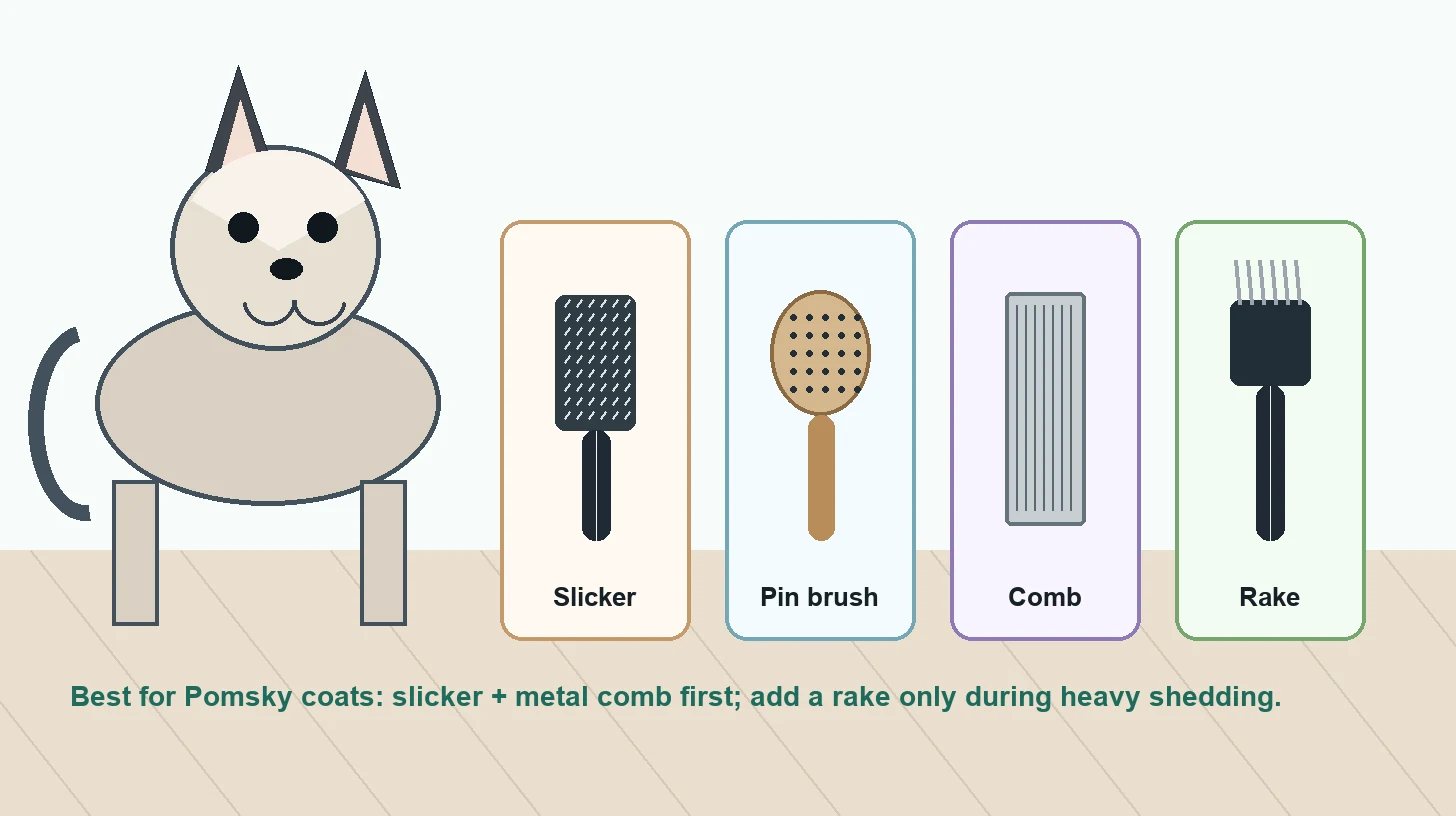
Quick answer: the best brush setup for most Pomskies is a gentle slicker brush plus a stainless steel comb. Add an undercoat rake only for heavy shedding periods, and use it lightly so you do not scratch the skin or break the coat.
Pomskies often inherit a dense double-coat pattern from their Husky side and a fluffy texture from their Pomeranian side. That means one brush rarely does every job well. A good grooming kit should remove loose hair, prevent mats, and let you check whether the coat is brushed all the way down to the skin.
Best Brush for Pomskies: The Short Recommendation
Start with a soft slicker brush for loose coat and small tangles, then use a metal comb to check your work. If the comb catches, brush that section again gently. During seasonal shedding, add an undercoat rake only where the coat is thick and only with light pressure.
| Tool | Best use on a Pomsky | Use with care when |
| Slicker brush | Everyday loose hair, small tangles, fluffy coat maintenance | The pins are sharp, bent, or scratch the skin |
| Stainless steel comb | Checking whether the coat is fully brushed through | The comb snags repeatedly; stop and loosen the section first |
| Pin brush | Longer outer coat and gentle finishing | The coat is packed with undercoat or mats |
| Undercoat rake | Heavy shedding and dense undercoat removal | You feel scraping, pulling, or repeated resistance |
| Bristle brush | Final smoothing and dust removal | You need to remove real tangles or undercoat |
How to Choose a Pomsky Brush
Choose a brush by coat density, coat length, your dog's tolerance, and the job you need the tool to do. For a medium or wooly Pomsky, a slicker-and-comb routine is usually more useful than a single large deshedding tool.
- Check coat density: thick coats need tools that reach below the surface, not only the top layer.
- Choose rounded or gentle pins: the tool should move through coat, not scrape skin.
- Buy a comb as a test tool: a comb tells you whether hidden tangles remain close to the skin.
- Match tool size to body area: use smaller tools near ears, armpits, legs, and tail base.
- Avoid aggressive blades first: start with gentler tools before using heavy deshedding edges.
Slicker Brush vs Pin Brush vs Undercoat Rake
A slicker brush is the most versatile first brush for many Pomskies because it handles loose coat and light tangles. A pin brush is gentler for finishing longer outer coat. An undercoat rake is a shedding-season tool, not a daily pressure tool.
| Comparison | Slicker brush | Pin brush | Undercoat rake |
| Main job | Loose hair and tangles | Finishing and longer coat | Dense undercoat during shedding |
| Best frequency | Several times weekly | As needed for finishing | Seasonal or heavy shedding only |
| Risk | Skin scratching if too firm | May miss undercoat | Pulling or coat damage if overused |
| Best companion tool | Metal comb | Metal comb | Slicker brush and comb |
How Often Should You Brush a Pomsky?
A Pomsky with a dense coat usually needs brushing several times per week. During heavy shedding, daily short sessions may be more comfortable than one long session. Short-coated or lower-shedding Pomskies may need less, but the comb test is still useful.
Focus on mat-prone areas: behind the ears, under the collar, armpits, belly, back legs, tail base, and anywhere harness straps rub. These areas can mat even when the top coat looks tidy.
Safe Brushing Routine
Brush in small sections and keep sessions calm. The goal is a clean, comfortable coat, not forcing every tangle out in one sitting.
- Let your Pomsky sniff the brush and reward calm behavior.
- Start with an easy area such as the shoulder or side.
- Brush in the direction the coat grows, using light pressure.
- Lift the coat in small sections so you do not brush only the surface.
- Run a metal comb through the section to check for hidden tangles.
- Stop if the dog flinches, guards the area, or the tool keeps catching.
Mat Warning Signs
Mats can pull skin, trap moisture, and hide irritation. Early tangles may brush out with patience, but tight mats should not be cut out with household scissors because the skin can be pulled into the mat.
- The coat feels hard, lumpy, or rope-like close to the skin.
- Your comb cannot pass through a small section after gentle brushing.
- Your Pomsky reacts when you touch one area.
- The area smells, looks red, or feels damp under the coat.
- Mats sit behind ears, under legs, or near the tail base.
If mats are tight, painful, close to the skin, or widespread, book a professional groomer or veterinarian. Do not keep pulling until the dog gives up; that can make future grooming harder.
What Not to Buy First
Do not start with harsh deshedding blades, oversized rakes, or cheap slickers with sharp pins. These tools can be useful in the right hands, but they can also irritate skin or break coat if used too often or too firmly.
For future Amazon or CPS monetization, this page should recommend tool categories before naming specific products. Product links should be added only after disclosure, tracking, and product-vetting rules are ready.
Best Brush Buying Checklist
- Rounded or coated pin tips.
- Comfortable handle that will not twist in your hand.
- Brush head small enough for legs, ears, and armpits.
- Easy-to-clean pins or pad.
- Separate metal comb for checking the coat.
- No claims that one brush solves every Pomsky coat problem.
Frequently Asked Questions
What brush is best for a Pomsky?
For many Pomskies, the best brush setup is a gentle slicker brush plus a stainless steel comb. The slicker loosens surface tangles and loose coat, while the comb confirms that you reached through the coat instead of only brushing the top layer.
Do Pomskies need an undercoat rake?
Some Pomskies need an undercoat rake during heavy shedding, especially if they have a dense double coat. Use it lightly and stop if it scrapes, pulls, or catches repeatedly. A rake should support grooming, not replace regular brushing.
How often should I brush my Pomsky?
Brush a dense-coated Pomsky several times per week, and more often during shedding seasons or when tangles start forming. Short, calm sessions are better than waiting until the coat is packed with loose undercoat.
Can I use a Furminator-style deshedding tool on a Pomsky?
Use blade-style deshedding tools cautiously. They may remove loose coat, but overuse can irritate skin or damage outer coat. Start with a slicker, comb, and light undercoat rake before using aggressive tools.
Can I cut mats out of a Pomsky coat?
Do not cut tight mats with household scissors. Skin can hide inside a mat, especially in armpits and behind the ears. For tight or painful mats, use a professional groomer or veterinarian.
Related Pomsky Grooming Guides
- Pomsky grooming hub
- Best shampoo for Pomskies
- What happens if you shave a Pomsky
- Pomsky coat types guide
- Health disclaimer
- Affiliate disclosure
- Editorial policy