
Quick answer: Pomsky puppy socialization means creating safe, positive, controlled exposure to people, animals, sounds, surfaces, handling, and environments during early development. It is not forced greeting or uncontrolled dog-park contact, and health-risk decisions need veterinary guidance.
Written and reviewed by A Pomsky Editorial Team. Published 2026-06-18; last reviewed July 25, 2026.
This guide is educational and not veterinary or behavior diagnosis. Use your veterinarian for vaccines, parasite prevention, illness, pain, diet, and urgent behavior changes. See the health disclaimer, affiliate disclosure, and editorial policy.
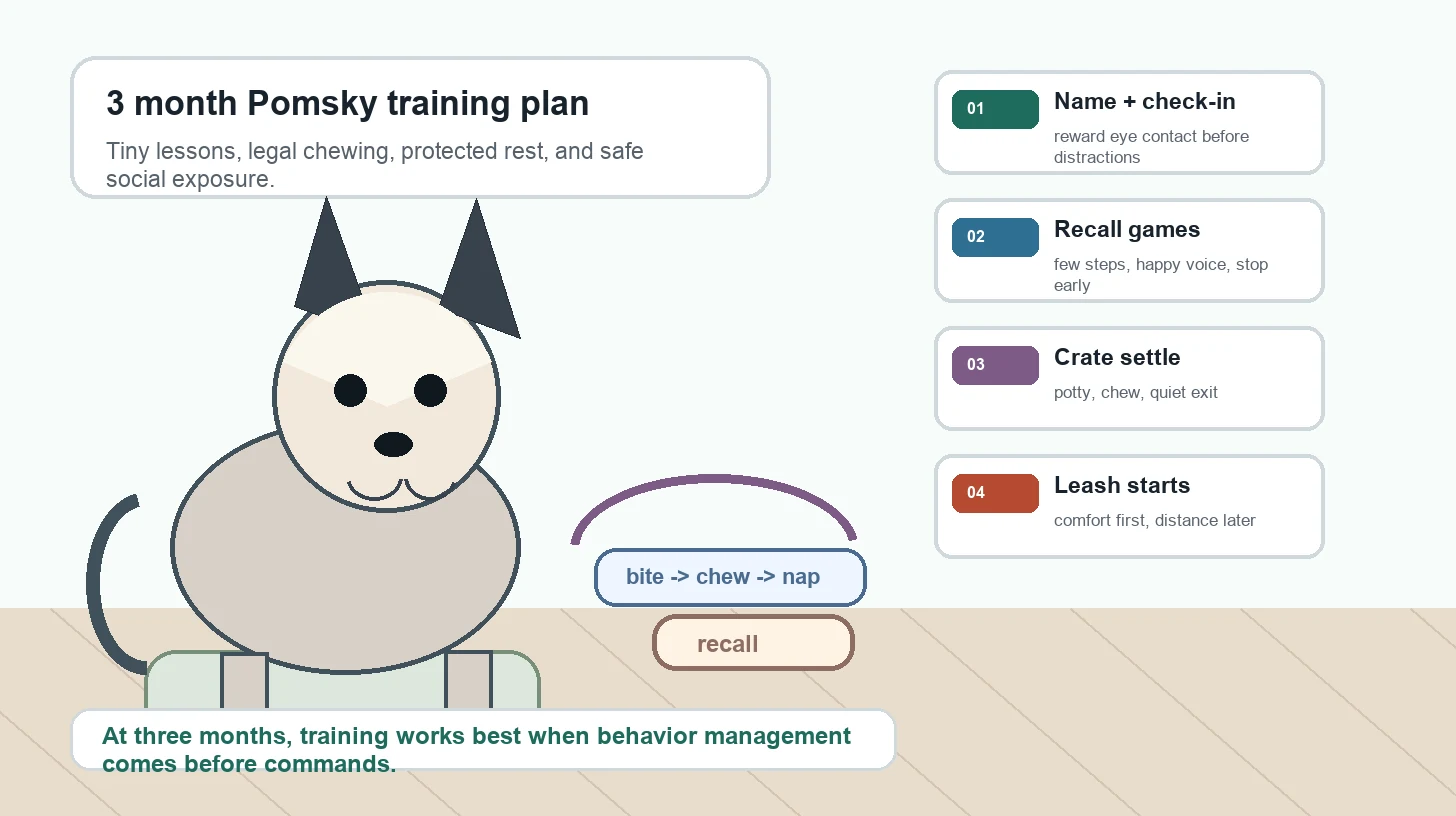
Quick answer: a 3-month-old Pomsky puppy should work on tiny, reward-based lessons: name response, check-ins, sit, hand touch, short recall, leash comfort, crate or pen settling, gentle handling, bite-to-chew redirection, and safe social exposure. The owner priority is not more commands. It is better setup, shorter sessions, more legal chewing, cleaner nap timing, and veterinarian-guided boundaries.
This page is intentionally different from the broader 3 month old Pomsky puppy care guide. That guide covers the full care rhythm. This guide focuses on behavior: what to teach, how to handle biting, when to use a crate or pen, how to start leash work, how to socialize safely, and when behavior may actually be a health or welfare problem.
3 Month Pomsky Training at a Glance
Self-contained answer: at three months, a Pomsky can learn simple cues in easy settings, but it still has a short attention span, strong teething needs, limited bladder reliability, and poor impulse control. Use one- to three-minute training moments and build the day around potty breaks, chewing, rest, and safe exposure.
| Area | Good 3-month goal | What to avoid |
| Name response | Turns toward you after one name cue. | Repeating the name until it becomes background noise. |
| Recall | Comes from a few steps away indoors or in a secure space. | Calling only when you are about to end fun. |
| Biting | Chooses legal chews more often and settles after play. | Rough hand games, yelling, or waiting until the puppy is frantic. |
| Crate or pen | Enters calmly, chews safely, and rests for short periods. | Using confinement only after the puppy is already wild. |
| Leash | Accepts harness handling and walks a few loose steps. | Dragging, long walks, or high-distraction public practice too soon. |
| Socialization | Notices people, sounds, surfaces, car rides, and handling calmly. | Uncontrolled dog contact or pushing a scared puppy forward. |
| Red flags | Owner acts quickly when behavior suddenly changes. | Treating pain, illness, panic, or escalating aggression as stubbornness. |
What a 3-Month-Old Pomsky Can Realistically Learn
A three-month Pomsky can learn patterns quickly when the environment is simple. It may check in for food, run toward a happy recall, sit before a bowl, follow a lure onto a mat, step into a crate, accept a harness, and settle with a chew. Those are useful skills. They are also fragile skills.
The same puppy may forget everything when visitors arrive, when the leash appears, when the floor smells interesting, or when teething pain makes chewing feel urgent. That is normal for the age. Train in easy locations first, then add one difficulty at a time. If the puppy cannot succeed, the setup is too hard.
Training Setup Before the First Cue
Most 3-month behavior problems get worse when training starts at the wrong time. Begin after the puppy has had a potty trip and before it is overtired. Keep rewards ready. Remove laundry, cords, shoes, and children running through the room. Put a safe chew nearby. Use a gate, pen, leash, or small room so the puppy cannot rehearse the wrong choice.
The order matters: potty, short lesson, legal chew, rest. If you reverse it and ask for focus after the puppy is already biting sleeves, racing the room, or barking at every sound, you are training through exhaustion instead of preventing it.
Short Sessions Beat Long Lessons
One to three minutes is enough for most lessons at this age. You can repeat short lessons several times a day, but the lesson should end before the puppy gets mouthy, distracted, or frustrated. A short clean session teaches faster than a long messy session.
Use a marker word such as "yes" or a clicker if you already use one, reward quickly, and then release the puppy. Do not drill a cue twenty times. Three good repetitions can be better than fifteen repetitions that collapse into jumping, biting, barking, or wandering away.
Name Response and Check-Ins
Name response is not a trick. It is the base layer for recall, leash work, handling, grooming, and interrupting bad choices. Say the puppy's name once. When the puppy turns, mark and reward close to you. If it does not turn, reduce the distraction instead of repeating the name louder.
Practice when the puppy is already likely to succeed: in the kitchen, beside the crate, near a mat, or during quiet play. Then reward voluntary check-ins. When your puppy looks at you without being asked, reward that too. Pomskies can become busy, vocal, and independent when the room is exciting; check-ins give that energy somewhere useful to go.
Recall From a Few Steps Away
At three months, recall should feel like a game. Start from a few steps away, crouch slightly, use a happy voice, reward well, and then release the puppy back to safe play. The release matters because the puppy learns that coming to you does not always end the fun.
Do not test recall in unsafe or distracting places. Do not call when you are angry. Do not call repeatedly while the puppy ignores you. Make the setup easier: shorter distance, better reward, fewer distractions, or another person gently holding the puppy for a playful release.
Sit, Touch, Down, and Settle
Basic cues are useful when they support daily life. Sit can help before meals, doors, and harness clipping. Hand touch can move the puppy without grabbing. Down can lead into calm chewing. Settle on a mat can help the puppy learn that not every family movement is an invitation to explode into play.
Keep the cues practical. If a cue only works when the treat is visible, fade the lure slowly. If the puppy jumps, bites, or barks during training, make the reward delivery lower and calmer. If the puppy cannot keep four paws down, reward earlier, before the jump happens.
Crate and Pen Settling
Crate or pen work should not feel like punishment. It should feel like a normal place to chew, nap, and reset. Send the puppy in for a treat, let it come out, repeat, then build short closed-door moments. Give a safe chew when appropriate. Keep exits calm so the puppy does not learn that bursting out is the goal.
Timing is the common mistake. Many owners wait until the puppy is already biting hard, barking, and spinning through the room. Instead, use the crate or pen before that peak. Potty first, then a chew, then quiet. If crate panic, repeated distress, or self-injury appears, stop forcing the issue and ask a qualified professional or veterinarian for help.
Leash and Harness Starts
Leash training at three months is about comfort, not distance. Touch the harness, reward. Clip one buckle, reward. Let the puppy drag a light leash in a safe indoor area only under supervision, reward check-ins, then pick up the leash for a few loose steps. End early.
Do not turn this age into long walks, pulling contests, or public sidewalk battles. Your veterinarian should guide public exposure based on vaccine status and local disease risk. If you need a broader routine around walking, naps, potty trips, and meals, pair this guide with the Pomsky puppy daily schedule.
Biting, Teething, and Legal Chewing
Biting is one of the biggest three-month complaints. It can come from teething, play, fatigue, frustration, hunger, needing to potty, or being asked to train for too long. The first fix is not a louder correction. The first fix is a better mouth plan.
Keep safe chew choices in the places where the puppy actually gets mouthy. When teeth touch skin or clothing, pause movement, offer a legal chew or toy, and resume only if the puppy can choose better. If biting escalates after several redirections, treat it as a management signal: potty, water if appropriate, then rest. For the broader care side of teething, use the 3 month care guide.
Jumping, Barking, and Overarousal
Jumping and barking often mean the puppy has learned that big behavior makes humans move, talk, touch, or chase. Reduce the rehearsal. Step behind a gate, ask for a simple sit only if the puppy can still think, reward four paws on the floor, and keep greetings short.
Overarousal is different from disobedience. A puppy that is racing, biting, barking, and ignoring food may need a potty break and rest, not more commands. Track when it happens. If the pattern appears late in the evening, after visitors, after rough play, or after missed naps, adjust the schedule before adding more training.
Potty Accidents That Look Like Behavior Problems
Some behavior complaints are really potty timing problems. A puppy that runs from room to room, sniffs, bites at shoes, or suddenly stops responding may need to go out. If accidents happen after play, crate exits, meals, water, visitors, or training, tighten transition potty trips.
The Pomsky potty training guide covers crate use, cleanup, pads, timing, and setbacks in more detail. For this page, the main point is simple: do not ask a puppy to learn calm behavior while it also needs to eliminate.
Safe Socialization at Three Months
Socialization is still important, but it does not mean throwing the puppy into every dog or busy public place. AVMA and AVSAB resources support early social learning, while your veterinarian should guide vaccine and disease-risk decisions. Good socialization is controlled, positive, and easy enough for the puppy to recover from.
Use surfaces, household sounds, quiet visitors, grooming tools, car rides, carriers, umbrellas, hats, doorbells, and watching the world from a clean safe place. Reward curiosity. Let the puppy retreat. End before fear or frantic behavior takes over. A frightened puppy does not need to be forced to "get over it."
Handling, Grooming, and Vet Prep
Handling is training. Touch one paw, reward. Lift one ear, reward. Touch the collar, reward. Brush one easy stroke, reward. Look at the teeth for one second, reward. Stop before the puppy turns the session into a wrestling match. These tiny lessons make grooming, vet visits, harnessing, and coat care easier later.
Use the Pomsky supplies checklist for basic tools and the Pomsky crate size guide for confinement setup. At this age, your goal is cooperation and comfort, not finishing a full groom at any cost.
Exercise and Rest Balance
A 3-month Pomsky may look like it wants endless activity, but long forced exercise can backfire. Use short play, sniffing, gentle leash starts, basic training, chew time, and naps. If the puppy gets more frantic after activity, the session was probably too long or too exciting.
Rest is part of training. A puppy that sleeps enough is more likely to learn, chew legal items, respond to cues, and recover from new experiences. If your training keeps getting worse as the day goes on, audit naps before adding harder work.
Common Training Mistakes
| Mistake | Why it backfires | Better choice |
| Repeating cues | The puppy learns that the first cue is optional. | Say it once, then make the setup easier. |
| Training after wild play | The puppy is already too aroused to think. | Use potty, water if appropriate, chew, and rest. |
| Using hands as toys | Mouthing becomes part of the game. | Use toys and chews between teeth and skin. |
| Skipping crate practice until bedtime | The crate only appears when the puppy is tired and separated. | Practice short calm entries during the day. |
| Going too public too soon | Disease risk, fear, and distraction can overwhelm learning. | Use veterinarian-guided, controlled exposure. |
| Expecting adult focus | The puppy fails and rehearses frustration. | Use short lessons with one clear goal. |
When to Get Veterinary or Behavior Help
Ask a veterinarian promptly for sudden behavior change, pain signs, limping, repeated vomiting or diarrhea, blood in stool or urine, refusal to eat, collapse, coughing, breathing trouble, severe lethargy, or repeated straining. Health problems can look like training problems.
Ask a qualified behavior professional for panic in the crate, fear that keeps getting worse, guarding, bites that break skin, inability to recover from normal household events, or aggression that escalates. The earlier you get help, the easier the plan usually is.
3 Month Pomsky Training Checklist
- Name response is practiced once, rewarded, and not repeated loudly.
- Recall games happen from a few steps away in safe spaces.
- Training sessions stay one to three minutes.
- Legal chews are placed where biting usually happens.
- Crate or pen practice happens before the puppy is frantic.
- Harness and leash work start with comfort and a few easy steps.
- Social exposure is controlled and veterinarian-guided.
- Potty trips happen before training and after transitions.
- Handling practice is short, rewarded, and stopped early.
- Vet and behavior red flags are not treated as stubbornness.
How This Page Fits the Puppy Cluster
Use the 12 week old Pomsky basic training guide as the foundation for first cues. Use the 12 week old Pomsky care guide and the 3 month care guide for feeding, naps, potty rhythm, grooming, safe exposure, and vet planning. Use this page when the question is behavior: biting, recall, crate settling, leash starts, overarousal, socialization, and when to get help.
If your puppy is younger or just arriving, review the 10 week old Pomsky guide, 11 week old Pomsky guide, and new Pomsky puppy care guide. Those pages help build the routine that makes three-month behavior work easier.
Frequently Asked Questions
What should I teach a 3-month-old Pomsky first?
Teach name response, check-ins, sit, hand touch, come from a few steps away, crate entry, calm exits, leash comfort, gentle handling, and settling. Keep lessons short, easy, and reward-based.
Why is my 3-month-old Pomsky biting so much?
Biting can come from teething, play, overtired behavior, frustration, hunger, needing to potty, or not having legal chew options close enough. Redirect to safe chews, pause rough play, and add rest when biting spikes.
How long should training sessions be?
Use one- to three-minute lessons several times a day. Stop while the puppy is still succeeding. Long sessions often create mouthiness, barking, frustration, or ignoring cues.
Can my 3-month-old Pomsky meet other dogs?
Ask your veterinarian about dog contact and public spaces based on vaccine status and local risk. Socialization can include people, sounds, surfaces, handling, car rides, carriers, and safe observation without uncontrolled dog contact.
Should I punish biting or barking?
Focus first on prevention and redirection: legal chews, calmer games, shorter lessons, gates, crate or pen rest, and better nap timing. If biting, barking, fear, or panic escalates, ask a qualified professional for help.
When is behavior a health concern?
Sudden behavior change, painful movement, collapse, breathing trouble, repeated vomiting or diarrhea, refusal to eat, severe lethargy, or repeated straining should be handled by a veterinarian promptly.
Related Pomsky Guides
- 3 month old Pomsky puppy care guide
- 12 week old Pomsky basic training guide
- 12 week old Pomsky care guide
- 10 week old Pomsky guide
- 11 week old Pomsky guide
- New Pomsky puppy care guide
- Pomsky puppy daily schedule
- Pomsky puppy potty training guide
- Pomsky crate size guide
- Pomsky supplies checklist
- Pomsky training topic hub
- Health disclaimer
- Affiliate disclosure
- Editorial policy
Sources Reviewed
- AKC - Puppy training timeline
- AKC - Teach your puppy these basic commands
- AKC - Puppy teething and nipping
- VCA Animal Hospitals - Puppy behavior and training basics
- VCA Animal Hospitals - Puppy vaccinations
- AVMA - Socialization of dogs and cats
- AVSAB - Puppy socialization position statement
- Merck Veterinary Manual - Routine health care of dogs
Evidence and related Pomsky guides
These sources support only their stated claim scopes; they do not guarantee an individual Pomsky outcome.
Sources reviewed for this page
- American Veterinary Society of Animal Behavior: Puppy Socialization Position Statement
- American Veterinary Society of Animal Behavior: Humane Dog Training Position Statement
- American Animal Hospital Association: AAHA-AVMA Canine Preventive Healthcare Guidelines