
Quick answer: A practical Pomsky supply list starts with secure identification and transport, fitted walking equipment, measured food and water tools, a safe sleep and confinement setup, grooming basics, training rewards, cleaning supplies, and an emergency kit. Buy for the individual dog's current size.
\n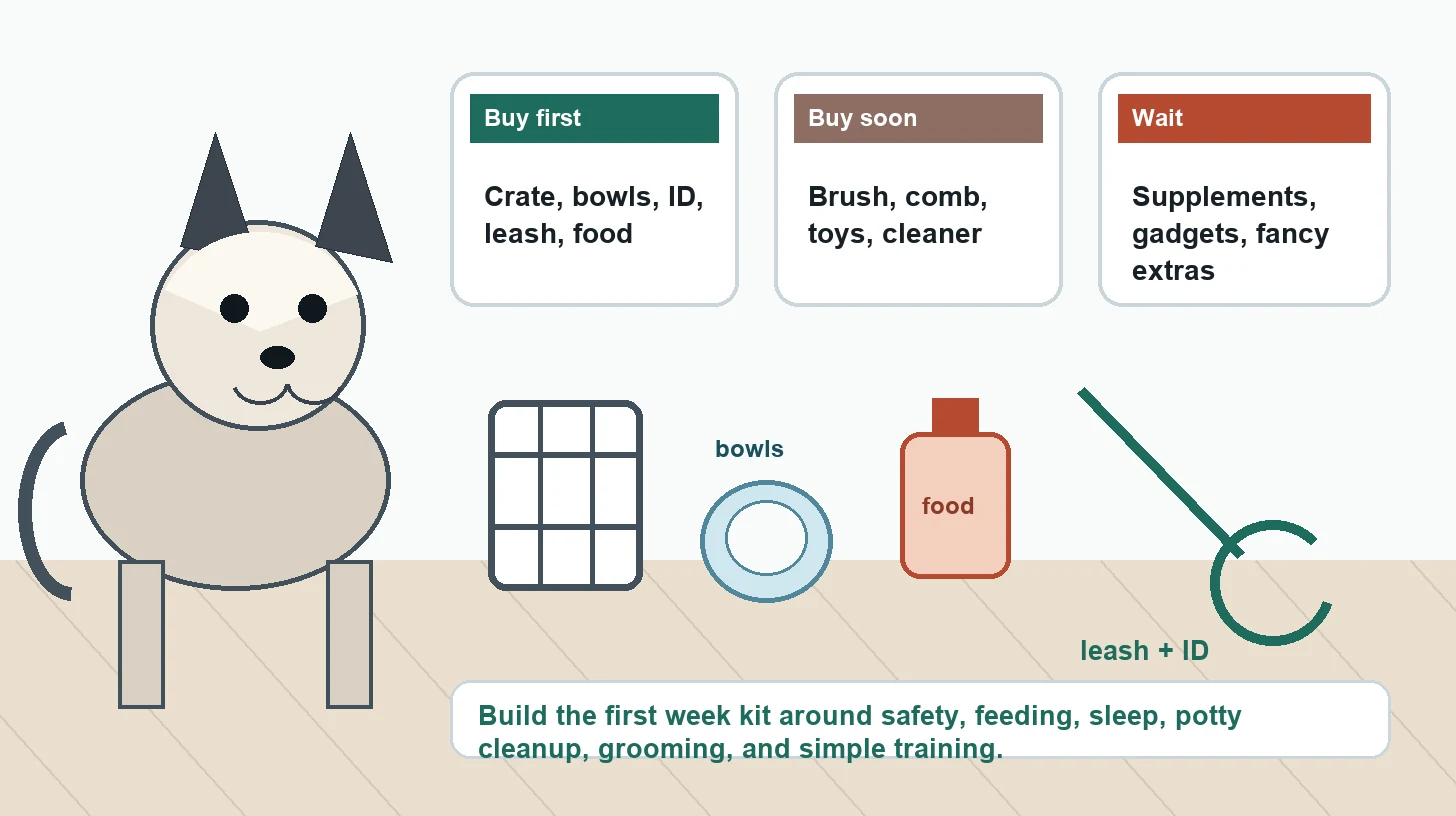
Written and reviewed by A Pomsky Editorial Team. Published 2026-06-18; last reviewed July 25, 2026.
This guide is educational and not a veterinary recommendation. Ask your veterinarian before adding supplements, changing diet, or using health products. See the health disclaimer and affiliate disclosure.
Quick answer: the best Pomsky supplies to buy first are the items that make the first week safe and predictable: a crate or pen, food and water bowls, the food your puppy already eats, a collar or harness with ID, a leash, washable bedding, chew toys, potty cleanup supplies, and basic grooming tools.
Pomsky owners can waste money quickly because this breed mix varies in adult size, coat thickness, chewing style, and energy level. Start with adjustable, washable, safety-focused supplies. Upgrade later after you know your dog's real size and routine.
Pomsky Supplies Checklist: Buy First, Buy Soon, Wait
A Pomsky starter kit should solve immediate safety, feeding, sleep, potty, grooming, and training needs. Fancy accessories can wait. This table gives a practical shopping order for a puppy or newly adopted adult Pomsky.
| Category | Buy first | Can wait |
| Safety | Collar or harness, ID tag, leash, baby gate or pen | Multiple specialty harnesses |
| Sleep | Adjustable crate or secure pen, washable bed or blanket | Expensive designer bed |
| Feeding | Food, water bowls, current food, training treats | Automatic feeder or slow feeder until you know eating habits |
| Grooming | Slicker brush, metal comb, dog-safe shampoo, towels | Heavy deshedding tools and clippers |
| Training | Chew toys, treat pouch, poop bags, enzyme cleaner | Clicker, long line, puzzle collection |
| Health | Vet appointment, records folder, first-aid basics | Supplements unless your vet recommends them |
Why Pomsky Supplies Need a Different Buying Strategy
Pomskies are not one-size-fits-all dogs. A small Pomsky and a larger Pomsky may need different crate dimensions, harness sizes, bed sizes, grooming tools, and chew durability. Coat thickness can also vary from a lighter companion coat to a dense double-coat style that needs regular brushing.
Self-contained answer: buy Pomsky supplies in stages. Choose adjustable gear for the first week, watch your dog's size and habits, then upgrade the items that affect safety, coat care, training, and daily comfort.
First-Week Essentials for a Pomsky
The first week is not about buying everything. It is about preventing unsafe roaming, avoiding food transitions, creating a sleep routine, and making cleanup easy. These are the items to have before your Pomsky arrives.
Crate, pen, or gated safe zone
A crate or exercise pen gives a Pomsky a predictable place to rest and helps protect the home while training is still new. Pick a space large enough for standing, turning, and lying down. For a growing puppy, a divider can prevent the crate from being too large at first.
Collar or harness, ID tag, and leash
Buy identification before pickup day. A flat collar with ID is useful even if you prefer a harness for walks. A front-clip or back-clip harness can reduce neck pressure while your Pomsky learns leash manners, but the fit should be snug enough that the dog cannot back out.
Food, bowls, and transition plan
Start with the food your Pomsky already eats, then ask your veterinarian how and when to transition. Stainless steel or ceramic bowls are easy to wash. A slow feeder can be helpful later if your dog gulps meals, but it is not always a first-day requirement.
Washable bed or blanket
Choose washable bedding over an expensive bed for the first week. Puppies may chew, dig, or have accidents. A simple crate mat, towel, or low-profile bed is easier to clean and cheaper to replace while you learn your dog's habits.
Chew toys and training treats
Buy a small variety: one soft toy for comfort, one safe chew toy for teething, and one food-stuffable toy for quiet time. Avoid buying a huge toy bundle before you know whether your Pomsky is a gentle chewer, shredder, tug fan, or fetch dog.
Potty and cleanup kit
Poop bags, paper towels, washable pads or a crate liner, and enzyme cleaner belong in the first kit. Cleanup supplies are not exciting, but they protect carpets, reduce odors, and make house training less stressful.
Pomsky Grooming Supplies to Buy First
A Pomsky coat can mat behind the ears, under the collar, around the armpits, behind the legs, and near the tail base. The first grooming kit should be gentle, simple, and designed for regular brushing rather than emergency coat removal.
| Grooming item | Why it helps | Buying note |
| Slicker brush | Loosens surface tangles and loose coat | Choose soft pins and use light pressure |
| Metal comb | Finds hidden mats after brushing | Use it as a check, not a pulling tool |
| Dog-safe shampoo | Cleans without using harsh human products | Pick gentle fragrance-free formulas first |
| Towels and dryer plan | Dense coat must dry well after baths | Avoid leaving damp undercoat trapped |
| Nail care | Supports comfort and normal movement | Use clippers, grinder, or a groomer |
Heavy undercoat tools, clippers, and scissors can wait unless a groomer recommends them. The wrong tool can scrape skin, break coat, or make grooming unpleasant. For more detail, see the Pomsky grooming tools guide and the Pomsky shaving safety guide.
Food and Treat Supplies
Food is a first-week essential, but supplement shopping is not. Puppies need a complete diet appropriate for their life stage, while adults need a diet matched to body condition, activity, and veterinary advice. Keep treats small so training does not accidentally become overfeeding.
- Buy the current food before pickup day.
- Keep fresh water available in a clean bowl.
- Use tiny training treats or pieces of daily food for rewards.
- Store food in a sealed container away from heat and moisture.
- Ask your veterinarian before using omega-3, probiotic, joint, coat, or calming supplements.
Crate and Bed Sizing for Pomskies
Pomsky size can vary, so avoid buying a final adult crate based only on a photo. The crate should be comfortable, but not so oversized that one end becomes a potty area. An adjustable crate with a divider is often the most practical puppy option.
If your Pomsky is already grown, measure from nose to tail base and from floor to top of head while standing. Add enough room for turning and lying down naturally. For more detail, use the Pomsky crate size guide.
Training Supplies That Actually Help
Pomskies often do best with short, consistent, reward-based training sessions. You do not need a complicated equipment shelf. You need a leash, rewards, safe confinement, cleanup supplies, and a plan everyone in the home follows.
- Treat pouch: useful if rewards are part of every walk and potty trip.
- Baby gate or pen: prevents free roaming before house rules are learned.
- Chew rotation: keeps legal chewing options available and protects furniture.
- Enzyme cleaner: removes odor after accidents better than regular cleaning alone.
- Simple cue list: keeps the family using the same words for sit, down, crate, and potty.
Supplies That Can Wait
Many supplies look useful online but do not need to be bought before you know your Pomsky. Waiting prevents waste and helps you choose based on real behavior.
| Delay this item | Why it can wait | Buy later if |
| Supplements | Not essential for most healthy dogs without veterinary advice | Your veterinarian recommends a specific need |
| Automatic feeder | You do not yet know appetite, meal pace, or training schedule | Your routine requires measured timed feeding |
| Expensive bed | Puppies may chew or soil bedding | Your Pomsky is reliably crate trained and non-destructive |
| Large toy bundle | Dogs differ in toy preference and chew strength | You know what textures and play styles are safe |
| Clippers or scissors | Coat and skin mistakes can be painful | A groomer trains you or recommends targeted use |
Budget Priorities for a Pomsky Starter Kit
Spend first on the supplies that reduce risk: secure walking gear, safe confinement, food, grooming basics, cleanup, and veterinary care. Spend later on comfort upgrades and optional accessories.
Turn the shopping priorities into a dated plan with the printable Pomsky first-year budget worksheet. It has space for local quotes, one-time purchases, recurring care, and monthly cash flow; the online cost calculator totals amounts you enter.
A practical budget order is vet appointment first, safe crate or pen second, food and bowls third, walking gear fourth, cleanup supplies fifth, then grooming tools and toys. If money is tight, choose washable, adjustable, durable basics instead of decorative items.
Emergency and Travel Supplies
A small emergency kit is useful even for a healthy Pomsky. The ASPCA disaster-preparedness guidance recommends planning for food, water, leashes, carriers, records, photos, and medicines when relevant. You can build this slowly after the first week.
- Recent photo and microchip or ID information.
- Copy of vaccination and veterinary records.
- Extra leash or slip lead stored near the exit.
- Travel crate or carrier that your Pomsky has practiced using.
- Several days of food, water, waste bags, and any required medicine.
Pomsky Supplies by Life Stage
| Life stage | Prioritize | Watch for |
| Puppy | Crate divider, teething toys, training treats, potty cleanup | Fast growth, chewing, house-training accidents |
| Adolescent | Durable leash gear, stronger chew options, brushing routine | Pulling, boredom, coat changes, boundary testing |
| Adult | Correct-size harness, stable bed, coat tools matched to coat | Weight gain, seasonal shedding, exercise needs |
| Senior | Supportive bed, easier grooming sessions, vet-guided changes | Joint comfort, dental care, skin changes, mobility |
Frequently Asked Questions
What supplies do I need before bringing home a Pomsky?
Before bringing home a Pomsky, buy a crate or safe pen, food and water bowls, the current food, collar or harness with ID, leash, washable bedding, safe chew toys, cleanup supplies, and a brush and comb. These cover the first week without overbuying.
What Pomsky supplies can wait?
Supplements, advanced grooming tools, automatic feeders, designer beds, large toy bundles, costumes, and brand-specific accessories can wait. Buy them later only if your Pomsky's size, coat, chewing style, or veterinarian recommendations make them useful.
What size crate should I buy for a Pomsky?
Buy a crate that lets your Pomsky stand, turn around, and lie down comfortably. For a growing puppy, use a divider so the crate is not too large. Adult Pomskies vary enough that measuring is better than guessing.
Are supplements essential Pomsky supplies?
Supplements are not first-day essentials for most healthy Pomskies. A complete diet, clean water, and a veterinary plan matter more. Ask your veterinarian before adding omega-3, probiotic, joint, coat, or calming supplements.
What grooming supplies does a Pomsky need?
Most Pomskies need a gentle slicker brush, metal comb, dog-safe shampoo, towels, and nail care. Add undercoat tools only if they move easily through the coat and do not scrape or pull. Use a groomer for mats close to the skin.
Related Pomsky Guides
- Pomsky crate size guide
- Best brush for Pomskies
- Best shampoo for Pomskies
- Pomsky grooming tools guide
- Best dog food for Pomskies
- Affiliate disclosure
- Editorial policy
- Health disclaimer
Sources Reviewed
- ASPCA - General dog care and dog supply checklist
- American Kennel Club - New puppy checklist
- VCA Animal Hospitals - How to prepare for a puppy
- ASPCA - Puppy and kitten home safety tips
- ASPCA - Disaster preparedness for pets
- Merck Veterinary Manual - Routine health care of dogs
Evidence and related Pomsky guides
These sources support only their stated claim scopes; they do not guarantee an individual Pomsky outcome.
Sources reviewed for this page
- U.S. Federal Trade Commission: Animal lovers: learn to spot and avoid breed and pet scams
- American Kennel Club: Responsible Breeders
- American Kennel Club: Signs of a Responsible Breeder