
Quick answer: Between about 3 and 5 months, a Pomsky puppy is building habits while teething, growing, and becoming more independent. Keep training short and rewarding, protect sleep, continue safe socialization, manage chewing, and monitor body condition rather than chasing a target weight.
Written and reviewed by A Pomsky Editorial Team. Published 2026-06-18; last reviewed July 25, 2026.
This guide is educational and not veterinary advice. Use your veterinarian for vaccines, parasite prevention, illness, diet, growth, pain, behavior changes, and emergency decisions. See the health disclaimer, affiliate disclosure, and editorial policy.
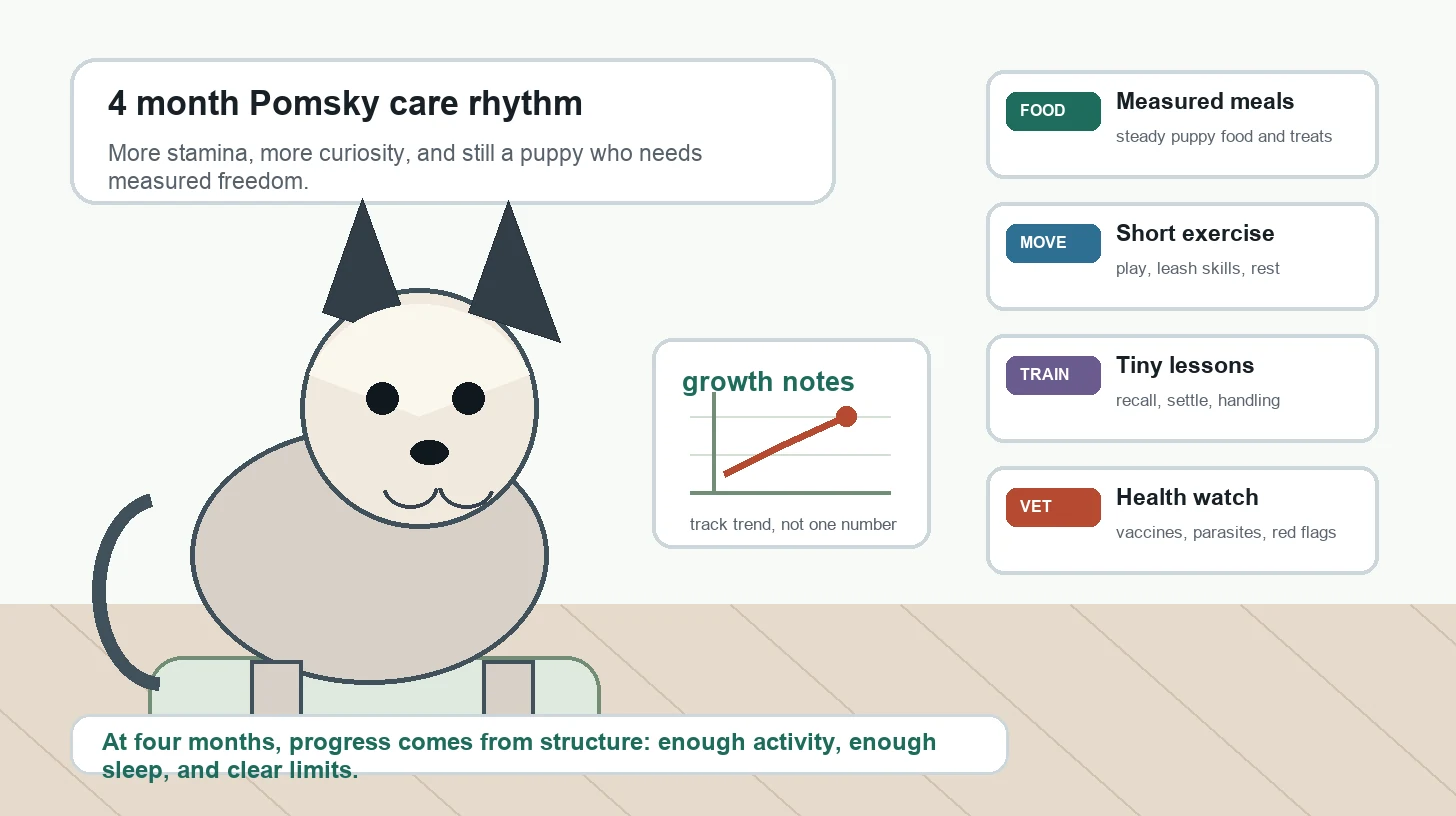
Quick answer: a 4-month-old Pomsky puppy needs measured meals, steady growth tracking, a still-structured potty plan, plenty of sleep, short reward-based training, controlled exercise, safe socialization, regular grooming handling, teething-safe chewing, and veterinarian-guided vaccine, parasite, diet, and illness decisions. This is a more capable puppy, not a small adult dog.
Four months is a useful checkpoint. Your Pomsky may have more stamina, a stronger voice, more confidence around the home, and more interest in the outside world. That progress can feel exciting, but it can also create new problems if freedom expands faster than the puppy's judgment. The best plan is to give more structure, not less.
4 Month Old Pomsky at a Glance
Self-contained answer: a 4-month-old Pomsky is usually in a busy growth and learning phase. Expect more energy, stronger chewing, improving bladder control, better response to simple cues, ongoing social learning, and a continued need for naps, supervision, and veterinarian-guided health care.
| Area | What often changes | Owner priority |
| Growth | The puppy may look lankier, heavier, or fluffier from week to week. | Track trend, body condition, appetite, and energy. |
| Food | Training rewards can quietly add up. | Measure meals and count treats as part of the day. |
| Potty | Progress is real, but mistakes can still happen. | Keep transition potty trips and limit unsupervised freedom. |
| Sleep | More stamina can hide tiredness until behavior falls apart. | Use rest before biting, barking, or zooming escalates. |
| Training | Simple cues can work in more places. | Add difficulty slowly: distance, distraction, or duration, not all at once. |
| Socialization | The puppy notices more of the world. | Use safe exposure, choice, and veterinary guidance. |
| Health | Vaccines, parasites, teething, stool, and appetite still matter. | Call a vet for red flags or sudden changes. |
Growth and Weight Expectations
There is no single correct weight for a 4-month-old Pomsky. Pomskies vary because they are a mixed breed, and adult size depends on parent size, sex, build, nutrition, and health. A small Pomsky and a larger Pomsky can both be normal if they are growing steadily and your veterinarian is satisfied with body condition.
Use a simple growth log instead of comparing your puppy to a random online number. Record weight, body condition, appetite, stool quality, energy, and any sudden changes. If your puppy is losing weight, refusing food, growing extremely fast or slowly, limping, or looking potbellied with poor condition, ask your veterinarian rather than changing food on your own.
Body Condition Beats Guessing
For a 4-month Pomsky, body condition is often more useful than a single scale number. You should be able to discuss ribs, waist, appetite, muscle, coat, stool, and energy with your veterinarian. A fluffy coat can hide both extra weight and poor condition, so do not rely only on appearance from across the room.
Use the same scale and the same time of day when weighing at home. A trend is easier to interpret than one isolated number. If the trend changes suddenly, pair the weight note with what changed that week: new food, more treats, parasites, illness, more activity, stress, visitors, or a missed meal.
Feeding at Four Months
A 4-month-old Pomsky should usually stay on a complete puppy food unless your veterinarian recommends a change. Keep meals measured, keep water available, and treat training rewards as part of the day's intake. Too many rich treats can change stool, reduce appetite for balanced meals, or make it harder to judge whether the main diet is working.
If you need help choosing food, use the Pomsky puppy food guide as a starting point and bring questions to your veterinarian. Avoid abrupt diet changes unless a veterinarian directs them. When you do transition food, do it gradually when the puppy is otherwise healthy.
Potty Training Is Improving, Not Finished
At four months, many puppies can hold it longer than they could at 10 or 12 weeks, but that does not mean they are reliable everywhere. New rooms, play, visitors, excitement, long naps, and water after activity can still create accidents. A puppy who succeeds in one room may fail in another room because the environment feels new.
Keep the core routine from the Pomsky potty training guide: out after waking, meals, drinking, active play, training, crate time, and before bed. If accidents return, shrink freedom and rebuild success rather than assuming the puppy is being stubborn.
Sleep and Recovery
Four-month-old Pomskies often look more durable than they are. They may run harder, bark louder, chew longer, and still need protected sleep. Overtired puppies often bite, jump, ignore cues, grab the leash, or race around the house. That behavior may look like bad manners, but it often means the puppy needs rest.
Use a crate, pen, quiet room, or mat after active play and training. The Pomsky crate size guide can help with setup, but the emotional pattern matters too: calm entry, safe chew, predictable exits, and no dramatic releases when barking starts.
Exercise Without Overdoing It
A 4-month-old Pomsky needs activity, but forced long-distance exercise is not the goal. Use short play periods, sniffing, leash skills, easy recall games, gentle tug with rules, and short outings that end before the puppy is frantic or sore. Several smaller activity blocks are usually better than one exhausting session.
Watch the recovery after exercise. A good session leaves the puppy able to drink, chew, nap, and respond again later. If your puppy becomes wild, limps, refuses to move, pants unusually, or cannot settle, reduce intensity and ask your veterinarian if symptoms concern you.
Training Goals at Four Months
Training at four months should still be short and reward-based. Good goals include name response, check-ins, recall from short distances, sit, down, touch, loose leash beginnings, polite greetings, crate entry, settle on a mat, handling, and calm recovery after excitement. These are more valuable than long obedience drills.
Use the 13-week training and socialization guide and 3-month Pomsky behavior guide for the previous stage. At four months, you can ask for a little more difficulty, but only one variable at a time. Change distance, distraction, duration, or location, not all four.
Leash Skills and Outdoor Manners
Leash work should still start with comfort. Reward the puppy for checking in, following, turning, and walking with a loose leash for a few steps. Practice in easy places before busier spaces. If the puppy bites the leash, grabs pants, or launches forward, lower the excitement and shorten the session.
Outdoor exposure should follow your veterinarian's vaccine and parasite guidance. Some puppies can do more public walking at this age, while others still need controlled locations. Avoid unknown dog traffic if your veterinarian has not cleared it.
Socialization and Confidence
Socialization is not forced greeting. A 4-month-old Pomsky benefits from seeing people, surfaces, vehicles, sounds, calm dogs, and everyday movement from a distance where the puppy can still eat, think, and recover. The AVMA and AVSAB socialization guidance supports careful exposure, but safety and veterinary risk guidance still matter.
If your puppy freezes, hides, refuses food, barks sharply, or tries to escape, increase distance. Reward looking and recovering. Confidence grows when the puppy learns that new things are predictable and optional enough to process.
Teething, Chewing, and Biting
Four months can be a chewy stage. Puppy teeth and adult teeth may be shifting, and chewing can become stronger. Keep safe chew options in the places where biting usually happens: near the couch, by the leash, beside the crate, and in the room where visitors arrive. Redirect early instead of waiting until the puppy is frantic.
Do not turn biting into a wrestling match. Make hands boring, offer a legal chew, reduce movement, and add a rest break if the puppy cannot calm down. If biting is sudden, extreme, paired with pain, or very different from normal, consider a health check.
Grooming and Coat Handling
A Pomsky coat needs calm handling practice before grooming becomes difficult. Touch ears, paws, tail, chest, and legs briefly, then reward. Brush one small section and stop. Pair nail handling with food. A puppy who can cooperate for short grooming moments will be easier to care for as the coat changes.
For supplies and grooming tools, use the Pomsky supplies checklist and grooming hub. Keep sessions gentle. If the puppy bites the brush or panics, shorten the session and make the next attempt easier.
Health Checks and Vet Boundaries
Four months is still a health-monitoring stage. Vaccination schedules, parasite prevention, dental changes, appetite, stool, skin, ears, energy, and movement all deserve attention. Your veterinarian is the right source for vaccine timing, deworming, flea and tick prevention, diet changes, and symptoms that may need urgent care.
Call a veterinarian promptly for vomiting, diarrhea, blood in stool or urine, refusal to eat, severe lethargy, collapse, coughing, trouble breathing, painful movement, repeated straining, swelling, suspected toxin exposure, or sudden behavior change. This page is educational and does not replace veterinary care.
Sample 4-Month Daily Flow
Use this as a flexible pattern. Wake, potty, breakfast, potty again, short training, chew, nap. Later, use leash comfort, supervised play, potty, calm handling, and another rest. Add one safe social exposure or short outing if your veterinarian says the setting is appropriate. End the day with a final potty trip, quiet chew, and a predictable sleep routine.
The exact times matter less than the order. A predictable flow helps your puppy understand what happens next. It also makes it easier to notice when appetite, stool, energy, or behavior changes.
When to Give More Freedom
Give more house freedom only when your puppy is succeeding with potty, chewing, and settling in the current space. Add one room or one short period at a time. If accidents, chewing, barking, or wild behavior return, reduce the area and rebuild. Freedom is earned by patterns, not by age alone.
Use gates, leashes, crates, pens, and closed doors as management tools. Management is not failure. It prevents the puppy from practicing habits that are hard to undo later.
If Progress Suddenly Slips
Four-month puppies can regress for ordinary reasons: teething discomfort, a growth spurt, a busy weekend, visitors, a food change, too much freedom, skipped naps, or a new outdoor distraction. First return to the last version of the routine that worked. Shorten training, add potty trips, lower exercise intensity, and restore predictable rest.
If the slip is sharp or paired with physical symptoms, treat it differently. A puppy who suddenly hides, growls when touched, refuses food, vomits, has diarrhea, limps, coughs, strains, or acts unusually dull may need veterinary help, not more training. Behavior and health are connected at this age.
What Not to Change All at Once
Do not change food, treat type, crate location, walk length, training difficulty, social exposure, and house freedom in the same week. If stool, sleep, appetite, or behavior changes afterward, you will not know what caused it. Change one variable, watch for a few days, and keep notes.
This conservative approach is especially useful for small or sensitive puppies. It keeps the advice practical and cautious instead of promising fast fixes that may not match your puppy's health, temperament, or environment.
When the Routine Is Working
The routine is working when your Pomsky eats steadily, has predictable potty progress, settles after activity, recovers from new sights and sounds, accepts brief handling, and can respond to simple cues in easy places. You should also see fewer accidents, less frantic biting, and a clearer pattern of rest after play.
That does not mean the puppy is finished. It means the current level of freedom and challenge is appropriate. Keep building gradually so the next month starts from confidence instead of chaos.
Common Mistakes at Four Months
A common mistake is assuming progress means the routine can disappear. Another is adding longer walks, more visitors, new food, bigger spaces, and harder training all in the same week. If behavior gets worse, you will not know which change caused it.
Also avoid comparing your Pomsky to another puppy online. Size, coat, confidence, potty progress, and energy vary. Your best evidence is your own puppy's trend, your veterinarian's guidance, and whether the daily routine is producing calm, healthy progress.
Related Age Guides
For the previous steps in the age cluster, read the 13-week Pomsky care guide, 13-week training guide, 3-month Pomsky care guide, 3-month behavior guide, 12-week care guide, and 12-week basic training guide. For daily structure, use the Pomsky puppy schedule.
Owner Checklist
- Track weight trend, body condition, appetite, stool, energy, and behavior notes.
- Keep meals measured and count treats.
- Use potty trips after sleep, meals, drinking, play, crate time, visitors, and before bed.
- Practice training in one- to five-minute sessions.
- Use safe social exposure with veterinary guidance.
- Keep chews, crate or pen rest, and calm grooming handling in the daily routine.
- Use the training hub, health hub, and size and growth hub for related guides.
- Read the health disclaimer, affiliate disclosure, and editorial policy for site boundaries.
Sources
This guide uses conservative puppy training, socialization, teething, vaccination, and routine health references. It is educational, not veterinary advice.
- AKC - Puppy training timeline
- AKC - Puppy teething and nipping
- AKC - Puppy shots complete guide
- VCA Animal Hospitals - Puppy behavior and training basics
- VCA Animal Hospitals - Puppy vaccinations
- AVMA - Socialization of dogs and cats
- AVSAB - Puppy socialization position statement
- Merck Veterinary Manual - Routine health care of dogs
Evidence and related Pomsky guides
These sources support only their stated claim scopes; they do not guarantee an individual Pomsky outcome.
Sources reviewed for this page
- American Veterinary Society of Animal Behavior: Puppy Socialization Position Statement
- World Small Animal Veterinary Association: Global Nutrition Guidelines
- American Animal Hospital Association: AAHA-AVMA Canine Preventive Healthcare Guidelines