
Quick answer: A new Pomsky puppy's first week should prioritize safety, sleep, a predictable toilet and meal routine, gentle handling, veterinary planning, and short reward-based learning. The goal is secure adjustment, not rapid exposure or perfect behavior.
\n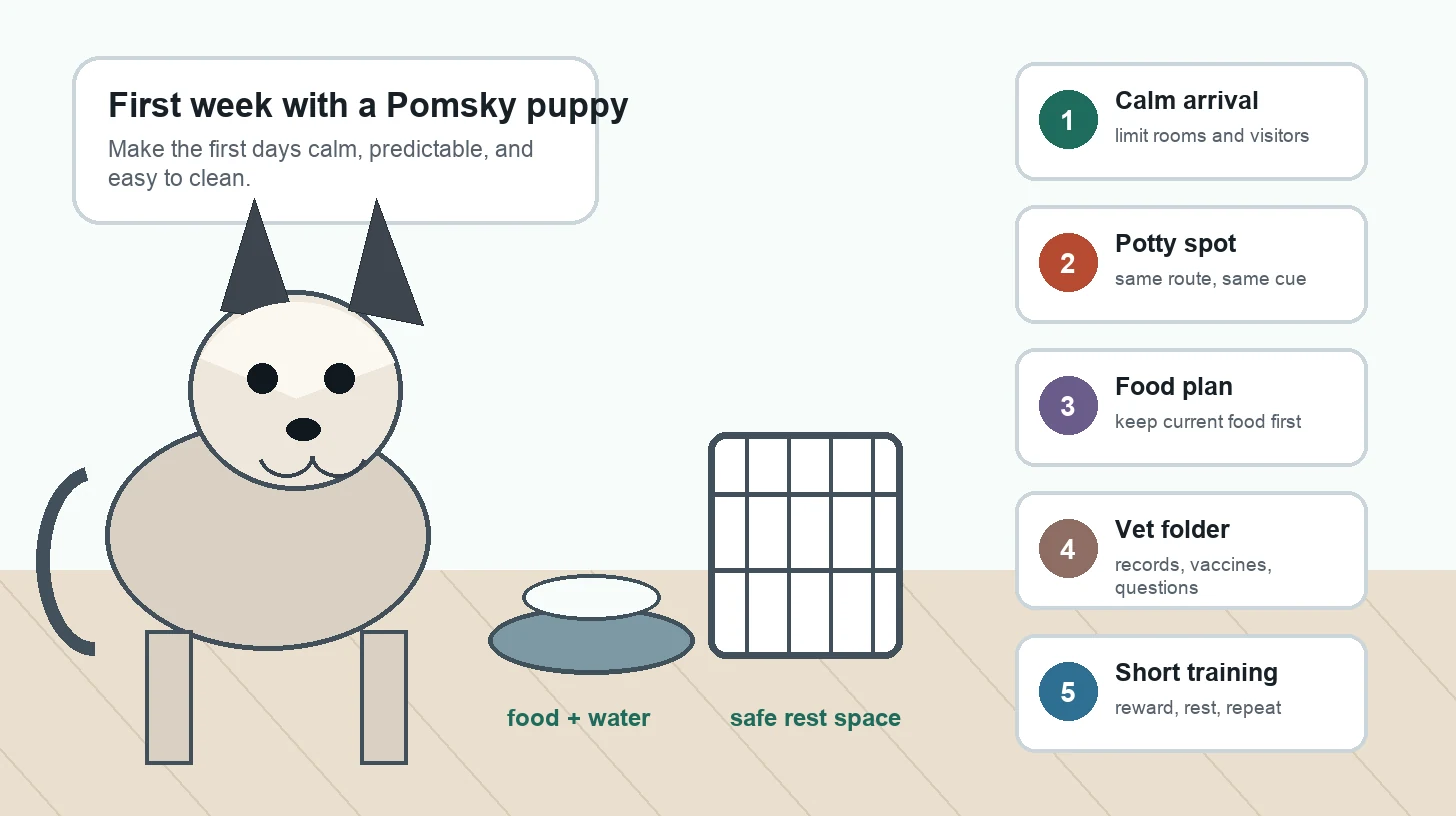
Written and reviewed by A Pomsky Editorial Team. Published 2026-06-18; last reviewed July 25, 2026.
This guide is educational and not veterinary advice. Use your veterinarian for diet, vaccine, parasite-prevention, illness, behavior, and emergency decisions. See the health disclaimer, affiliate disclosure, and editorial policy.
Quick answer: the first week with a Pomsky puppy should be calm, structured, and easy to repeat. Set up a small safe area, use the same potty spot, keep the current food at first, schedule a veterinary visit, start short reward-based training, brush gently, and protect sleep.
A Pomsky puppy is not just a smaller adult dog. The mix can inherit a thick coat, a lively voice, sharp curiosity, quick learning, and a size range that is hard to predict from a photo. The best first-week plan is simple: reduce stress, prevent unsafe roaming, avoid sudden food changes, and build routines before bad habits become normal.
New Pomsky Puppy Care Plan: First 24 Hours and First Week
| Timeframe | What matters most | Owner action |
| Before pickup | Safety and supplies | Puppy-proof one room, set up crate or pen, buy current food, bowls, leash, ID, cleaner, brush, and records folder. |
| First hour | Calm arrival | Go to the potty spot first, then introduce only the safe area. Avoid a crowd of visitors. |
| First night | Sleep and reassurance | Use a crate or pen close enough to hear the puppy, keep lights low, and expect potty trips. |
| Days 2 to 3 | Routine | Repeat meals, potty trips, rest, short play, and one or two tiny training sessions. |
| Days 4 to 7 | Confidence | Add gentle brushing, short handling practice, controlled social exposure, and vet questions. |
Set Up a Small Puppy-Proofed Zone
Limit the first-day world. A puppy that can sprint through the whole house can also hide, chew cords, pee behind furniture, and become overwhelmed. Start with a kitchen, laundry room, play pen, or gated living area where you can supervise easily.
Remove electrical cords, small objects, medicines, toxic plants, pest-control products, shoes, loose socks, dangling curtains, and anything the puppy could swallow. The ASPCA recommends checking windows, screens, hidden spaces, cords, and poisonous items when pet-proofing a new home. That advice fits Pomsky puppies well because they are often quick, curious, and mouthy.
Build the First-Week Supply Kit
You do not need every cute product on the internet. You need the supplies that prevent chaos in the first week. Start with the basics from the Pomsky supplies checklist: a crate or pen, food and water bowls, current food, safe chew toys, leash and ID, cleanup supplies, washable bedding, and grooming basics.
- Crate or pen: choose a safe rest space before the puppy arrives.
- Current food: keep the diet familiar while the puppy adjusts.
- Enzyme cleaner: clean accidents so odor does not train the wrong spot.
- Brush and comb: begin gentle handling before the coat is tangled.
- Records folder: keep vaccination, deworming, microchip, breeder, shelter, or rescue paperwork together.
First 24 Hours: Keep Arrival Boring on Purpose
The first day is not the time for a party. Take the puppy straight to the chosen potty spot, reward success, then enter the prepared safe area. Let the puppy sniff and settle without every family member crowding around at once.
AKC first-day guidance emphasizes limiting access, choosing a potty area, introducing family calmly, and minimizing excitement. That structure matters for a Pomsky because the breed mix can become stimulated quickly. A calm first day helps the puppy learn where to rest, where to potty, and which humans are predictable.
Feeding Your Pomsky Puppy Without Upsetting the Stomach
For the first several days, feed the same food the puppy was already eating unless a veterinarian gives different instructions. Sudden diet changes can make the first week harder because digestive upset can look like potty-training failure, stress, or illness.
Measure meals instead of free-pouring. Keep fresh water available, wash bowls daily, and use small pieces of food or tiny treats for training. If you want to change foods later, see the Pomsky puppy food guide and ask your veterinarian how to transition gradually.
Potty Training From Day One
Pick one potty location and use the same route as often as possible. Take the puppy out after waking, eating, drinking, playing, and before crate or bedtime. Use a simple cue such as "go potty," then reward immediately after the puppy finishes.
Accidents will happen. Do not turn them into drama. Interrupt gently if you catch the puppy in the act, go outside, then clean the indoor spot with an enzyme cleaner. If the puppy is having frequent accidents, diarrhea, straining, blood in stool or urine, or sudden lethargy, treat that as a veterinary issue rather than a training issue.
Crate, Pen, and Sleep Routine
A crate or pen is not a storage box for the puppy. It is a rest area that keeps the puppy safe when you cannot supervise. The space should allow standing, turning, and lying down comfortably. For a growing Pomsky, an adjustable crate with a divider is often more practical than guessing the final adult size.
Keep first-night expectations realistic. Many puppies wake, whine, and need a potty trip. Keep the routine quiet: out to potty, praise if successful, then back to the rest area. Avoid turning every wake-up into playtime. For sizing details, use the Pomsky crate size guide.
Training: Five-Minute Sessions Beat Long Lessons
Pomsky puppies often learn quickly, but that does not mean they can concentrate for long. Use tiny sessions built into normal life: say the name, reward eye contact, lure a sit before meals, reward calm crate entry, and praise quiet behavior before barking becomes a habit.
Keep the family consistent. Decide the words for sit, down, crate, come, and potty. Decide whether furniture is allowed before the puppy learns two different rule systems. The AVMA notes that basic commands can be incorporated into activities that build obedience and trust. For Pomskies, that means training should feel like daily rhythm, not a once-a-week lecture.
Safe Socialization Without Ignoring Vaccine Status
A Pomsky puppy needs positive exposure to normal life: sounds, surfaces, gentle handling, visitors, carriers, grooming tools, car rides, and calm observation of the world. Socialization does not require handing the puppy to every stranger or letting the puppy meet unknown dogs.
Until your veterinarian confirms the right vaccine and parasite-prevention plan, avoid high-risk dog traffic areas and unknown dogs. Safer first-week exposure can include sitting in the car, hearing household appliances at low intensity, meeting one calm visitor, walking on different indoor surfaces, and practicing handling with treats.
Grooming Starts Before the Coat Looks Bad
Do not wait for mats. Pomsky coats can tangle behind the ears, under the collar, near the armpits, behind the legs, and around the tail base. Begin with short, gentle sessions: touch ears, lift paws, brush lightly, offer treats, and stop before the puppy fights the process.
Use a soft slicker brush and metal comb as starter tools. Dog-safe shampoo is useful, but most puppies do not need frequent baths. For coat-specific details, see the Pomsky brush guide and Pomsky shampoo guide.
Vet Visit, Records, and Warning Signs
Schedule a new-puppy veterinary visit soon after arrival. Bring the records folder, food label or photo, parasite-prevention history, vaccine dates, deworming information, microchip details, and questions about diet, growth, socialization, grooming, and spay or neuter timing.
Contact a veterinarian promptly if your puppy has repeated vomiting, diarrhea, refusal to eat, collapse, breathing trouble, pale gums, severe coughing, persistent pain, swollen belly, blood in stool or urine, seizures, or sudden extreme lethargy. This page is educational and not a substitute for veterinary care. Keep the health disclaimer in mind for any health decision.
Pomsky Puppy Energy: Play, Rest, Repeat
A first-week puppy does not need long forced exercise. Short play, potty walks, training rewards, chew time, and naps are enough. Too much excitement can create biting, barking, overtired zooming, and rough play.
Use a simple loop: potty, short play or training, food or water when scheduled, chew or calm handling, then rest. If the puppy cannot settle, reduce stimulation and return to the safe zone. Pomskies can be lively, but puppies still grow during sleep.
What to Avoid During the First Week
| Avoid | Why | Better choice |
| Big welcome parties | Too much excitement can overwhelm a new puppy. | Meet family members calmly and one at a time. |
| Sudden diet changes | Digestive upset can complicate potty training and health monitoring. | Keep current food, then transition with veterinary guidance. |
| Unsupervised house access | Puppies chew, hide, and practice accidents. | Use a pen, gate, crate, or leash supervision. |
| Unknown dog meetups | Vaccine status and temperament are uncertain. | Ask your veterinarian about safe socialization options. |
| Long forced exercise | Overtired puppies can bite, bark, and struggle to settle. | Use short play, training, and frequent rest. |
First-Week Schedule Example
This is a framework, not a strict medical schedule. Adjust for age, health, and veterinary advice.
| Morning | Potty trip, breakfast, water, quiet handling, short training, rest. |
| Midday | Potty, play, chew toy, supervised exploration of one safe area, nap. |
| Afternoon | Potty, meal if age-appropriate, gentle brushing, name response, rest. |
| Evening | Potty, calm play, final meal if scheduled, family rules, crate wind-down. |
| Night | Last potty trip, quiet rest, overnight potty trips only as needed. |
Frequently Asked Questions
What should I do first when bringing home a Pomsky puppy?
Go to the potty spot first, reward success, then settle the puppy in one prepared safe area. Offer water, keep activity calm, and avoid inviting visitors over on day one.
How should I feed a new Pomsky puppy during the first week?
Use the current food at first, measure meals, and keep fresh water available. If you need to change food, do it gradually with veterinary guidance rather than switching suddenly.
How often should I take a Pomsky puppy outside to potty?
Take the puppy out after waking, eating, drinking, playing, and before crate or bedtime. Young puppies need frequent opportunities, especially during the first days in a new home.
When should a new Pomsky puppy see a veterinarian?
Schedule a new-puppy exam soon after arrival. Bring records and ask about vaccines, parasite prevention, diet, growth, socialization safety, and warning signs.
How much exercise does a Pomsky puppy need in the first week?
Use short play and training sessions instead of long forced exercise. Frequent naps are normal and useful. If the puppy becomes mouthy, frantic, or unable to settle, reduce stimulation.
Related Pomsky Guides
- Pomsky supplies checklist
- Pomsky crate size guide
- Pomsky puppy food guide
- Pomsky shampoo guide
- Pomsky brush guide
- Affiliate disclosure
- Editorial policy
- Health disclaimer
Sources Reviewed
- AKC - Your first day at home with a new puppy
- AKC - New puppy checklist
- AKC - Preparing for a new puppy
- ASPCA - General dog care
- ASPCA - Moving with your pet
- AVMA - Selecting a pet dog
- AVMA - Dog bite prevention
- Merck Veterinary Manual - Routine health care of dogs
Evidence and related Pomsky guides
These sources support only their stated claim scopes; they do not guarantee an individual Pomsky outcome.
Sources reviewed for this page
- American Veterinary Society of Animal Behavior: Puppy Socialization Position Statement
- World Small Animal Veterinary Association: Global Nutrition Guidelines
- American Animal Hospital Association: AAHA-AVMA Canine Preventive Healthcare Guidelines