
Quick answer: At roughly 8 to 12 weeks, a Pomsky puppy needs frequent sleep and toilet opportunities, several age-appropriate meals, safe socialization, gentle reward-based training, and prompt veterinary planning. Development varies, so weight and vaccine decisions should not be copied from another puppy.
Written and reviewed by A Pomsky Editorial Team. Published 2026-06-18; last reviewed July 25, 2026.
This guide is educational and not veterinary advice. Use your veterinarian for vaccines, parasite prevention, illness, diet, behavior, and emergency decisions. See the health disclaimer, affiliate disclosure, and editorial policy.
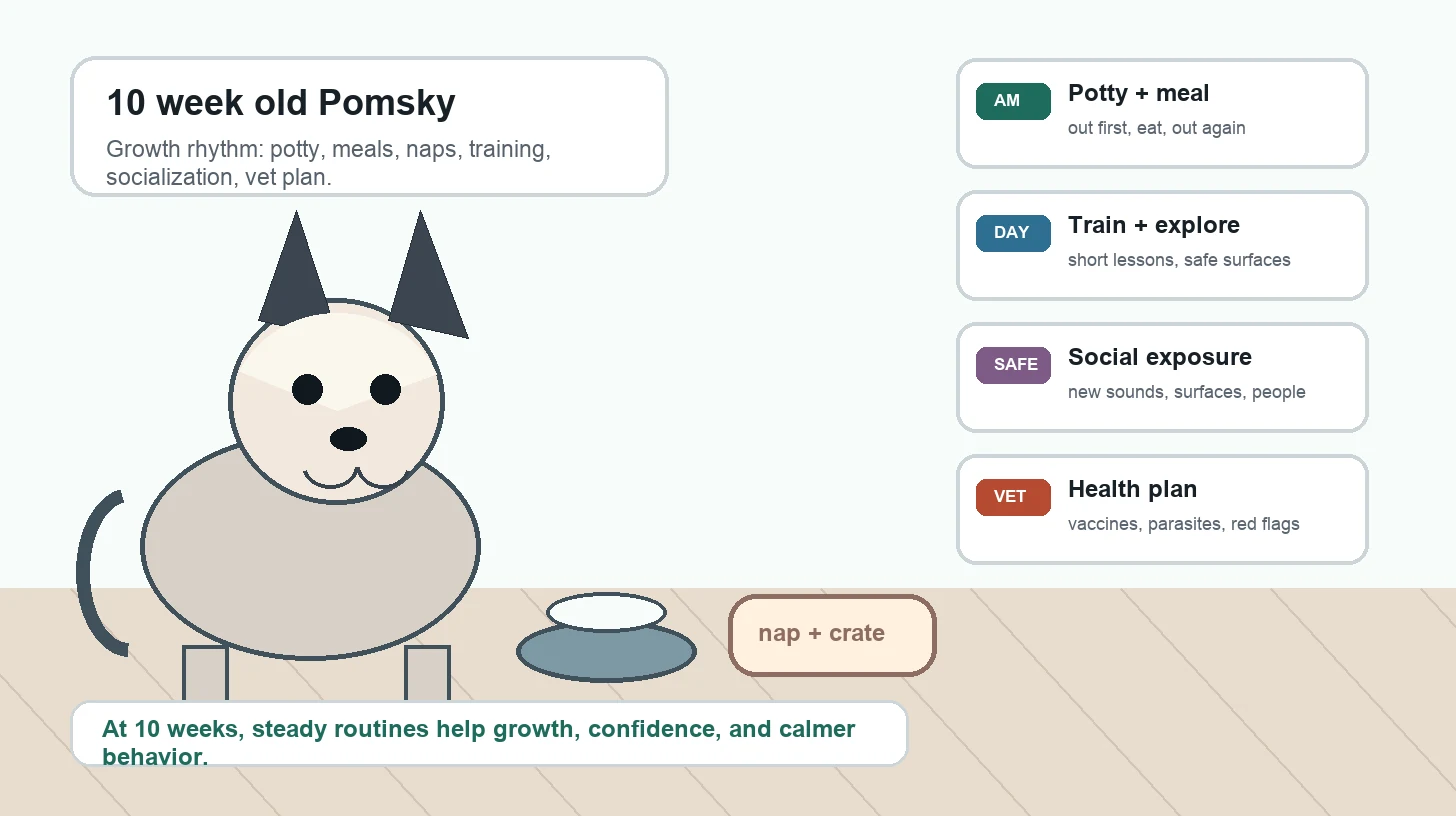
Quick answer: a 10-week-old Pomsky is still a very young puppy, but you should start seeing clearer routines: more predictable potty triggers, short bursts of training focus, stronger chewing needs, longer calm naps, and growing confidence in safe social situations. Keep the day structured around meals, potty breaks, sleep, training, grooming practice, and your veterinarian's vaccine and parasite-prevention plan.
Ten weeks is a bridge between the first chaotic days at home and a more repeatable puppy routine. Your Pomsky may look more confident than a younger puppy, but bladder control, impulse control, sleep habits, bite inhibition, and social confidence are still developing. Because Pomskies can be alert, vocal, and quick to become overstimulated, a simple routine prevents many problems before they become habits.
10 Week Old Pomsky Care at a Glance
Self-contained answer: supervise closely, keep the puppy in a small safe area, repeat the same daily rhythm, track growth and stool changes, reward good choices, and use your veterinarian for health decisions.
| Care area | What to do | Why it matters |
| Potty | Go out after sleep, food, water, play, training, crate time, and before bed. | Young puppies need predictable opportunities before they wander into accidents. |
| Feeding | Keep puppy food, portions, and timing consistent unless your veterinarian changes the plan. | Sudden food changes can make stool and potty timing harder to read. |
| Growth | Watch appetite, body condition, energy, stool quality, and whether weight gain seems steady. | Pomsky puppies vary widely by parent size, so trends matter more than generic charts. |
| Sleep | Use a crate or pen for frequent quiet naps. | Overtired puppies often bite, bark, dig, or zoom instead of resting. |
| Training | Use short reward-based lessons for name, sit, crate, touch, handling, and leash following. | Small successes build focus without overwhelming the puppy. |
| Socialization | Choose safe exposure that matches your puppy's vaccine status and local risk. | Early experiences matter, but disease prevention still belongs in the plan. |
| Health | Confirm vaccines, deworming, parasite prevention, weight, appetite, and red flags with your vet. | At 10 weeks, small problems can become urgent quickly. |
Growth and Appearance at 10 Weeks
A 10-week-old Pomsky can still look round, fluffy, and babyish. Ear carriage, coat texture, mask markings, and color contrast may continue to change as the puppy grows. Do not judge adult size from one week of photos or one online chart. Parent size, litter variation, sex, nutrition, and health all affect growth.
Instead of chasing a perfect number, track trends: appetite, stool quality, energy after meals, steady weight gain, body condition, and whether the puppy is bright and responsive. Ask your veterinarian whether your puppy is growing appropriately. If your Pomsky suddenly stops eating, loses weight, has repeated diarrhea, or seems weak, treat that as a health concern, not a normal growth stage.
Behavior You May See This Week
At 10 weeks, many puppies test their mouth, voice, and feet. You may see more chewing, short zooming bursts, attention-seeking barking, tugging on clothes, or frustration when the puppy is tired. This does not mean the puppy is dominant or bad. It usually means the routine needs clearer supervision, more legal chew options, shorter lessons, and better nap timing.
Reward calm choices early. If the puppy sits, looks at you, chooses a toy, enters the crate, follows the leash indoors, or settles for a few seconds, mark and reward that behavior. Pomskies often learn fast, but fast learners can also learn noisy or pushy habits if those behaviors get attention.
Before You Give More Freedom
A 10-week-old Pomsky should not have full access to the house. Use a crate, exercise pen, baby gate, leash tether, or one puppy-proofed room. The puppy can earn more space after several accident-free days, calmer chewing, better sleep, and reliable response to supervision.
Free-roaming too early causes most problems owners blame on stubbornness: hidden potty accidents, stolen socks, chewing furniture, barking at windows, and overstimulated zooming. Keep freedom small and successful. For your first-week setup, use the new Pomsky puppy care guide.
Daily Schedule for a 10 Week Old Pomsky
The exact clock can change, but the order should stay familiar: wake, potty, meal or water, potty again, short activity, chew or handling, nap. Repeat this cycle through the day and make bedtime boring and predictable.
A useful default is to take the puppy out immediately after waking, after each meal, after drinking, after play, after training, after crate time, and before sleep. If accidents happen, do not wait for a longer interval to prove itself. Shorten the schedule and reduce the area. Use the Pomsky puppy daily schedule for a full routine template.
Feeding and Water
At 10 weeks, keep food changes conservative. Feed a puppy-appropriate diet the puppy already tolerates unless your veterinarian tells you to transition. Measure meals, watch stool quality, and keep fresh water available. If you change food, transition gradually unless your veterinarian gives different instructions.
Do not use online charts as a substitute for body-condition advice. Pomskies vary by parent size, growth pattern, and activity level. Ask your veterinarian about portion changes, appetite concerns, vomiting, diarrhea, and whether your puppy's growth is on track. For deeper food details, use the Pomsky puppy food guide.
Potty Training Priorities
Potty training at 10 weeks is about prevention. Carry or guide the puppy to the same potty area, reward immediately after success, and return indoors calmly. If you wait until the puppy is sniffing and circling, you are already late.
Accidents mean the system needs adjustment, not punishment. Clean the area thoroughly, tighten supervision, and make the next success easy. For the complete housebreaking plan, use the Pomsky puppy potty training guide.
Sleep, Crate, and Pen Time
Puppies need much more rest than they appear to want. A 10-week-old Pomsky may play hard for a short period and then become wild, mouthy, or noisy because the puppy is tired. Put naps in the routine before the behavior falls apart.
The crate or pen should feel like a safe rest zone, not a punishment. Pair it with calm rewards, a safe chew, and short successful sessions. Make sure the crate fits the puppy's current size and does not encourage potty accidents at one end. For sizing, use the Pomsky crate size guide.
Training Skills to Start Now
VCA training guidance supports short, consistent, reward-based learning. At 10 weeks, train in tiny moments: name response, sit, hand target, come from a few steps away, crate entry, collar handling, paw touch, gentle brushing, and leash following indoors.
Stop while the puppy is still succeeding. Long lessons create biting, frustration, and avoidance. A few minutes before meals or naps is enough. Use training to build communication, not to demand adult obedience from a baby puppy.
Safe Socialization
Socialization is not a random dog park visit. It is planned exposure to normal life while protecting the puppy from avoidable disease and overwhelming experiences. Ask your veterinarian what is safe for your puppy's vaccine status, local parvovirus risk, parasite risk, and household needs.
Low-risk socialization can happen at home: different floor textures, gentle handling, household sounds, a calm visitor, car practice while parked, a carrier or crate, grooming tools, a leash, and watching the world from a safe place. End exposure while the puppy is curious or calm, not when the puppy is frightened.
Grooming and Handling
Pomsky coat care starts early. Use short sessions for brushing, combing easy areas, touching paws, lifting ears, checking teeth, and putting on a collar or harness. Reward calm behavior and stop before the puppy turns the session into a wrestling match.
At this age, grooming practice is more important than a perfect groom. Build trust so future brushing, nail care, ear checks, and vet exams are easier. For a supply list, use the Pomsky supplies checklist.
Vet Care and Vaccines
A 10-week-old puppy is usually in the middle of a veterinary plan, not finished with it. Your veterinarian should set the vaccine schedule, deworming plan, parasite prevention, diet advice, weight checks, and local disease-risk guidance. AVMA vaccination guidance emphasizes that vaccine decisions should be made with a veterinarian based on risk.
Bring records from the breeder, rescue, or previous owner. Ask which vaccines have already been given, when the next visit is due, what stool or parasite checks are needed, and what environments to avoid until your veterinarian says your puppy is protected enough.
Warning Signs That Need a Vet Call
Call your veterinarian promptly if your Pomsky has vomiting, diarrhea, blood in stool or urine, repeated straining, painful urination, refusal to eat, severe lethargy, collapse, coughing, trouble breathing, pale gums, a swollen belly, repeated crying, or any sudden behavior change that concerns you.
Do not try to solve a sick 10-week-old puppy with internet advice alone. Small puppies can become dehydrated or unstable faster than adult dogs. This guide is educational and not veterinary advice; see the health disclaimer.
Common Mistakes at 10 Weeks
| Mistake | What happens | Better choice |
| Too much freedom | Hidden accidents, chewing, and unsafe exploration. | Use gates, pen, crate, or leash supervision. |
| Too much play | Mouthing, zooming, barking, and poor focus. | Add a potty break and nap sooner. |
| Random meals | Unpredictable stool and potty windows. | Keep feeding steady and log changes. |
| Unsafe social exposure | Disease risk or fear from overwhelming situations. | Ask your vet and choose controlled exposure. |
| Long training sessions | Frustration, biting, and avoidance. | Use brief reward-based repetitions. |
Simple Owner Checklist
- Small supervised area is ready.
- Crate or pen is paired with calm rewards.
- Potty schedule is written down.
- Puppy food, water, and stool changes are tracked.
- Vet appointment, vaccine records, and parasite plan are confirmed.
- Training is short and reward-based.
- Socialization is safe, gentle, and matched to vaccine status.
- Grooming and handling practice happen in tiny sessions.
Adjusting the Routine for Real Homes
The best 10-week-old Pomsky routine is the one your household can repeat. Apartment owners may need more planned leash trips, elevator timing, and a backup cleanup plan. Families with children should assign one adult to supervise potty timing during meals, school pickup, and bedtime. Work-from-home owners should still schedule crate or pen naps so the puppy does not expect constant attention.
If you leave the house for work, arrange age-appropriate midday care instead of expecting a young puppy to wait too long. If weather is extreme, make potty trips short and practical, then return to a warm or cool indoor rest area. Keep the sequence familiar even when the clock changes: potty, food or water, potty again, short activity, calm rest.
What Not to Worry About Too Soon
At 10 weeks, do not expect perfect leash walking, all-night independence, adult bladder control, reliable recall, or a finished grooming routine. Focus on patterns: the puppy learns that humans are predictable, potty happens outside, the crate is safe, hands are gentle, food and water have a rhythm, and calm behavior earns rewards.
Progress may look uneven. A puppy can have several good days and then regress after visitors, a vet visit, a diet change, bad weather, or a missed nap. When that happens, return to smaller space, more frequent potty breaks, shorter lessons, and more protected sleep for a few days.
Frequently Asked Questions
What should a 10-week-old Pomsky be doing each day?
A 10-week-old Pomsky should follow a predictable routine of potty breaks, puppy meals, short play, short training, safe socialization, grooming practice, and frequent naps. The goal is supervised structure, not long exercise or adult-dog freedom.
How often should a 10-week-old Pomsky go potty?
Use potty breaks after waking, eating, drinking, playing, training, crate time, and before bedtime. If accidents happen, shorten the interval and reduce indoor freedom until the pattern improves.
Can a 10-week-old Pomsky meet other dogs?
Ask your veterinarian what is safe for your puppy's vaccine status and local disease risk. Many socialization experiences can be low-risk, such as meeting calm people, hearing household sounds, handling practice, and exploring clean surfaces at home.
How much training should a 10-week-old Pomsky do?
Keep training short and frequent. Practice one or two simple skills for a few minutes, reward success, then end before the puppy becomes tired or frustrated.
When should I call a veterinarian for a 10-week-old Pomsky?
Call a veterinarian promptly for vomiting, diarrhea, blood in stool or urine, painful urination, repeated straining, refusal to eat, severe lethargy, collapse, coughing, trouble breathing, or any sudden behavior change that worries you.
Related Pomsky Guides
- New Pomsky puppy care guide
- Pomsky puppy daily schedule
- Pomsky puppy potty training guide
- Pomsky puppy food guide
- Pomsky crate size guide
- Pomsky supplies checklist
- Pomsky training topic hub
- Affiliate disclosure
- Editorial policy
- Health disclaimer
Sources Reviewed
- AKC - Setting schedules and developing a routine for your new puppy
- AKC - Your first day at home with a new puppy
- AKC - Puppy shots complete guide
- VCA Animal Hospitals - Puppy behavior and training basics
- VCA Animal Hospitals - Puppy vaccinations
- AVMA - Socialization of dogs and cats
- AVSAB - Puppy socialization position statement
- Merck Veterinary Manual - Routine health care of dogs
- AVMA - Vaccinations
Evidence and related Pomsky guides
These sources support only their stated claim scopes; they do not guarantee an individual Pomsky outcome.
Sources reviewed for this page
- American Veterinary Society of Animal Behavior: Puppy Socialization Position Statement
- World Small Animal Veterinary Association: Global Nutrition Guidelines
- American Animal Hospital Association: AAHA-AVMA Canine Preventive Healthcare Guidelines