
Last updated: June 18, 2026
This guide is educational and not veterinary advice. Use your veterinarian for vaccines, parasite prevention, illness, diet, behavior, and emergency decisions. See the health disclaimer, affiliate disclosure, and editorial policy.
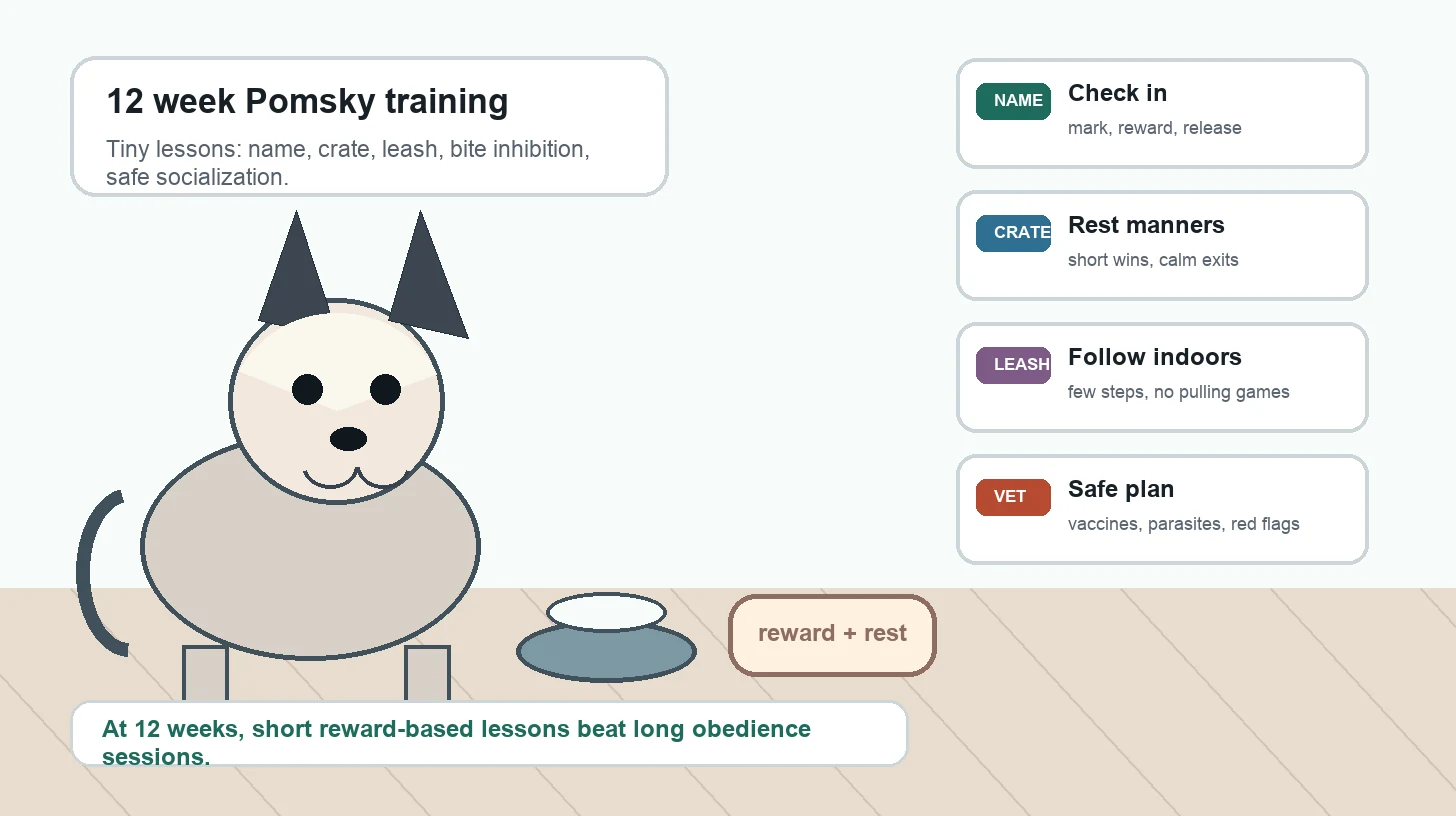
Quick answer: a 12-week-old Pomsky should train in short, reward-based sessions focused on name response, sit, touch, come from a few steps away, crate or pen manners, calm handling, early leash following, and bite inhibition. Keep lessons one to three minutes, stop before frustration, and protect naps so training does not turn into barking or biting.
Twelve weeks is not the age for strict adult obedience. It is the age for clean habits. A Pomsky puppy may be more confident than it was at 9, 10, or 11 weeks, but impulse control is still immature. The goal is to make the right choice obvious, reward it quickly, and prevent the puppy from practicing the wrong pattern.
12 Week Old Pomsky Training at a Glance
Self-contained answer: train a 12-week-old Pomsky with very short sessions, high-value rewards, small spaces, frequent naps, and simple cues. Prioritize response to name, calm crate entry, gentle mouth habits, potty timing, leash following indoors, and safe social exposure approved by your veterinarian.
| Skill | What to practice | Success sign |
| Name response | Say the name once, mark eye contact, reward, and release. | The puppy turns toward you before you repeat yourself. |
| Sit or touch | Use one easy cue at a time and reward quickly. | The puppy offers the behavior without jumping or grabbing. |
| Crate or pen manners | Reward entering, settling, and calm exits. | The puppy can enter and pause without panic or a wrestling match. |
| Leash starts | Reward a few steps beside you indoors or in a clean secure area. | The puppy follows food, voice, and movement instead of fighting the leash. |
| Bite inhibition | Redirect to a toy or chew, pause play when teeth hit skin or clothes. | The puppy starts choosing toys sooner. |
| Handling | Touch paws, ears, collar, harness, brush, and mouth briefly. | The puppy accepts touch for a moment and returns to a reward. |
| Socialization | Use safe sights, sounds, surfaces, handling, and calm people. | The puppy stays curious or recovers quickly after a surprise. |
What Makes 12 Weeks Different?
At 12 weeks, many Pomsky puppies have more stamina, more teeth-on-everything behavior, and a stronger opinion about confinement. That does not mean the puppy is stubborn. It usually means the plan needs shorter sessions, better timing, more legal chewing, and a clearer nap routine.
Your puppy may look ready for more freedom, but freedom should be earned in small pieces. If accidents, barking, sock stealing, or furniture chewing increase, the training plan is too loose. Return to a smaller area, more supervision, and clearer transitions from play to potty to rest.
Before You Train: Set the Room Up
A good training setup prevents half the problems. Use a small puppy-proofed room, a crate or pen, a leash if needed, a few soft rewards, a legal chew, and one clear exit to the potty area. Remove loose shoes, cords, socks, and anything that turns the session into a chase game.
Train before the puppy is frantic, not after. A puppy that is hungry, overtired, or overdue for a potty break will look like it is refusing training. Start after a potty break and end with water, a chew, or a nap.
How Long Should Training Sessions Be?
Most 12-week-old Pomsky sessions should last one to three minutes. Two or three clear repetitions are better than fifteen sloppy ones. End while the puppy is still engaged, then release the puppy to sniff, chew, potty, or rest.
Pomskies can learn quickly, but speed is not the same as maturity. If the puppy starts biting hands, barking, zooming, grabbing clothes, or ignoring food, stop the session. Those signs usually mean the puppy needs a reset, not a firmer command.
Training Schedule for the Day
Use training as tiny moments inside the daily rhythm. After waking, go potty. After potty, do one minute of name response or touch. After a meal, go potty again, then practice crate entry or calm handling before a nap. After the nap, repeat the pattern.
The Pomsky puppy daily schedule can carry the clock, but training should remain brief. A realistic day may include five to eight tiny lessons rather than one formal class. That is enough for a young puppy.
Name Response and Check-In
Name response is the foundation of recall, leash work, and interruption. Say the puppy's name once. When the puppy turns, mark the moment with a short word such as "yes," reward, and release. Do not repeat the name until it becomes background noise.
Practice name response in easy places first: beside the crate, in the kitchen, near the pen, and in a quiet hallway. Add distance only after the puppy can win several times in a row.
Sit, Touch, and Come From a Few Steps Away
At this age, choose simple cues that create useful habits. Sit helps with greetings and impulse control. Touch teaches the puppy to move toward your hand. Come from a few steps away starts recall without turning it into a chase.
Keep cues clean. Say the cue once, help the puppy succeed, reward immediately, and then release. If the puppy does not understand, make the setup easier instead of repeating the cue louder.
Crate and Pen Manners
The crate or pen should become a rest station, not a place the puppy only enters when everyone is frustrated. Reward the puppy for walking in, turning around, eating a treat, settling briefly, and exiting calmly. Keep early wins short.
If the crate is too large, too isolated, or only used after chaotic play, the puppy may resist it. For sizing and setup, use the Pomsky crate size guide. Pair crate work with the new Pomsky puppy care guide if your household routine still feels messy.
Leash Training Starts Indoors
A 12-week-old Pomsky can start leash skills indoors or in a clean secure area. Clip the leash on, reward the puppy for standing calmly, take two or three steps, reward again, and release before the leash becomes a tug toy.
Do not start with long walks, busy sidewalks, dog parks, or pulling contests. Ask your veterinarian which outdoor areas are safe for your puppy's vaccine status and local disease risk. Early leash work is about comfort and following, not mileage.
Bite Inhibition and Chewing
At 12 weeks, mouthiness is normal but still needs structure. Keep legal chew options nearby. When teeth touch skin or clothes, pause the game, offer a toy, and reward the puppy for choosing the toy. Rough hand games make this harder.
If biting rises suddenly, check the basics: has the puppy pottied, eaten, slept, and had a legal chew? Many biting problems are overtired-puppy problems. Add a nap before adding more commands.
Potty Training Still Comes First
Training sessions should not compete with potty needs. Take the puppy out after waking, eating, drinking, playing, training, crate time, and before bed. If the puppy has accidents after lessons, the lesson may be running too long or starting too late.
Use the Pomsky puppy potty training guide to tighten timing. Clean accidents thoroughly and reduce freedom rather than punishing the puppy after the fact.
Safe Socialization While Training
Socialization is not the same as uncontrolled dog contact. AVMA and AVSAB guidance supports early social learning, but your veterinarian should guide disease-risk decisions for your area and your puppy's vaccine status.
Safe training exposures can include household sounds, different floor textures, a calm visitor, a parked car, a carrier, grooming tools, leash pressure, and watching the world from a safe place. End exposure while the puppy is still calm or curious.
Feeding, Rewards, and Body Condition
Use small rewards and count them as part of the day. If training treats cause loose stool or reduce meal appetite, use part of the puppy's regular food or ask your veterinarian about safer options. A puppy that feels unwell will not train well.
For diet and growth questions, use the Pomsky puppy food guide and your veterinarian. Do not let training treats replace balanced puppy nutrition.
Grooming and Handling as Training
Handling is training. Touch one paw, reward. Lift an ear, reward. Brush one easy area, reward. Touch the collar or harness, reward. Stop before the puppy bites the brush or turns the session into wrestling.
This practice prepares your Pomsky for grooming, nail care, harnessing, and veterinary exams. For equipment planning, use the Pomsky supplies checklist.
Training Mistakes to Avoid
| Mistake | Why it backfires | Better choice |
| Long sessions | The puppy becomes mouthy, tired, or avoidant. | Use one to three minute lessons. |
| Repeating cues | The puppy learns that the first word does not matter. | Say it once and make the setup easier. |
| Training after wild play | The puppy is already overstimulated. | Train after potty and before hard play. |
| Too much freedom | Accidents and chewing become rehearsed habits. | Use gates, pen, crate, or leash supervision. |
| Unsafe social exposure | Disease risk or fear can outweigh learning. | Use veterinarian-guided, controlled exposure. |
Vet and Health Boundaries
A 12-week-old puppy is still in a veterinary plan. Confirm vaccine timing, deworming, parasite prevention, diet, safe outdoor exposure, and any unusual behavior with your veterinarian. Training should pause when health is questionable.
Call a veterinarian promptly for vomiting, diarrhea, blood in stool or urine, painful movement, repeated straining, refusal to eat, severe lethargy, collapse, coughing, trouble breathing, or sudden behavior change. This guide is educational and not veterinary advice; see the health disclaimer.
Simple 12 Week Training Checklist
- One small training space is puppy-proofed.
- Rewards are ready before the puppy becomes overexcited.
- Name response is practiced in easy places.
- Sit, touch, and short recall are kept simple.
- Crate and pen work include calm exits, not only entries.
- Leash work starts indoors or in a clean secure area.
- Chewing has legal outlets before biting starts.
- Safe socialization follows veterinary guidance.
- Training stops before frustration and is followed by potty, water, chew, or nap.
How This Connects to the Earlier Puppy Weeks
If your puppy is new to the household, first stabilize the basics from the 10 week old Pomsky guide and the 11 week old Pomsky guide. Training is easier when the puppy already has a potty rhythm, sleep rhythm, and safe space.
If your puppy has been home for several weeks, use this page to sharpen the routine. The next goal is not a perfect trick list. It is a puppy that can look at you, recover from excitement, settle in a safe place, accept gentle handling, and learn without fear.
Frequently Asked Questions
What should a 12-week-old Pomsky learn first?
A 12-week-old Pomsky should first learn name response, calm handling, crate or pen entry, potty routine, gentle mouth habits, short leash following, and one or two simple cues such as sit or touch. The goal is communication and prevention, not adult obedience.
How long should training sessions be for a 12-week-old Pomsky?
Most 12-week-old Pomsky training sessions should last one to three minutes. A few short sessions across the day usually work better than one long session because puppies lose focus quickly and become mouthy or frustrated when overtired.
How do I stop a 12-week-old Pomsky from biting?
Redirect biting to legal chew toys, pause play when teeth touch skin or clothes, and reward calm toy choice. Avoid rough hand games that teach the puppy to chase fingers. If biting rises suddenly, add a potty break or nap.
Can a 12-week-old Pomsky start leash training?
Yes, a 12-week-old Pomsky can start leash training in safe, low-distraction places. Begin indoors or in a clean secure area with a few rewarded steps beside you. Avoid long walks, pulling contests, or unsafe public areas until your veterinarian clears them.
When should training wait for a veterinarian?
Pause training and call a veterinarian if your puppy has vomiting, diarrhea, blood in stool or urine, painful movement, repeated straining, refusal to eat, severe lethargy, collapse, coughing, trouble breathing, or a sudden behavior change that worries you.
Related Pomsky Guides
- 10 week old Pomsky puppy care guide
- 11 week old Pomsky puppy care guide
- New Pomsky puppy care guide
- Pomsky puppy daily schedule
- Pomsky puppy potty training guide
- Pomsky puppy food guide
- Pomsky crate size guide
- Pomsky supplies checklist
- Pomsky training topic hub
- Affiliate disclosure
- Editorial policy
- Health disclaimer
Sources Reviewed
- AKC - Puppy training timeline
- AKC - Teach your puppy basic commands
- AKC - How to stop puppy biting
- VCA Animal Hospitals - Puppy behavior and training basics
- VCA Animal Hospitals - Puppy vaccinations
- AVMA - Socialization of dogs and cats
- AVSAB - Puppy socialization position statement
- Merck Veterinary Manual - Routine health care of dogs