
Quick answer: Choose Pomsky food by confirming nutritional adequacy for the dog's life stage, evaluating the manufacturer's expertise and quality controls, and matching the diet to individual health needs. Ingredient-list marketing and breed imagery are not reliable quality tests.
Written and reviewed by A Pomsky Editorial Team. Published 2026-06-18; last reviewed July 25, 2026.
This nutrition guide is informational and is not a substitute for veterinary advice. Medical diets, weight-loss plans, puppy growth concerns, allergies, and chronic digestive signs should be handled with a veterinarian. See the health disclaimer.
Quick answer: the best dog food for a healthy Pomsky is a complete and balanced dog food labeled for the dog's current life stage. Start with the label's feeding guide, measure the food, watch body condition, and ask a veterinarian before using raw, homemade, weight-loss, allergy, or prescription diets.
Pomskies vary more than many new owners expect. Some look like small fluffy companion dogs, while others inherit more Husky-like energy, appetite, and coat density. That makes a single brand list less useful than a reliable selection method. A good Pomsky diet should match species, life stage, calories, body condition, activity, digestion, and any medical restrictions.
Best Dog Food for Pomskies: The Short Standard
Choose food that says it is complete and balanced for dogs, not just treats or supplemental feeding. The life-stage statement matters: puppies need growth nutrition, adults usually need adult maintenance, and pregnant or nursing dogs have different needs.
| Pomsky situation | Better starting point | Watch closely for |
| Puppy | Complete and balanced food for growth or all life stages | Steady growth, stool quality, appetite, and vet growth checks |
| Healthy adult | Adult maintenance dog food with calories listed per cup or can | Weight gain, weight loss, itchiness, vomiting, or loose stools |
| Very active adult | Adult food adjusted by measured calories and activity | Overfeeding on rest days or underfeeding during heavy activity |
| Less active or overweight | Measured portions, treat control, and veterinarian weight plan | Crash dieting, hunger, or weight loss without a plan |
| Sensitive stomach or skin | Consistent diet and vet-guided ingredient or therapeutic trial | Switching foods too often without a clear reason |
How to Read a Dog Food Label
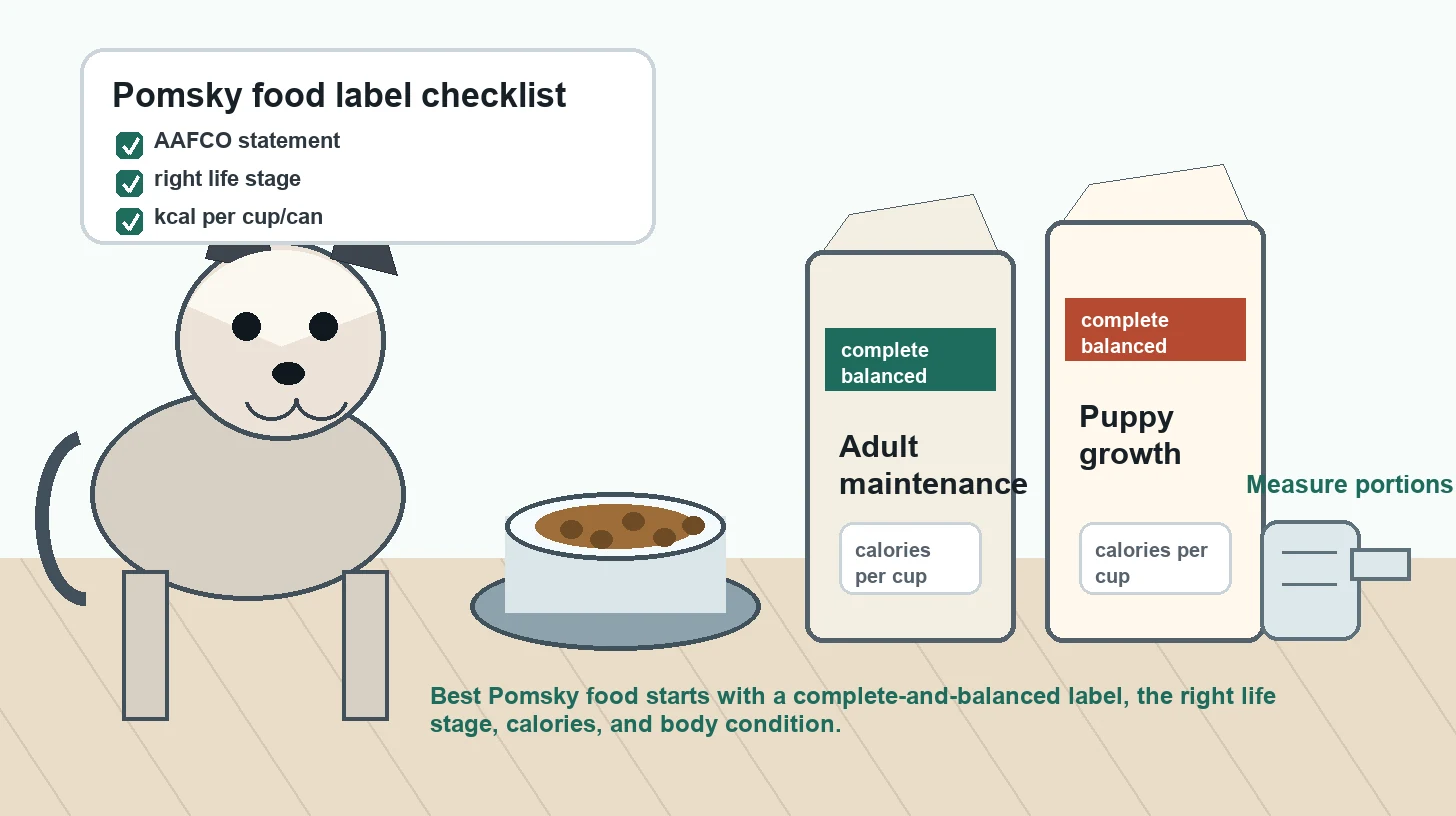
The label is more important than the front-of-bag marketing. FDA and AAFCO guidance both point owners toward the nutritional adequacy statement, life stage, feeding directions, and calorie information rather than a simple ingredient-list judgment.
- Find the nutritional adequacy statement: look for wording that the food is complete and balanced for dogs and a named life stage.
- Match the life stage: growth, adult maintenance, gestation/lactation, or all life stages should fit your Pomsky.
- Check calories: find kcal per cup, can, pouch, or kilogram so portions can be measured.
- Read feeding directions: use them as a starting point, then adjust based on weight trend and body condition.
- Separate food from treats: treats and supplements are not a complete daily diet unless the label says otherwise.
- Save the manufacturer contact: useful if you need nutrient details, batch information, or quality-control answers.
Dry Food vs Wet Food vs Fresh Food for Pomskies
No format is automatically best. Dry, wet, and commercial fresh-cooked foods can all work if they are complete and balanced for the correct life stage. Compare formats by calories, moisture, storage, cost, stool quality, and how consistently your Pomsky eats measured portions.
| Food type | Potential advantage | Main caution |
| Dry kibble | Easy to measure, store, and use for training portions | Calorie density can lead to overfeeding if scoops are not measured |
| Wet food | Higher moisture and often strong palatability | Can be more expensive and harder to compare without dry-matter context |
| Commercial fresh-cooked | May suit dogs that dislike kibble texture | Must still be complete and balanced, not just human-style ingredients |
| Homemade cooked | Can be tailored under veterinary nutrition guidance | High risk of imbalance if not formulated by a qualified professional |
| Raw or freeze-dried raw | Some owners prefer the format | Foodborne bacteria risks for dogs and people handling the food |
Should Pomskies Eat Grain-Free Food?
Grain-free food is not automatically better for Pomskies. If your dog has no diagnosed grain problem, judge the food by nutritional adequacy, life stage, calories, digestibility, quality control, and veterinary guidance. Many dogs tolerate grains well, and changing food based only on marketing can make digestion harder to interpret.
If you suspect a food allergy or intolerance, avoid guessing from the ingredient list alone. Skin signs, ear issues, vomiting, and diarrhea can have many causes. A veterinarian can help decide whether a structured diet trial or therapeutic food is appropriate.
How Much Food Should a Pomsky Eat?
Start with the feeding directions on the package, then adjust. The right amount depends on current weight, expected adult size, activity, age, neuter status, treats, and body condition. A Pomsky that gains weight on the suggested amount needs less food or fewer treats; one losing weight unexpectedly needs veterinary attention.
- Use a measuring cup or kitchen scale instead of a loose scoop.
- Split meals if your dog eats too fast or does better on routine.
- Count treats, chews, toppers, and table scraps as calories.
- Check weight trend every 2 to 4 weeks during diet changes.
- Keep fresh water available unless your veterinarian says otherwise.
Puppy Food vs Adult Food
A Pomsky puppy generally needs a diet labeled for growth or all life stages. Adult maintenance food may not match a growing puppy's nutrient needs. Once growth slows and your veterinarian says the puppy is ready, transition gradually to adult maintenance food.
| Life stage | Label to look for | Practical note |
| Young puppy | Growth or all life stages | Feed measured meals and track growth at vet visits |
| Adolescent Pomsky | Growth/all life stages until switch is appropriate | Needs change as final size and activity become clearer |
| Adult Pomsky | Adult maintenance | Adjust by body condition and calories, not just cup volume |
| Senior Pomsky | Adult maintenance or vet-recommended senior plan | Ask about weight, muscle condition, dental comfort, and medical issues |
When to Ask a Veterinarian Before Changing Food
Do not rely on a web article for medical diet decisions. Ask a veterinarian before major diet changes if your Pomsky is a puppy with poor growth, pregnant or nursing, overweight, underweight, vomiting, having chronic diarrhea, very itchy, losing hair, drinking or urinating more, or taking medication.
Prescription diets, elimination diets, and homemade therapeutic diets should be handled with veterinary guidance. The goal is to solve the real problem without creating a nutritional imbalance.
Safe Food Transition Plan
Most healthy dogs do best with a gradual food transition. A slow change gives the digestive system time to adjust and helps you identify whether the new food agrees with your dog.
- Days 1 to 2: feed mostly the old food with a small amount of new food.
- Days 3 to 4: move toward an even mix if stool and appetite are normal.
- Days 5 to 6: feed mostly the new food.
- Day 7 and after: use the new food only if your dog is doing well.
Slow down the transition if stools soften. Stop and ask a veterinarian if vomiting, repeated diarrhea, refusal to eat, or signs of illness appear.
Best Food Buying Checklist
- Dog food, not cat food or generic pet food.
- Complete and balanced nutritional adequacy statement.
- Life stage matches your Pomsky: growth, adult maintenance, or all life stages.
- Calories listed per familiar measure such as cup, can, or pouch.
- Feeding directions that can be converted into measured portions.
- Manufacturer contact details and a clear product lot or date code.
- No exaggerated promise that one food fixes every coat, allergy, behavior, or weight issue.
Future Product Picks and Affiliate Safety
This page is intentionally category-first, not a paid product roundup. Future Amazon or CPS modules can be added after product-vetting, price checks, disclosure placement, and affiliate click tracking are ready. Any future links should prioritize complete-and-balanced labels, life-stage fit, calories, and availability over commission rate.
Frequently Asked Questions
What is the best dog food for a Pomsky?
The best dog food for a healthy Pomsky is a complete and balanced dog food labeled for the dog's current life stage. For most adults, that means adult maintenance food with clear calories and feeding directions. Puppies need growth or all-life-stages nutrition unless a veterinarian advises otherwise.
Should a Pomsky puppy eat puppy food?
Yes, a Pomsky puppy should generally eat food labeled for growth or all life stages. Puppy growth is not the time to guess with adult maintenance food, homemade diets, or heavy treat feeding. Ask your veterinarian when to switch to adult food.
Is grain-free food best for Pomskies?
Grain-free food is not automatically best. A food's nutritional adequacy statement, life stage, calories, digestibility, quality control, and your dog's health matter more than a grain-free claim on the front of the package.
How much should I feed my Pomsky?
Use the package feeding guide as the starting point, then adjust based on body condition, weight trend, activity, age, treats, and veterinary advice. Measure the food instead of estimating with an unmarked scoop.
Is wet food or dry food better for a Pomsky?
Either can work if it is complete and balanced for the right life stage. Dry food is often easier to measure and store, while wet food adds moisture and may be more appealing. Calories and portion control matter with both.
Is raw food safe for Pomskies?
Raw diets can expose dogs and people to foodborne bacteria. If you choose raw feeding, discuss it with a veterinarian and use strict handling, cleaning, and storage practices. Raw is not required for a healthy Pomsky diet.
Related Pomsky Nutrition Guides
- Pomsky nutrition and supplements hub
- Best dog food for Pomsky puppies
- Food guide for Pomskies
- Pomsky feeding chart
- Health disclaimer
- Affiliate disclosure
- Editorial policy
Sources Reviewed
- FDA - Complete and Balanced Pet Food
- AAFCO - Selecting the Right Pet Food
- WSAVA - Global Nutrition Guidelines
- Merck Veterinary Manual - Dog and Cat Foods
- FDA - Raw Pet Food Diets Can Be Dangerous
Evidence and related Pomsky guides
These sources support only their stated claim scopes; they do not guarantee an individual Pomsky outcome.
Sources reviewed for this page
- World Small Animal Veterinary Association: Selecting a Pet Food for Your Pet
- U.S. Food and Drug Administration: Complete and Balanced Pet Food
- U.S. Food and Drug Administration: Animal Food Labeling and Pet Food Claims