
Last updated: June 18, 2026
This grooming guide is informational and is not a substitute for veterinary or professional grooming advice. For painful mats, skin irritation, odor, or behavior changes during grooming, ask a veterinarian or qualified groomer. See the health disclaimer.
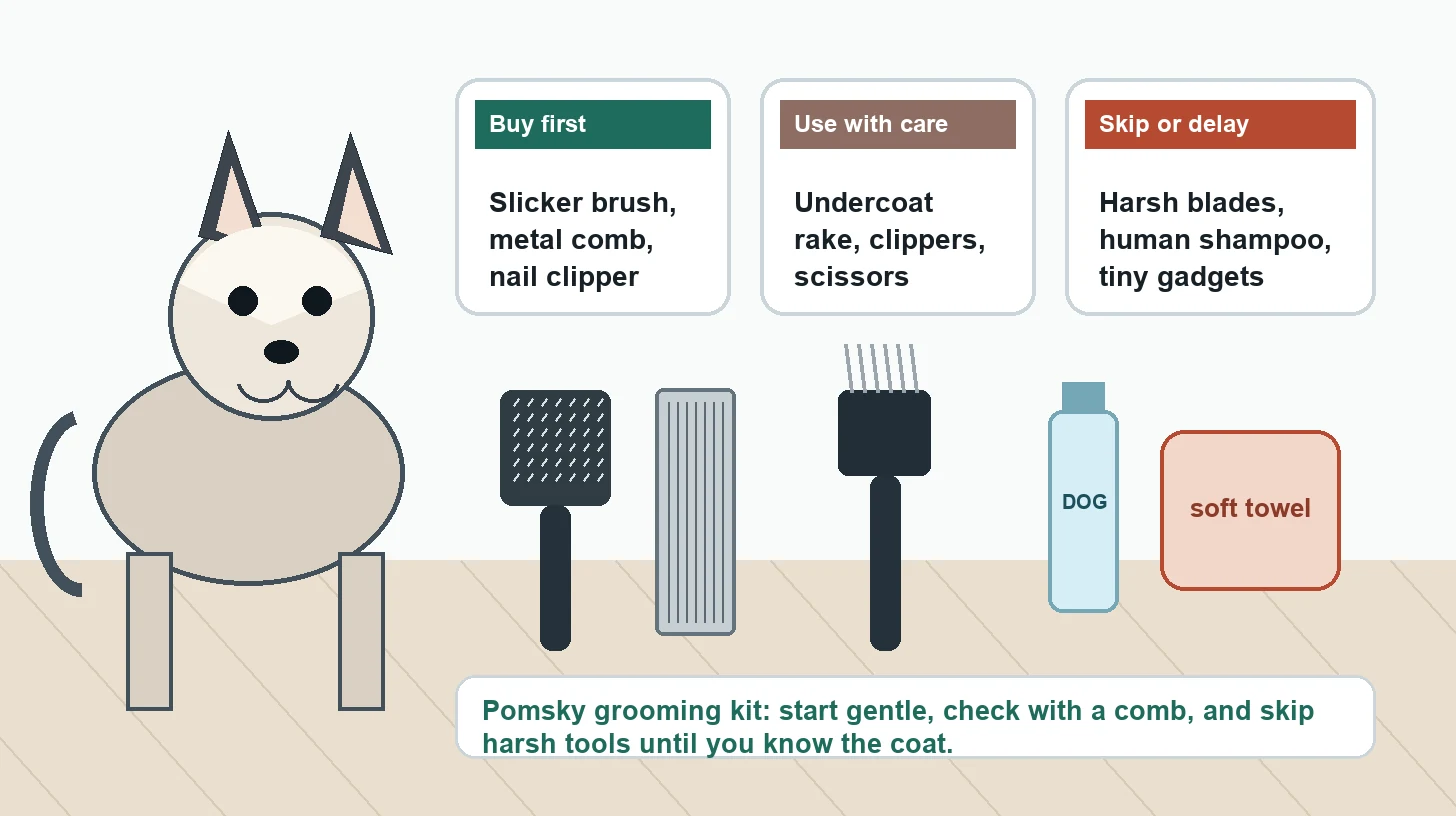
Quick answer: most Pomskies need a slicker brush, a metal comb, dog-safe shampoo, towels, nail care tools, and basic dental supplies. Add an undercoat rake only when the coat is shedding heavily. Skip harsh blades, human shampoo, oversized tools, and full-body clipping unless a professional has a clear reason.
Pomsky grooming gear can get expensive fast because many products sound essential. The better question is not "how many tools can I buy?" It is "which tool solves a real coat, skin, nail, or handling problem without adding risk?" This guide turns the old "useless equipment" topic into a practical buy, use-with-care, and skip checklist.
Pomsky Grooming Tools: Buy First
A simple Pomsky grooming kit should handle loose coat, hidden tangles, safe baths, nail care, and calm handling. Start with tools that you will use every week before buying specialty gadgets.
| Tool | Why it helps a Pomsky | Buying note |
| Gentle slicker brush | Loosens surface tangles and loose coat on fluffy areas | Choose flexible pins that do not scratch your wrist |
| Stainless steel comb | Checks whether the coat is brushed through to the skin | Use medium and wider spacing for different coat sections |
| Dog-safe shampoo | Cleans without using human products that can irritate skin | Choose a mild dog formula and rinse thoroughly |
| Microfiber towels | Dry the coat faster after baths or rain | Buy towels before buying blow-dryer accessories |
| Nail trimmer or grinder | Keeps nails short enough for comfortable movement | Pick the tool you can use calmly and safely |
| Dog toothbrush and toothpaste | Supports routine dental care | Use dog toothpaste, not human toothpaste |
Tools to Use With Care
Some grooming equipment is useful only when you understand the coat and your dog tolerates the process. These are not bad tools; they are tools that can cause problems when used too often, too firmly, or on the wrong area.
| Tool | Useful when | Risk if misused |
| Undercoat rake | The coat is packed with loose undercoat during seasonal shedding | Scraping skin, pulling coat, or over-thinning if used aggressively |
| Clippers | Paw-pad, sanitary, or medical work with training or professional help | Uneven coat, skin nicks, or unnecessary shaving |
| Grooming scissors | Small tidy-ups away from tight mats and sensitive skin | Cutting skin hidden inside mats or folds |
| High-velocity dryer | Drying a dense coat after a bath, if introduced gradually | Fear, noise stress, or overheating if used carelessly |
| Dematting tool | Minor tangles in skilled hands | Cutting coat or skin if used on tight mats |
Grooming Equipment to Skip or Delay
Skip tools that promise an instant fix for a Pomsky coat. Dense coats need patient brushing, correct bath products, drying, and mat prevention. A harsh tool can make the coat look better for one day while creating skin irritation or broken guard hairs.
- Human shampoo: use dog-safe shampoo because dog skin and coat care needs are different from human hair care.
- Harsh blade-style deshedding tools as a first brush: they can remove coat, but they are easier to overuse than a slicker and comb.
- Full-body clippers for routine grooming: shaving is not a normal shortcut for a healthy double coat.
- Dull household scissors: they can pull hair and cut skin, especially around mats.
- Oversized rakes: a huge rake may miss small areas and encourage too much pressure.
- Perfume sprays and heavy coat oils: they can hide odor instead of fixing the cause and may irritate sensitive skin.
- One-tool miracle kits: no single tool replaces brushing, comb checking, bathing, drying, nail care, and vet guidance.
Why Pomsky Coat Tools Matter
Many Pomskies have a fluffy coat with enough density to trap loose hair, moisture, and small tangles. A topcoat can look smooth while mats form behind the ears, under the collar, in the armpits, on the back legs, or near the tail base.
The clearest rule: the best Pomsky grooming tool is the one that reaches the problem without hurting the skin. A slicker brush helps loosen hair, a comb proves whether tangles remain, and a rake is a seasonal support tool for dense undercoat. Tools that scrape, cut, or hide odor should not be your first choice.
Best Starter Grooming Kit for a Pomsky Puppy
A puppy kit should make grooming calm and repeatable. You do not need a professional salon setup before your Pomsky comes home.
- Soft slicker brush: introduce it slowly with treats and short sessions.
- Small metal comb: use it after brushing to find hidden tangles.
- Puppy-safe dog shampoo: choose mild, dog-labeled shampoo and rinse until the coat is clean.
- Two or three absorbent towels: dense coats stay damp longer than they look.
- Nail care tool: pick a trimmer or grinder and learn where the quick is before cutting.
- Toothbrush and dog toothpaste: make mouth handling normal while your dog is young.
- Treats and a nonslip surface: handling skills matter as much as the tools.
Slicker Brush vs Comb vs Undercoat Rake
Use these tools together rather than treating them as substitutes. The slicker starts the job, the comb checks the job, and the rake is for heavy shedding areas when the coat allows it.
| Comparison | Slicker brush | Metal comb | Undercoat rake |
| Main job | Loose coat and light tangles | Checks for hidden tangles | Removes packed undercoat |
| Best frequency | Several times weekly | After each brushing section | Seasonal or heavy shedding only |
| Risk | Scratching if pressure is too firm | Pulling if forced through mats | Over-thinning or skin irritation |
| Best area | Body, sides, tail, legs | Behind ears, armpits, tail base, final check | Dense body coat during shedding |
Safe Brushing Routine
Safe grooming is a process, not just a product choice. Short sessions reduce stress and help you catch coat problems before they become painful.
- Put your Pomsky on a nonslip surface and reward calm standing or sitting.
- Brush one small section in the direction the coat grows.
- Use light pressure and stop if the dog flinches or guards the area.
- Lift the coat in layers so you do not brush only the top surface.
- Run a comb through the section; if it catches, return to gentle brushing.
- Check ears, collar area, armpits, belly, tail base, and back legs.
- End before your dog gets frustrated, especially with puppies.
When to Stop and Get Help
Stop grooming when the coat is tight, painful, damp under a mat, red, smelly, or impossible to comb without pulling. Do not keep working until the dog stops reacting. That can make future grooming harder and can hide real skin problems.
- The mat is tight against the skin.
- The area is red, hot, damp, crusted, or smells unusual.
- Your Pomsky growls, snaps, hides, or repeatedly turns to guard the spot.
- You cannot see where the skin begins under the mat.
- The coat problem covers a large area.
For these situations, book a professional groomer or veterinarian. Routine tools are for maintenance; painful mats and skin changes need skilled hands.
Pomsky Grooming Schedule
Frequency depends on coat type, age, activity, shedding season, and health. Use this as a starting point and adjust based on how quickly your Pomsky tangles.
| Task | Practical rhythm | What to watch |
| Brush and comb check | Several times per week; daily during heavy shedding | Hidden mats behind ears and under legs |
| Bath | As needed when dirty or smelly | Dry dense coat thoroughly after washing |
| Nails | Check weekly and trim as needed | Clicking nails, overgrown quicks, paw sensitivity |
| Teeth | Build a routine early | Use dog toothpaste and ask your vet about dental care |
| Ears and skin | Check during brushing | Redness, odor, discharge, or repeated scratching |
Buying Checklist
Before buying a Pomsky grooming product, ask whether it solves a real weekly need. A smaller, safer tool that you use often is better than a dramatic tool that sits unused or scares the dog.
- Does the tool match the coat area and dog size?
- Are the pins rounded, flexible, or gentle enough for skin?
- Can you clean and dry the tool easily?
- Does it replace a real need, or is it a duplicate?
- Can you use it with light pressure and good control?
- Would a groomer or veterinarian need to show you first?
- Is the claim realistic, or does it promise to solve every coat problem?
Frequently Asked Questions
What grooming tools does a Pomsky really need?
Most Pomskies need a gentle slicker brush, a stainless steel comb, dog-safe shampoo, absorbent towels, nail trimmers or a grinder, and dental supplies. Dense coats may also need a light undercoat rake during heavy shedding. Start with these basics before buying specialty tools.
What grooming tools should I avoid for a Pomsky?
Avoid harsh blade-style deshedding tools as a first brush, human shampoo, dull household scissors, oversized rakes, and full-body clippers used without a professional reason. These tools can irritate skin, break coat, cut skin, or make grooming stressful when used poorly.
Can I use a Furminator-style tool on a Pomsky?
Use Furminator-style tools cautiously. They may remove loose undercoat, but overuse can scrape skin or damage guard hairs. A slicker brush and comb should be your first routine tools; a light undercoat rake can help during shedding if it moves easily through the coat.
Do Pomskies need clippers?
Most Pomsky owners do not need clippers for routine full-body grooming. Clippers can help with paw-pad or sanitary work in trained hands, but shaving a dense coat should be discussed with a professional groomer or veterinarian, especially if the dog has mats or skin irritation.
How often should I brush a Pomsky?
A dense-coated Pomsky often needs brushing several times per week, and daily short sessions during heavy shedding. Use a comb after brushing to check hidden areas. If the comb catches repeatedly, work more gently or get professional help before mats tighten.
What is the best starter grooming kit for a Pomsky puppy?
A starter kit should include a soft slicker brush, small metal comb, puppy-safe dog shampoo, microfiber towels, a nail trimmer or grinder, dog toothbrush and toothpaste, and treats for handling practice. You can add specialty tools after you know the coat and your dog's tolerance.
Related Pomsky Grooming Guides
- Pomsky grooming hub
- Best brush for Pomskies
- Best shampoo for Pomskies
- What happens if you shave a Pomsky
- Pomsky coat types guide
- Health disclaimer
- Affiliate disclosure
- Editorial policy