
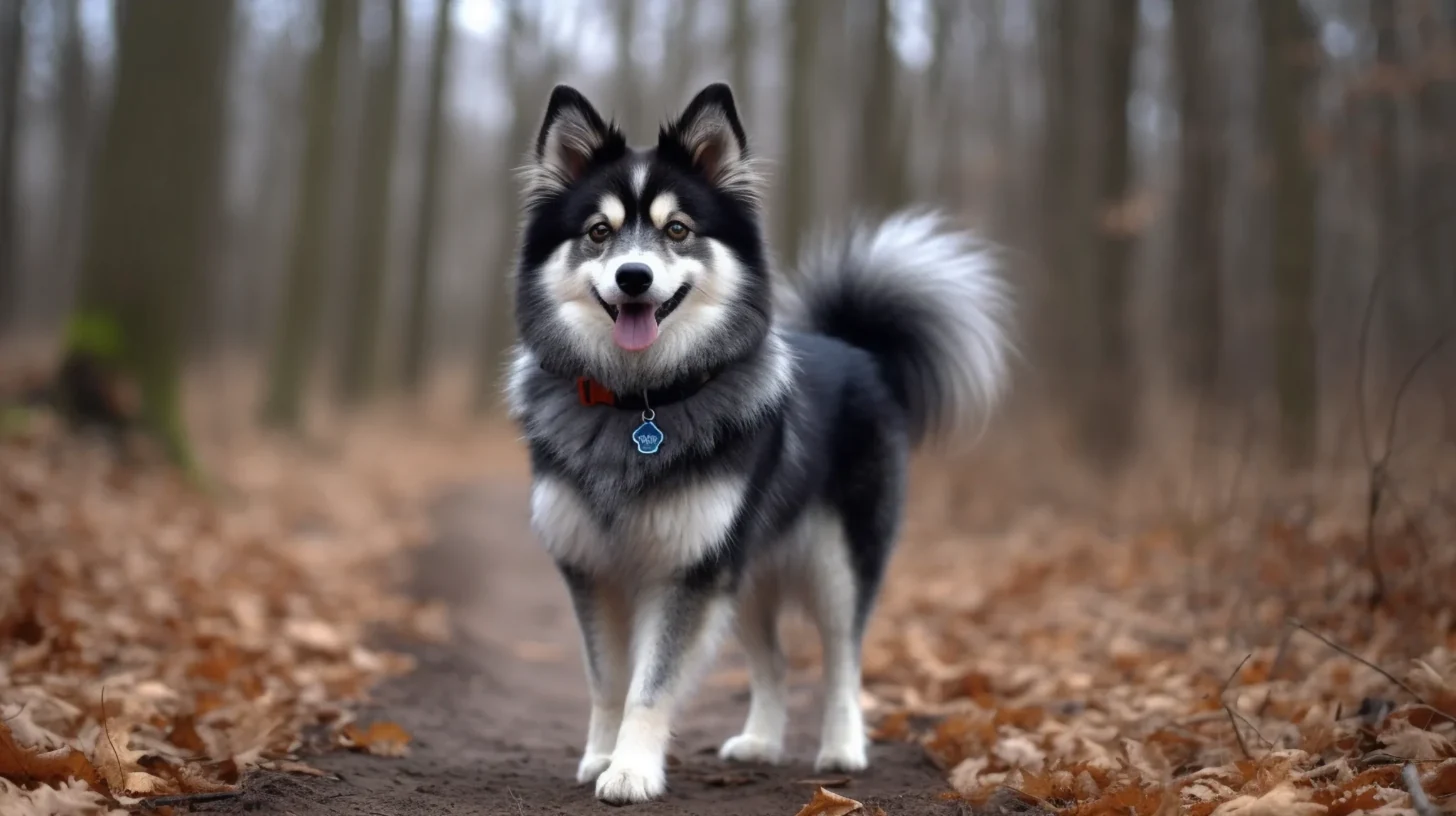
Last updated: June 19, 2026
This guide is educational only. It is not a puppy listing, breeder endorsement, veterinary diagnosis, or guarantee of adult size or temperament. See the health disclaimer, editorial policy, and affiliate disclosure.
Quick answer: "Siberian Husky Pomsky" usually means a Pomsky, a designer mix associated with Siberian Husky and Pomeranian ancestry. It is not a separate purebred dog, not a miniature Siberian Husky, and not proof that a puppy will stay tiny. Use the phrase as a starting point, then check parent records, adult-size expectations, temperament, exercise needs, and breeder transparency.
The old version of this page answered many questions but still left important gaps: it had placeholder media, weak schema, and did not clearly separate a Pomsky from a Siberian Husky, a mini Husky, or an Alaskan Klee Kai. This rewrite keeps the search intent while making the page more useful for owners, buyers, and AdSense-safe educational traffic.
Siberian Husky Pomsky at a Glance
| Search phrase | Safer interpretation | What to verify |
| Siberian Husky Pomsky | Usually a Pomsky with Siberian Husky and Pomeranian ancestry. | Parent breeds, generation, adult-size range, health records, and temperament. |
| Pomsky | A mixed or designer dog, not a purebred Siberian Husky. | How the breeder defines the pairing and what records support it. |
| Mini Husky | A phrase that can be confused with Klee Kai or Pomsky marketing. | Whether the dog is a Pomsky, Klee Kai, Siberian Husky, or another mix. |
| Husky look | Coat pattern, ears, mask, and eye color can be misleading. | Do not use appearance alone as proof of ancestry or adult size. |
| Family pet | Possible for the right household, but not low-effort by default. | Exercise, grooming, training, vocal behavior, and child supervision. |
How This Page Differs From Nearby Guides
Miniature Siberian Husky vs Pomsky explains the mini Husky, Klee Kai, and Pomsky naming confusion. Klee Kai vs Pomsky is the direct breed-comparison page. Pomsky size focuses on adult weight and growth expectations. Adult Pomsky care covers adult routines.
This page has a narrower role: when someone searches "Siberian Husky Pomsky," it explains what that wording can mean, what it does not prove, and what to ask before choosing a dog. It should not replace the full comparison pages.
Is a Siberian Husky Pomsky a Separate Breed?
No. Treat the phrase as wording around a Pomsky, not as a separate recognized purebred label. A Pomsky is commonly described as a mix connected to Siberian Husky and Pomeranian ancestry, while a Siberian Husky is its own established breed. Those are not the same thing.
This matters because sellers sometimes use breed-like wording to make a puppy sound more predictable than it is. A mixed dog can inherit traits unevenly. Size, coat, voice, energy, prey drive, and trainability can vary between littermates.
What the Siberian Husky Side Can Contribute
The Siberian Husky side is often associated with endurance, athletic movement, a thick coat, alert expression, and an independent streak. In a Pomsky, those traits may appear as energy, vocal behavior, shedding, cold-weather tolerance, or a strong need for mental work.
That does not mean every Pomsky will act like a full Siberian Husky. It means owners should prepare for more than a cute small dog. A Pomsky that looks compact can still need daily exercise, training, structure, and grooming.
What the Pomeranian Side Can Contribute
The Pomeranian side can contribute smaller size, spitz expression, alertness, confidence, and a bold personality in a compact body. In some Pomskies, that may show up as watchful barking, attachment to people, quick reactions, and a big-dog attitude.
Again, this is not a guarantee. A Pomsky is not simply "half Husky behavior and half Pomeranian behavior." The useful question is not which side wins. The useful question is how this individual puppy or adult dog behaves and what the parent dogs are like.
Siberian Husky vs Pomsky: Practical Differences
A Siberian Husky is usually the more predictable choice when someone specifically wants the established breed's working-dog history, athletic build, size range, and classic northern-dog personality. A Pomsky is usually the more flexible but less predictable choice when someone wants a smaller companion with some Husky-like appearance and spitz energy.
The difference is not just weight. A full Siberian Husky may need more physical outlet and space, while a Pomsky may still require serious daily attention despite being smaller. Both can shed, both can be vocal, and both can test boundaries if the owner does not provide structure.
| Question | Siberian Husky | Pomsky |
| Predictability | More breed-standard consistency. | More variation between dogs and litters. |
| Size | Typically larger and more athletic. | Often smaller, but exact adult size varies. |
| Care load | High exercise and shedding expectations. | May be easier to house, but still active and shedding. |
| Best fit | Owners ready for a northern working breed. | Owners who want a companion mix and can handle uncertainty. |
Adult Size: Why Exact Promises Are Risky
Many people search this phrase because they want a Husky look in a smaller dog. That is understandable, but exact adult-size promises are a red flag. A seller can estimate from parent size, generation, puppy growth, and previous litters, but cannot responsibly guarantee a precise adult weight.
If adult size matters for housing, travel, stairs, lifting, or children, ask for ranges rather than promises. Compare the answer with the broader Pomsky size guide and remember that a thick coat can make a dog look larger or smaller than its real body condition.
Temperament and Energy
A Siberian Husky Pomsky can be social, clever, playful, and expressive. The same dog may also be stubborn, vocal, easily bored, or too busy for a quiet household. This is why owner fit matters more than appearance.
Before choosing one, ask how the puppy or adult responds to handling, new sounds, crate time, leash pressure, grooming, children, visitors, and other dogs. A good answer includes real observation, not only "great family dog."
Exercise Needs
Pomskies are often smaller than Siberian Huskies, but smaller does not mean inactive. Plan for daily walks, sniffing, play, training, and puzzle work. A bored Pomsky may bark, dig, chew, pace, pull on leash, or invent its own routine.
Apartment living can work for some Pomskies when the owner provides structure and outlets. It is harder when the dog is alone for long hours, gets little exercise, or has no calm-down training.
Training and Socialization
Start with reward-based basics: name response, recall games, leash skills, crate comfort, grooming handling, settle cues, and polite greetings. Keep sessions short and consistent. Smart dogs learn fast, including behaviors you did not mean to teach.
Socialization does not mean forcing greetings. It means carefully introducing sights, sounds, surfaces, people, dogs, handling, car rides, and calm observation. A noisy or fearful Pomsky needs patience, not punishment.
Grooming, Shedding, and Coat Care
A Husky-look Pomsky often has a dense coat. Expect brushing, seasonal shedding, and extra attention behind the ears, under the collar, around the tail, and on the back legs. Skipping coat care can lead to mats and skin irritation.
Do not assume shaving is the answer for heat or shedding. Read the Pomsky shaving safety guide and use a groomer or veterinarian when coat condition, skin irritation, or overheating is a concern.
Health and Veterinary Records
This page does not diagnose health risks, but it should steer buyers toward records. Ask about veterinary exams, vaccinations, parasite prevention, parent health, inherited-condition screening where available, and any known issues in previous litters.
For ongoing care, use the Pomsky health maintenance checklist. Food, dental care, body condition, coat condition, activity, and behavior changes all create useful clues for the veterinary team.
Family Fit
A Pomsky can be a good fit for some families, but "good with kids" should not be treated as automatic. Children need supervision, the dog needs safe retreat space, and adults need to manage handling, food, toys, sleeping areas, and excitement.
If the household wants a quiet, low-shedding, low-exercise dog, a Husky-influenced Pomsky may be the wrong match. If the household enjoys training, grooming, walking, and structured play, the match can be more realistic.
Questions to Ask Before You Choose One
- What exactly do you mean by "Siberian Husky Pomsky"?
- What are the parent breeds, adult sizes, temperaments, and health histories?
- What adult weight range is realistic, and what evidence supports that range?
- How much daily exercise and mental work does this dog currently need?
- How does the dog handle grooming, crate time, leash walking, and visitors?
- What support, return policy, and veterinary documentation are provided?
First Week Setup
Before bringing a Pomsky home, prepare a simple routine rather than a pile of new gear. Decide where the dog will sleep, where meals happen, where potty trips happen, and who handles morning, evening, and weekend exercise. Consistency reduces stress for the dog and makes behavior easier to read.
Use the first week to observe. Track appetite, stool, water intake, sleep, barking triggers, leash confidence, crate comfort, and grooming tolerance. If the dog is a puppy, keep the schedule quiet and predictable. If the dog is an adult, give it time before judging personality from the first few days.
When This Mix May Not Be the Right Choice
Do not choose a Siberian Husky Pomsky just because the photos look dramatic. This may be the wrong match if your household needs very low shedding, very low noise, minimal exercise, exact adult size, or a dog that can be left alone for long stretches with no training plan.
It may also be the wrong match if every family member wants something different: one person wants a small lap dog, another wants a running companion, and another wants a quiet apartment dog. Mixed expectations create frustration. Agree on the real daily routine before you fall for the picture.
Red Flags in Listings
- Guaranteed tiny adult size with no parent-size context.
- Claims that the dog is hypoallergenic because of the mix.
- Pressure to pay quickly before asking questions.
- No clear explanation of parents, generation, or records.
- Only appearance claims, with no temperament or care details.
- Using "mini Husky," "Siberian Husky Pomsky," and "Klee Kai" as if they are interchangeable.
Cost and Buying Risk
Price can vary widely by region, breeder practices, parent dogs, health work, demand, and what is included. A higher price does not automatically prove quality, and a low price can hide missing veterinary care or poor records.
Use price as one data point. A safer evaluation looks at health records, seller transparency, socialization, temperament, contract terms, and whether the seller can explain the dog without leaning on buzzwords.
Owner-Fit Decision Table
| You may be a good fit if | Think twice if |
| You can provide daily walks, training, and enrichment. | You want a low-energy lap dog with little routine. |
| You can brush and manage shedding. | You need a low-shedding or allergy-safe dog. |
| You enjoy vocal, expressive spitz-type dogs. | You live where barking or howling will create immediate conflict. |
| You will check records before focusing on appearance. | You are choosing mainly for blue eyes, mask, or tiny size. |
| You can keep training calm and consistent. | You expect instant obedience without ongoing work. |
Frequently Asked Questions
Is a Siberian Husky Pomsky the same as a Pomsky?
Most of the time, yes. The phrase usually points to a Pomsky and emphasizes the Siberian Husky side of the mix. It is not a separate purebred label.
Is a Pomsky just a small Siberian Husky?
No. A Pomsky may have a Husky-like look, but it is a mixed dog with Pomeranian ancestry as well. Size, coat, behavior, and training needs can vary.
Will a Siberian Husky Pomsky stay small?
Not guaranteed. Parent size and generation help with estimates, but adult weight should be discussed as a realistic range, not a fixed promise.
Are these dogs good for apartments?
Some can be, if they get exercise, training, enrichment, and barking management. Apartment fit is harder for dogs that are under-exercised, anxious, or very vocal.
Do Siberian Husky Pomskies shed a lot?
Many shed heavily or seasonally because of their spitz-type coat. Regular brushing and coat checks are part of normal care.
What is the biggest mistake buyers make?
Choosing for appearance before checking records, temperament, adult-size expectations, daily routine, and seller transparency.
Related Pomsky Guides
- Miniature Siberian Husky vs Pomsky
- Klee Kai vs Pomsky
- Pomsky size guide
- Adult Pomsky care FAQ
- Pomsky health maintenance checklist
- How to take care of a Pomsky
- Editorial policy
- Health disclaimer
- Affiliate disclosure