Written and reviewed by A Pomsky Editorial Team. Originally published 2023-04-19; substantively reviewed July 26, 2026.
Training boundary: Use humane, reward-based methods and protect safety with management. Pain, panic, aggression, a bite history, or serious handling risk requires a veterinarian or qualified behavior professional. Read the editorial policy.
Direct answer: Stop Pomsky begging by ending every table-food payoff and teaching the dog to settle on a mat away from the table. Train the behavior outside meals, rehearse short staged meals, reward calm settling, and use a gate when the household cannot maintain the rule.
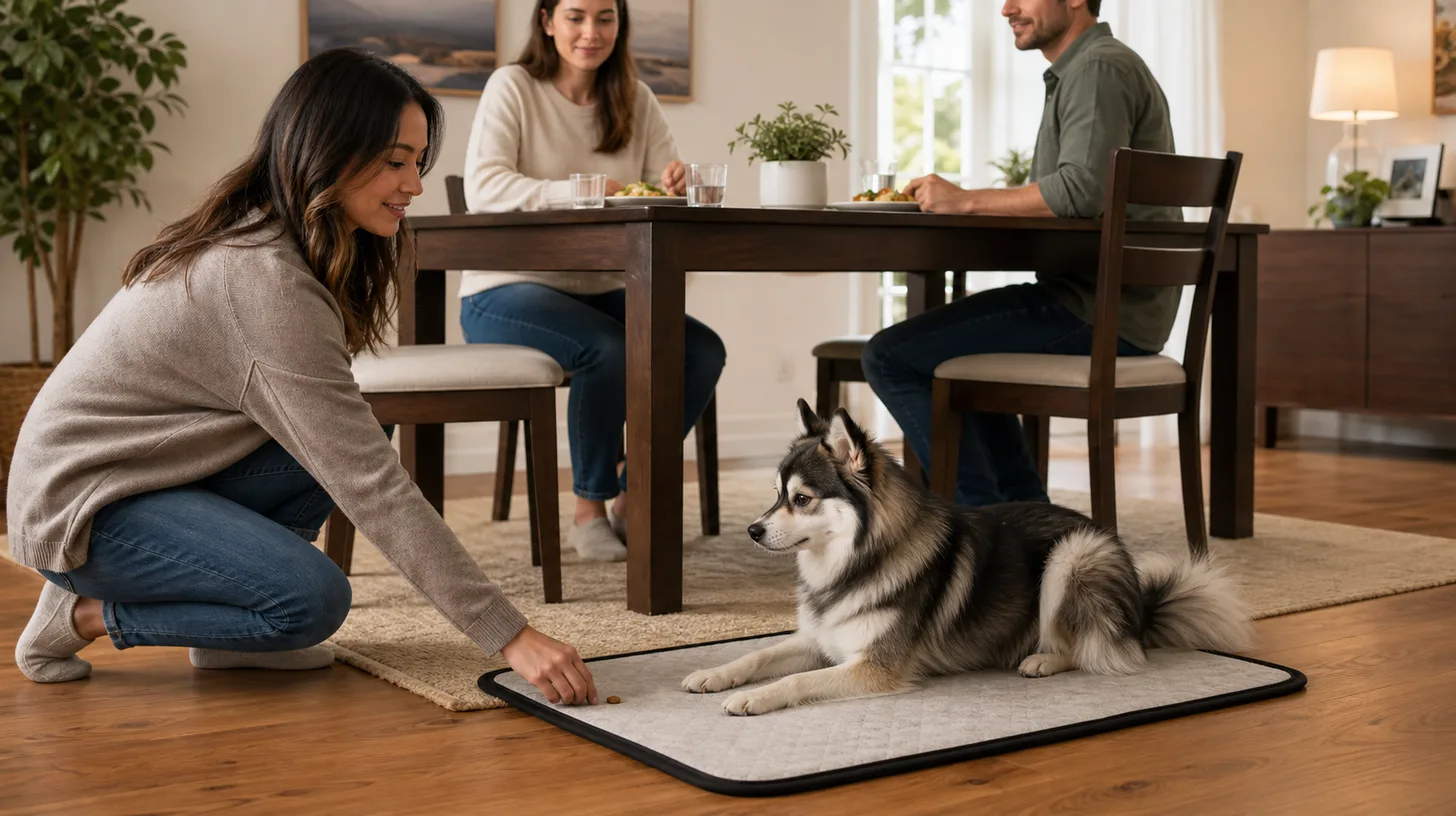
To stop a Pomsky from begging, stop rewarding begging and teach a specific alternative: resting on a mat away from the table. Train the mat behavior outside mealtimes, make every household member follow the same food rules, and reinforce calm settling before the dog starts staring, pawing, barking, or climbing.
Begging usually persists because it has worked at least occasionally. One bite from one person can maintain many unsuccessful attempts, so consistency matters more than confrontation.
Decide what settled behavior looks like
Choose a location where the dog can rest without being under chairs, near hot dishes, or in a walkway. The mat should be large enough for the Pomsky to lie down comfortably. Decide whether sitting is acceptable or whether the final behavior is lying with hips relaxed.
Use one cue, such as "mat" or "settle," and one release cue. Write the household rule in practical terms: no food from the table, no dropped scraps offered after the meal, and no attention for pawing or barking. Family members can still share suitable food, but it should be placed in the dog's bowl or used in a separate training session.
If children eat at the table, an adult should manage the training. A gate or exercise pen can prevent crowding and protect both child and dog while the skill develops. Management is not failure; it prevents begging from receiving another accidental payoff.
Reward-based training is the appropriate foundation. The AVSAB humane training statement advises reward-based methods and describes welfare risks associated with aversive techniques. There is no need to frighten a dog away from food to teach a calm station.
Build a strong mat behavior away from meals
Start when no one is eating. Place the mat on the floor, mark the dog for looking at or stepping onto it, and deliver the reward on the mat. Shape four paws on the surface, then a sit or down. Do not drag the dog into position.
Once the Pomsky moves to the mat readily, say the cue just before the movement. Reward several times while the dog remains there, release, and reset. Five short repetitions are more useful than one long struggle.
Increase duration gradually. Deliver the first reward after one or two seconds, then vary the interval. Add one small distraction, such as sitting in a chair or placing an empty plate on the table. If the dog gets up, calmly reset at an easier level.
Teach the dog that remaining on the mat continues to pay. A stuffed food toy or safe chew can support longer settling if it fits the dog's diet and chewing habits, but it should not be the only way the behavior works. Supervise items that could break, splinter, or be swallowed.
Use part of the dog's measured daily food for training when appropriate. Treats still contribute calories, and the AAHA nutrition and weight management guidance supports considering all food sources during an individualized nutrition assessment.
Rehearse a meal in small steps
Do not begin with a full family dinner. Practice a staged meal:
- cue the mat while the table is empty;
- sit for ten seconds and reward calm behavior;
- stand, move a plate, and sit again;
- place low-value food on the table;
- take one bite while the dog remains settled;
- build duration across several sessions.
Deliver rewards to the mat without calling the dog to the table. A small container at your seat can make reinforcement easy. Space rewards closely at first, then vary them as the dog understands the routine.
If the Pomsky stares but remains on the mat, that is still a better behavior than approaching. Reinforce relaxation signs such as lowering the head, shifting onto one hip, or disengaging from the table. Do not demand perfect sleep on the first day.
End the exercise before the dog fails repeatedly. Release after people have cleared food and wiped the floor so the dog does not learn that the release cue means a scavenging opportunity.
Remove every payoff for begging
Begging can be reinforced by more than food. Eye contact, talking, pushing the dog away, and repeated commands may all provide attention. When the dog leaves the mat, calmly guide the situation back to an easier setup without a dramatic response.
The household must close common reward leaks:
- do not feed from fingers at the table;
- pick up dropped food before releasing the dog;
- keep counters and serving areas inaccessible;
- secure trash and food-preparation waste;
- ask guests not to make exceptions;
- feed the dog's planned meal separately rather than whenever people eat;
- avoid leaving children responsible for enforcing the rule.
Some human foods are unsafe for dogs. The ASPCA list of foods to avoid is a useful screening reference, but suspected exposure still requires direct veterinary or poison-control advice.
If one person wants to share a dog-safe ingredient, place a measured portion aside before the meal and offer it later in the bowl. This preserves the no-table-food pattern and makes the amount visible.
Handle barking pawing and jumping safely
If begging escalates, the exercise is too difficult or has a long reinforcement history. Increase distance, shorten the meal rehearsal, use a gate, and reward sooner. Do not shout, knee the dog, spray water, or use a bark collar.
For barking, wait for the briefest natural pause you can capture, then reinforce the mat behavior. Avoid holding food visibly while waiting through prolonged distress, which can increase frustration. A prepared low-distraction setup makes a quiet response more likely.
For pawing or jumping, protect people from scratches by using distance and a barrier. Do not reward the dog immediately after paws land on a person. Reset, wait for four paws on the floor, cue the mat, and reinforce there.
Growling around food, guarding dropped items, snapping, or biting is not ordinary begging. Do not reach for the item or confront the dog. Separate safely and seek individualized help from a veterinarian or qualified reward-based behavior professional.
Fit the plan to the dog's daily needs
A dog that is hungry because of an inappropriate feeding plan, a sudden appetite change, medication effects, or illness needs more than a training rule. Review the complete daily intake, body condition, activity, and health with the dog's veterinarian.
Do not increase food automatically because the dog looks interested in human meals. Many dogs will investigate available food even when their nutritional needs are met. Follow an individualized feeding plan and measure portions and training rewards.
Before a difficult mealtime, provide an appropriate walk, sniffing opportunity, play session, or short training activity. The goal is not to exhaust the dog, but to meet normal needs and lower avoidable restlessness. Then allow time to drink and settle before the family eats.
Puppies need shorter expectations and more frequent bathroom breaks. Older dogs or dogs with pain may find a hard floor or distant mat uncomfortable. The related guide to choosing a Pomsky bed explains how to size a resting surface around actual sleeping posture.
Troubleshoot setbacks without punishment
If begging returns, look for the changed consequence. Did a guest share food? Did rewards on the mat stop completely? Was the mat moved closer to the table? Did the meal become much longer? Correct the setup rather than labelling the dog stubborn.
Practice easy repetitions between meals for several days. Reinforce the first signs of settling, not only a long finished down. Use household boundary training when the dog also needs to remain outside a kitchen or serving area.
Record a short video if the problem is hard to describe, but protect household privacy and do not provoke behavior for the camera. A trainer can use the sequence of events to identify where reinforcement occurs.
Seek veterinary assessment for a sudden increase in hunger, thirst, scavenging, restlessness, weight change, vomiting, diarrhea, discomfort, or medication-associated behavior. Training cannot diagnose or treat a medical cause.
Maintain calm mealtimes
Once the Pomsky settles through normal meals, continue occasional rewards on the mat. Real-life reinforcement can include a safe chew, release to another activity, or part of the dog's own meal after the table is cleared. Vary the reward while preserving the no-table-food rule.
Refresh the routine before holidays, guests, travel, or changes in seating. Use the gate early rather than waiting for a crowded meal to undo weeks of practice. Tell visitors the rule before food appears.
The plan works because it replaces an effective old behavior with a more effective new one. Begging no longer produces food or attention, while going to the mat produces predictable reinforcement and a clear place in the household routine.
Sources reviewed
Each source is used only for the claim scopes listed below. None establishes a guaranteed Pomsky outcome or replaces individual professional assessment.
- American Veterinary Society of Animal Behavior: Humane Dog Training Position Statement - Supports: reward-based training; aversive-method risk; behavior change principles. Limit: Does not guarantee outcomes for an individual dog.
- American Animal Hospital Association: 2021 AAHA Nutrition and Weight Management Guidelines - Supports: nutrition screening; weight and body-condition monitoring; unexplained weight change as a risk factor; extended nutritional evaluation. Limit: A general article cannot diagnose the reason for weight loss or prescribe calories, diets, tests, or treatment.
- ASPCA: People Foods to Avoid Feeding Your Pets - Supports: common unsafe human foods; poison-risk awareness. Limit: Suspected exposure requires immediate professional poison-control or veterinary advice.