Written and reviewed by A Pomsky Editorial Team. Published 2023-04-12; last reviewed July 25, 2026.
This article provides general educational information. Individual dogs vary, and health or serious behavior concerns require an appropriate veterinary or qualified behavior professional. Read the editorial policy.
Quick answer: A Pomsky is a deliberately bred mix with Pomeranian and Siberian Husky ancestry. It is not an AKC-recognized breed, so adult size, coat, energy, and temperament can vary substantially even within one litter.
At-a-glance decisions
| Question | Evidence-led answer |
|---|---|
| What exactly is a Pomsky? | A Pomsky is a dog with reported Pomeranian and Siberian Husky ancestry. |
| Is a Pomsky a recognized breed? | The American Kennel Club does not list the Pomsky as a recognized breed. |
| How large can a Pomsky become? | Adult size is difficult to predict because the two parent breeds differ substantially and mixed inheritance is not an average calculation. |
| What temperament should an owner expect? | A Pomsky may be energetic, social, vocal, independent, sensitive, playful, reserved, or some combination. |
| What care commitments matter most? | Daily care normally includes a complete and balanced diet, fresh water, physical activity, mental enrichment, reward-based training, coat and dental care, rest, identification, and preventive veterinary care. |
| Who is not a good fit for a Pomsky? | A Pomsky is a poor fit for someone who needs a reliably tiny, quiet, low-shedding, low-exercise, or highly predictable dog. |
What exactly is a Pomsky?
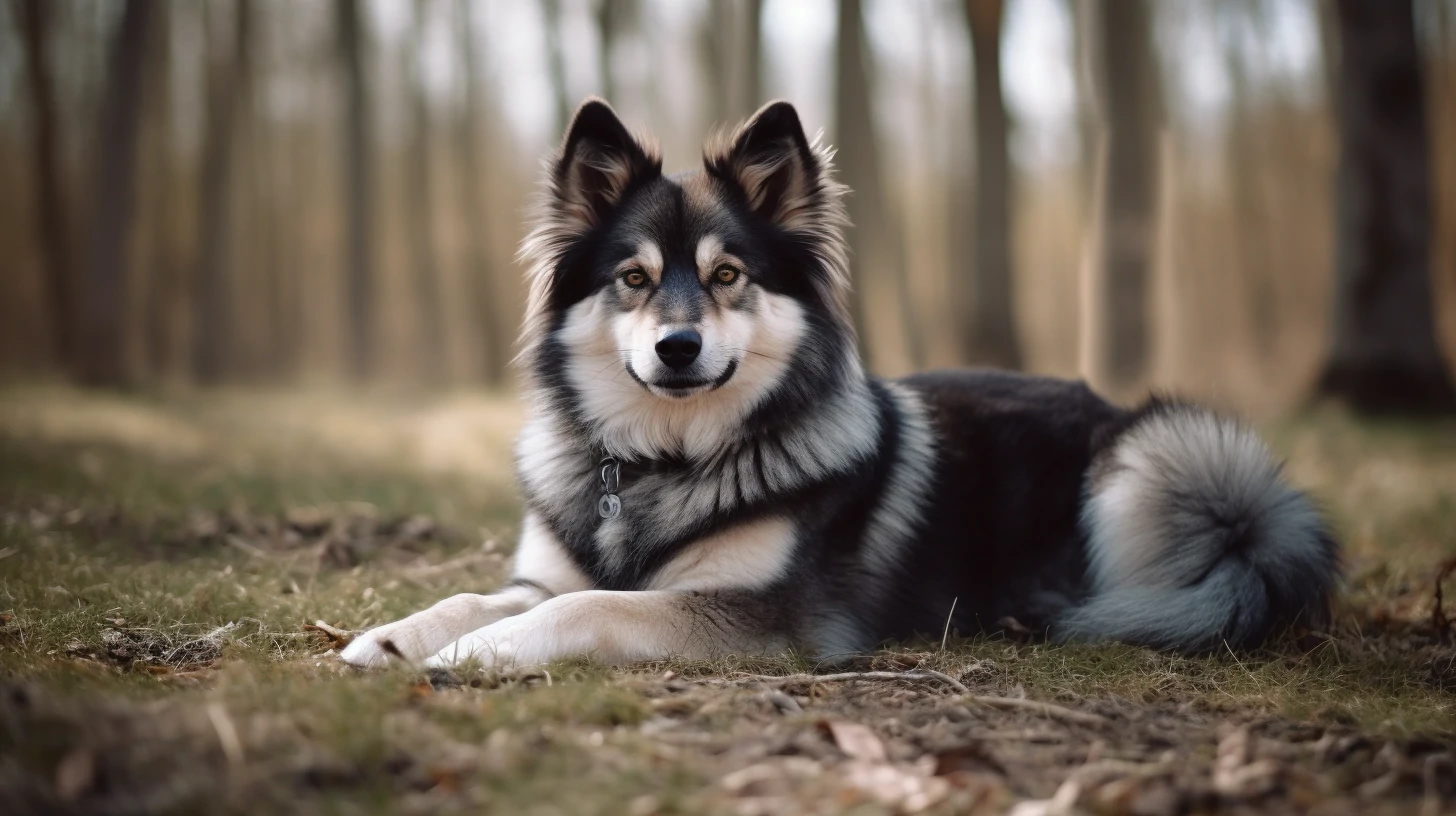
A Pomsky is a dog with reported Pomeranian and Siberian Husky ancestry. That description explains the family tree, but it does not create a fixed template for appearance or behavior. A first-generation litter can contain puppies with noticeably different frames, coats, energy levels, and social responses. Later generation labels still describe ancestry rather than a standardized breed result.
The useful starting point is therefore the individual dog: verified parentage when available, current size and body condition, observed behavior, health records, and the care the dog actually needs. A photograph, eye color, or seller label cannot establish those facts.
Is a Pomsky a recognized breed?
The American Kennel Club does not list the Pomsky as a recognized breed. The Pomeranian and Siberian Husky have separate breed standards, but crossing them does not automatically produce a new standardized breed. Private clubs or registries may record a dog, pedigree, or breeder, yet that registration has a different meaning from recognition under a long-established breed standard.
For an owner, the practical consequence is variability. Registration should never replace direct verification of identity, parent records, welfare, veterinary history, and the individual dog's suitability for the home.
How large can a Pomsky become?
Adult size is difficult to predict because the two parent breeds differ substantially and mixed inheritance is not an average calculation. Parent size and a puppy's growth trend can provide context, but they cannot promise a final number. Terms such as mini, micro, toy, or teacup are not standardized Pomsky size classes.
Track weight and body condition over time rather than aiming for a number from an online chart. A veterinarian can interpret the growth curve, skeletal development, diet, and body condition together, especially when growth changes abruptly.
What temperament should an owner expect?
A Pomsky may be energetic, social, vocal, independent, sensitive, playful, reserved, or some combination. Those possibilities are tendencies, not a personality guarantee. Genetics, prenatal and early care, socialization, learning history, sleep, health, and current environment all shape behavior.
Evaluate observable responses instead of relying on a label. Watch how the dog recovers from novelty, accepts handling, settles after activity, communicates discomfort, and responds to reward-based learning. Sudden behavior change or persistent distress deserves professional assessment.
What care commitments matter most?
Daily care normally includes a complete and balanced diet, fresh water, physical activity, mental enrichment, reward-based training, coat and dental care, rest, identification, and preventive veterinary care. The amount and schedule should follow age, actual size, coat, body condition, health, and lifestyle rather than a generic Pomsky formula.
The double-coat possibility makes regular brushing and shedding management realistic planning items. A household should also budget for training help, grooming support, routine veterinary care, and emergencies before choosing the dog.
Who is not a good fit for a Pomsky?
A Pomsky is a poor fit for someone who needs a reliably tiny, quiet, low-shedding, low-exercise, or highly predictable dog. It may also be a poor match when housing rules are uncertain, daily toilet and activity breaks cannot be provided, or the household will not supervise interactions with children or other pets.
A better decision comes from comparing the individual dog's needs with the household's actual time, noise tolerance, handling ability, budget, and long-term plan. Appearance alone is not a sound selection criterion.
Apply the guide in three common situations
Before you make a choice or change
Start with the first two questions on this page and write down the evidence you can actually verify. A Pomsky is a dog with reported Pomeranian and Siberian Husky ancestry. The American Kennel Club does not list the Pomsky as a recognized breed. If the available record does not support those points, keep the uncertainty visible instead of replacing it with a Pomsky stereotype.
While you carry out the plan
Use the middle questions to define what you will observe and what you will change. Adult size is difficult to predict because the two parent breeds differ substantially and mixed inheritance is not an average calculation. A Pomsky may be energetic, social, vocal, independent, sensitive, playful, reserved, or some combination. Keep the setting easy enough for a safe, repeatable response, and change one important variable at a time so the result can be interpreted.
When you review, stop, or escalate
Use the final questions to decide whether the situation remains inside the article's boundary. Daily care normally includes a complete and balanced diet, fresh water, physical activity, mental enrichment, reward-based training, coat and dental care, rest, identification, and preventive veterinary care. A Pomsky is a poor fit for someone who needs a reliably tiny, quiet, low-shedding, low-exercise, or highly predictable dog. Stop for deteriorating health, serious behavior risk, unsafe conditions, or transaction evidence that cannot be reconciled; route the issue to the appropriate professional or authority.
Use this guide as a practical decision loop
- Write down the traits your household can and cannot accommodate.
- Verify the individual dog and source instead of relying on a mix label.
- Plan daily care, training, grooming, veterinary care, and backup support.
- Observe behavior and body condition rather than predicting from appearance.
- Use reward-based handling and controlled introductions.
- Reassess fit when the dog's age, health, or household changes.
Record the starting conditions, make one controlled change, and observe the same outcome measures afterward. Keep what produces a safe, repeatable improvement and reduce difficulty when the dog cannot respond or recover. This approach is more reliable than a fixed rule based only on a Pomsky label.
Stop when the situation exceeds the article's safety boundary. Medical decisions belong to a veterinarian, serious behavior risk belongs to a qualified professional, and transaction claims require independent verification. A checklist supports judgment; it does not replace it.
Evidence boundaries for this page
- Describe ranges and household fit, never deterministic Pomsky traits or guarantees.
- Use ranges and decision criteria; do not invent Pomsky-specific prevalence, survey, price, or outcome data.
- Attribute factual claims to a source whose declared claim scope supports them.
The sources below were selected for the claim scopes declared in the content brief. They do not create Pomsky-specific prevalence data, guarantee an individual result, or substitute for direct records and professional assessment. Where the evidence is parent-breed context, this page labels it as context rather than converting it into a prediction.
Common mistakes to avoid
- Treating a Pomsky label as a guarantee of size, coat, temperament, or health.
- Choosing from appearance before checking household fit and records.
- Assuming a yard or small body removes training and exercise needs.
- Waiting for predictable problems instead of preparing routines and support.
- Using punishment when management and reward-based teaching are needed.
Related Pomsky guides
- Topics
- How To Take Care Of Pomsky
- Why Should You Take Time When You Are Thinking Of Getting A Pomsky
- Pomsky Pros
- Are Pomskies Good For First Time Owners
Sources reviewed
These sources support only the claim scopes stated in this article. Parent-breed information is context, not proof of an individual Pomsky outcome.
- American Kennel Club: Pomeranian Dog Breed Information - Parent-breed context only; not direct Pomsky outcome evidence.
- American Kennel Club: Siberian Husky Dog Breed Information - Parent-breed context only; not direct Pomsky outcome evidence.
- American Animal Hospital Association: AAHA-AVMA Canine Preventive Healthcare Guidelines - The veterinarian sets the schedule for the individual dog and location.