Written and reviewed by A Pomsky Editorial Team. Originally published 2026-07-26; substantively reviewed July 26, 2026.
Training boundary: Use humane, reward-based methods and protect safety with management. Pain, panic, aggression, a bite history, or serious handling risk requires a veterinarian or qualified behavior professional. Read the editorial policy.
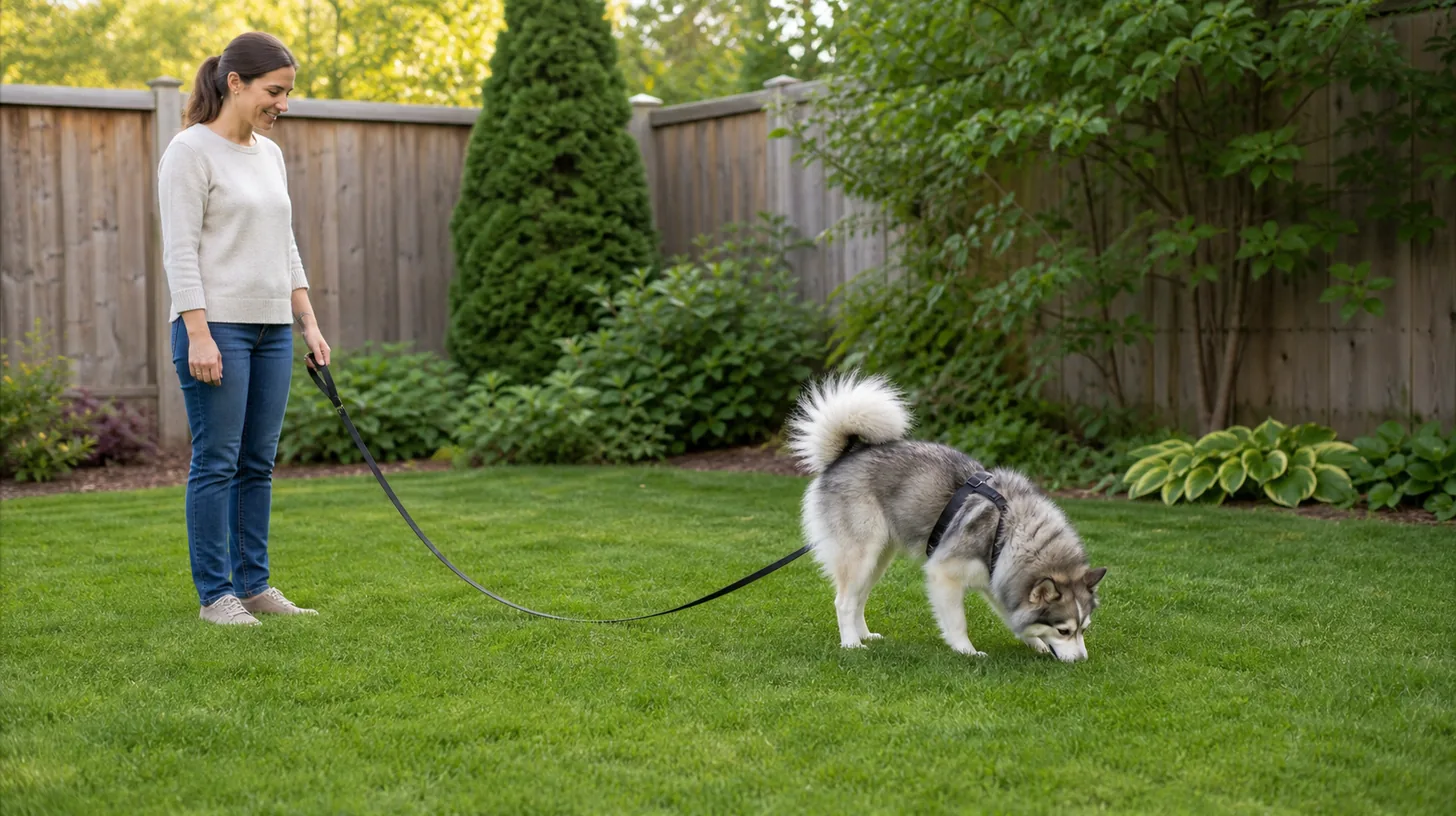
Direct answer: Choose a clean low-distraction patch that you have already checked for waste, toxic plants, unknown food, wildlife and traffic exposure. Pause with the leash loose, say go sniff once and move one or two steps toward the patch. Allow the Pomsky to investigate voluntarily for a few seconds without directing the nose or pulling toward a spot. Then use a separate transition cue, reward orientation away from the patch and resume walking. Repeat only where the dog can leave comfortably. Build duration before environmental difficulty, and do not use the cue to permit access to every verge or object. Sniffing remains optional; stop if the dog freezes, ingests material, encounters wildlife or cannot disengage safely.
This page teaches permission to begin and end one sniff break; the walk plan designs the whole outing, check-in reinforces orientation during movement, and the general release cue ends stationary behaviors. Choose a clean low-distraction patch that you have already checked for waste, toxic plants, unknown food, wildlife and traffic exposure. Pause with the leash loose, say go sniff once and move one or two steps toward the patch. Allow the Pomsky to investigate voluntarily for a few seconds without directing the nose or pulling toward a spot. Then use a separate transition cue, reward orientation away from the patch and resume walking. Repeat only where the dog can leave comfortably. Build duration before environmental difficulty, and do not use the cue to permit access to every verge or object. Sniffing remains optional; stop if the dog freezes, ingests material, encounters wildlife or cannot disengage safely. This guide is limited to reward-based skill building in a controlled setup. It does not make a medical, temperament or guaranteed-behavior claim.
Direct answer
Choose a clean low-distraction patch that you have already checked for waste, toxic plants, unknown food, wildlife and traffic exposure. Pause with the leash loose, say go sniff once and move one or two steps toward the patch. Allow the Pomsky to investigate voluntarily for a few seconds without directing the nose or pulling toward a spot. Then use a separate transition cue, reward orientation away from the patch and resume walking. Repeat only where the dog can leave comfortably. Build duration before environmental difficulty, and do not use the cue to permit access to every verge or object. Sniffing remains optional; stop if the dog freezes, ingests material, encounters wildlife or cannot disengage safely.
The reader task is specific: Choose one safe low-distraction patch, pause with a loose leash, say the go-sniff cue once and move toward the area, allow brief voluntary exploration, use a separate transition cue to leave, and keep traffic, toxic plants, waste, wildlife and unknown food outside the exercise. Keep the nearest owner pages separate when the real problem is equipment selection, household management, a complete routine, medical care or another already-defined training behavior.
Audit One Safe Sniff Patch
Check the surface and nearby plants, waste, food, chemicals, animals, traffic and footing before approaching.
For how to teach a pomsky a go-sniff cue, this checkpoint passes only when the Pomsky completes the described step voluntarily and returns to ordinary posture without crowding, restraint or repeated prompting. Generalize as a new lesson, returning to an easier criterion whenever the room, surface, caregiver or equipment changes. Do not add the next audit one safe sniff patch variable until that observable criterion is repeatable.
Pause With a Loose Leash
Stand at a comfortable distance while keeping the line slack and preserving a clear route away.
For how to teach a pomsky a go-sniff cue, this checkpoint passes only when the Pomsky completes the described step voluntarily and returns to ordinary posture without crowding, restraint or repeated prompting. Protect the stop rule: pain, startle, guarding, panic, equipment failure or repeated avoidance requires a different plan. Do not add the next pause with a loose leash variable until that observable criterion is repeatable.
Say Go Sniff Once
Give the permission cue immediately before moving calmly toward the approved area.
For how to teach a pomsky a go-sniff cue, this checkpoint passes only when the Pomsky completes the described step voluntarily and returns to ordinary posture without crowding, restraint or repeated prompting. Define the pass condition before beginning and record the first observable response that earns reinforcement. Do not add the next say go sniff once variable until that observable criterion is repeatable.
Allow Voluntary Investigation
Let the Pomsky choose whether and where to sniff without pointing, touching the head or dragging the harness.
For how to teach a pomsky a go-sniff cue, this checkpoint passes only when the Pomsky completes the described step voluntarily and returns to ordinary posture without crowding, restraint or repeated prompting. Keep footing, equipment and the exit route easier than the final use case so one error does not create another forced attempt. Do not add the next allow voluntary investigation variable until that observable criterion is repeatable.
Begin With Only a Few Seconds
End the first break while exploration remains calm rather than waiting for fixation or leash tension.
For how to teach a pomsky a go-sniff cue, this checkpoint passes only when the Pomsky completes the described step voluntarily and returns to ordinary posture without crowding, restraint or repeated prompting. Change only one variable after three calm successes; duration, distance, body position and distraction should not rise together. Do not add the next begin with only a few seconds variable until that observable criterion is repeatable.
Use a Separate Leaving Transition
Cue an easy turn or check-in, reward movement away and then resume the route.
For how to teach a pomsky a go-sniff cue, this checkpoint passes only when the Pomsky completes the described step voluntarily and returns to ordinary posture without crowding, restraint or repeated prompting. Treat a reset as information by restoring the starting picture, waiting for ordinary movement and making the next repetition easier. Do not add the next use a separate leaving transition variable until that observable criterion is repeatable.
Reward Disengagement From the Patch
Place reinforcement in the new travel direction so leaving does not become a pulling contest.
For how to teach a pomsky a go-sniff cue, this checkpoint passes only when the Pomsky completes the described step voluntarily and returns to ordinary posture without crowding, restraint or repeated prompting. Place reinforcement where it prepares the next safe setup instead of creating crowding, twisting, rushing or fixation. Do not add the next reward disengagement from the patch variable until that observable criterion is repeatable.
Increase Duration Before Difficulty
Add a few seconds in the same safe place before changing surface, route or environmental activity.
For how to teach a pomsky a go-sniff cue, this checkpoint passes only when the Pomsky completes the described step voluntarily and returns to ordinary posture without crowding, restraint or repeated prompting. End while the Pomsky can still choose and recover; repetition after fatigue or avoidance changes the behavior being taught. Do not add the next increase duration before difficulty variable until that observable criterion is repeatable.
Keep Unknown Areas Off Limits
Management overrides the cue around waste, food, toxic plants, wildlife, roads and treated ground.
For how to teach a pomsky a go-sniff cue, this checkpoint passes only when the Pomsky completes the described step voluntarily and returns to ordinary posture without crowding, restraint or repeated prompting. Use physical management for real-world risk while the skill is incomplete because a cue never replaces barriers or fitted equipment. Do not add the next keep unknown areas off limits variable until that observable criterion is repeatable.
Stop for Ingestion or Loss of Control
Leave immediately for swallowing, guarding, freezing, lunging, tangled equipment or inability to disengage.
For how to teach a pomsky a go-sniff cue, this checkpoint passes only when the Pomsky completes the described step voluntarily and returns to ordinary posture without crowding, restraint or repeated prompting. Describe feet, head position, distance, latency and recovery rather than assigning motives such as stubbornness or dominance. Do not add the next stop for ingestion or loss of control variable until that observable criterion is repeatable.
Training record
Record the date, location, setup and reward used for how to teach a pomsky a go-sniff cue. Track the first three checkpoints (Audit One Safe Sniff Patch, Pause With a Loose Leash, Say Go Sniff Once), the middle progression (Allow Voluntary Investigation, Begin With Only a Few Seconds, Use a Separate Leaving Transition, Reward Disengagement From the Patch) and the final safety checks (Increase Duration Before Difficulty, Keep Unknown Areas Off Limits, Stop for Ingestion or Loss of Control). Note latency, repetitions, release quality and recovery in direct language. A useful record also states why a session ended early.
When to pause or get help
The risk boundary for this page is outdoor ingestion environmental hazards leash slack and transition control. Stop for pain, lameness, breathing change, guarding, fear, a bite or snap, equipment failure, loss of physical control or a sudden change from the Pomsky's ordinary behavior. Use a veterinarian for health questions and a qualified reward-based professional when the setup cannot be completed without conflict or distress.
Keep the skill distinct
This page teaches permission to begin and end one sniff break; the walk plan designs the whole outing, check-in reinforces orientation during movement, and the general release cue ends stationary behaviors. Preserve that boundary when updating this page or linking related owners. The useful outcome is one observable voluntary behavior with a reliable transition and safe management, not a staged demonstration or proof that the cue works everywhere.
Sources reviewed
Each source is used only for the claim scopes listed below. None establishes a guaranteed Pomsky outcome or replaces individual professional assessment.
- American Veterinary Society of Animal Behavior: Humane Dog Training Position Statement - Supports: reward-based training; aversive-method risk; behavior change principles. Limit: Does not guarantee outcomes for an individual dog.
- American Animal Hospital Association: Lifestyle and Safety Assessment - Supports: appropriate confinement; leash, collar and harness planning; lifestyle-specific safety review. Limit: Equipment selection must account for the individual dog's anatomy, behavior, health, and environment.