Written and reviewed by A Pomsky Editorial Team. Originally published 2026-07-26; substantively reviewed July 26, 2026.
Training boundary: Use humane, reward-based methods and protect safety with management. Pain, panic, aggression, a bite history, or serious handling risk requires a veterinarian or qualified behavior professional. Read the editorial policy.
Direct answer: Record what happens before the scratching: a person leaving, a blocked room, household noise or a predictable transition. Prevent repeated contact while protecting paws and the door, using distance, a suitable barrier or a different setup rather than punishment. Teach a familiar mat or station away from the door during calm practice, then introduce the trigger below the Pomsky's distress threshold. Do not trap the dog in a practice setup. Panic, self-injury, sudden onset or rapidly worsening behavior requires veterinary and qualified behavior support.
This page owns repeated pawing and scratching at an interior door and the associated injury and surface risks; barrier frustration covers barking and lunging at visible barriers, alone-time covers departures, and mat training teaches one alternative behavior. Record what happens before the scratching: a person leaving, a blocked room, household noise or a predictable transition. Prevent repeated contact while protecting paws and the door, using distance, a suitable barrier or a different setup rather than punishment. Teach a familiar mat or station away from the door during calm practice, then introduce the trigger below the Pomsky's distress threshold. Do not trap the dog in a practice setup. Panic, self-injury, sudden onset or rapidly worsening behavior requires veterinary and qualified behavior support. This guide uses prevention, observable behavior, voluntary choices and explicit stop rules. It does not diagnose a Pomsky or promise that one household technique will fit every dog.
Direct answer
Record what happens before the scratching: a person leaving, a blocked room, household noise or a predictable transition. Prevent repeated contact while protecting paws and the door, using distance, a suitable barrier or a different setup rather than punishment. Teach a familiar mat or station away from the door during calm practice, then introduce the trigger below the Pomsky's distress threshold. Do not trap the dog in a practice setup. Panic, self-injury, sudden onset or rapidly worsening behavior requires veterinary and qualified behavior support.
Use this plan for the specific task described as: Record whether door scratching follows separation, blocked access, noise or a predictable household transition, prevent nail and surface injury, increase distance or visibility when safe, reinforce an alternative station before the trigger, practice only below distress, and seek veterinary or qualified behavior help for panic, self-injury or rapid escalation. If the setting, trigger or risk is different, follow the nearest owner page or ask the relevant professional instead of combining several protocols into one improvised response.
Identify Which Door and Event Matter
Separate departure, blocked access, noise response and household-transition contexts instead of grouping every scratch together.
In manage a pomsky scratching an interior door, the identify which door and event matter checkpoint has a narrow purpose. Use a visible pass condition rather than a reassuring guess. Note what was observed, what was controlled and what remains uncertain before changing access or asking for behavior. Complete this checkpoint before adding the next variable.
Inspect Paws and the Door Area
Pause the setup for broken nails, bleeding, splinters, loose paint or damaged hardware.
In manage a pomsky scratching an interior door, the inspect paws and the door area checkpoint has a narrow purpose. Write the place, timing, preceding event and first observable response in neutral language. That context makes the record useful without assigning motive or diagnosis. Complete this checkpoint before adding the next variable.
Stop Rehearsal With Management
Change access, caregiver movement or barrier position so the dog is not repeatedly practicing contact.
In manage a pomsky scratching an interior door, the stop rehearsal with management checkpoint has a narrow purpose. Check the arrangement from dog height. It should prevent rehearsal, preserve an open retreat and avoid dependence on speed, grabbing, an open exit or another participant tolerating contact. Complete this checkpoint before adding the next variable.
Adjust Visibility and Distance
Test whether a safer visual opening or greater distance lowers arousal without creating escape risk.
In manage a pomsky scratching an interior door, the adjust visibility and distance checkpoint has a narrow purpose. Change one variable while distance, duration, equipment and caregiver position remain stable. End while the Pomsky can still disengage rather than repeating until failure. Complete this checkpoint before adding the next variable.
Build an Alternative Station
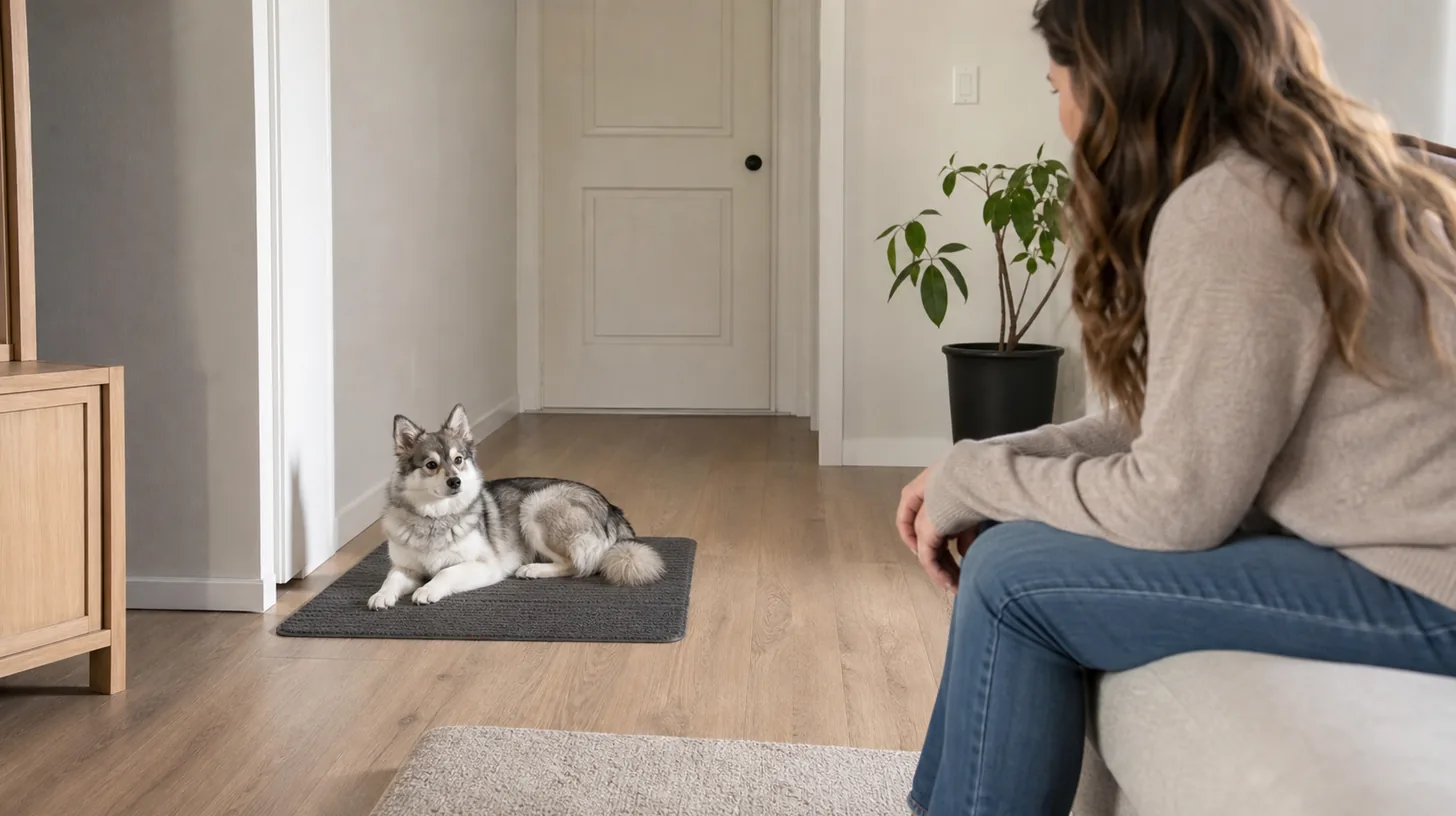
Reinforce voluntary movement to a nonslip mat placed well away from the door.
In manage a pomsky scratching an interior door, the build an alternative station checkpoint has a narrow purpose. The alternative must already be easy in a quiet setting. Mark the first voluntary choice, place reinforcement where it supports the next safe position and provide a clear release. Complete this checkpoint before adding the next variable.
Practice a Small Trigger Step
Use a brief low-intensity door movement or caregiver transition and return before scratching begins.
In manage a pomsky scratching an interior door, the practice a small trigger step checkpoint has a narrow purpose. Practice away from the full trigger. Preserve loose movement, ordinary breathing and the option to decline reinforcement; return to an easier version after confusion or rising arousal. Complete this checkpoint before adding the next variable.
Keep an Open Opt-Out
Allow the Pomsky to move away from the station and avoid blocking the dog between people and doors.
In manage a pomsky scratching an interior door, the keep an open opt-out checkpoint has a narrow purpose. Give every caregiver the same prevention step, alternative response and stop rule. Identify prohibited actions, storage locations and the person responsible for professional contact. Complete this checkpoint before adding the next variable.
Separate Training From Real Departures
Use physical management during unavoidable events rather than testing an unfinished skill.
In manage a pomsky scratching an interior door, the separate training from real departures checkpoint has a narrow purpose. A reset should lower exposure and restore choice. Reopen access after the environment is controlled and ordinary movement returns, not after an arbitrary timer or forced stillness. Complete this checkpoint before adding the next variable.
Measure Recovery and Paw Safety
Record scratching attempts, distance, duration and return to ordinary behavior without assigning a diagnosis.
In manage a pomsky scratching an interior door, the measure recovery and paw safety checkpoint has a narrow purpose. Compare frequency, distance, duration and recovery with the Pomsky's own baseline. One incident-free session is not proof if management opened or the dog was simply unable to act. Complete this checkpoint before adding the next variable.
Escalate Distress and Injury
Contact veterinary and qualified behavior professionals for panic, self-injury, prolonged recovery or sudden change.
In manage a pomsky scratching an interior door, the escalate distress and injury checkpoint has a narrow purpose. Stop collecting examples when pain, ingestion, breathing change, injury, panic, aggression, sudden onset or prolonged recovery is possible. Preserve the factual timeline for the responsible professional. Complete this checkpoint before adding the next variable.
What to record
Keep a dated record for manage a pomsky scratching an interior door that covers Identify Which Door and Event Matter, Inspect Paws and the Door Area, Stop Rehearsal With Management, Adjust Visibility and Distance, Build an Alternative Station, then Practice a Small Trigger Step, Keep an Open Opt-Out, Separate Training From Real Departures, Measure Recovery and Paw Safety, Escalate Distress and Injury. Record direct observations, the physical management in place, the first safe alternative response, recovery and every unresolved question. Avoid labels about dominance, stubbornness, guilt, anxiety or intent unless a qualified professional supplied that interpretation.
When to stop and escalate
Stop when the Pomsky, another animal, a person or the environment can no longer remain safe while pursuing this goal: Record whether door scratching follows separation, blocked access, noise or a predictable household transition, prevent nail and surface injury, increase distance or visibility when safe, reinforce an alternative station before the trigger, practice only below distress, and seek veterinary or qualified behavior help for panic, self-injury or rapid escalation. The risk boundary for this page is barrier behavior and distress escalation. Do not continue through pain, ingestion concern, breathing change, injury, panic, aggression, forced contact, equipment failure or a sudden change from the dog's ordinary baseline.
For manage a pomsky scratching an interior door, bring the veterinarian or qualified reward-based behavior professional a concise factual timeline, relevant original photos or videos captured without provoking the event, current medication and health context when requested, and a description of management already in place. Professional escalation is part of the plan, not evidence that the household failed.
Keep the plan current
Recheck manage a pomsky scratching an interior door whenever the Pomsky's health, household, equipment, environment, caregivers or trigger pattern changes. Retire stale assumptions, preserve current source instructions and update only one variable at a time. The useful outcome is safer daily management and clearer evidence, not a staged demonstration for the camera or a claim that the behavior can never recur.
Sources reviewed
Each source is used only for the claim scopes listed below. None establishes a guaranteed Pomsky outcome or replaces individual professional assessment.
- Cornell University College of Veterinary Medicine: Anxious Behavior: How to Help Your Dog Cope With Unsettling Situations - Supports: anxiety signs; separation-related vocalization; gradual desensitization; reward-based professional help. Limit: Howling alone does not diagnose separation anxiety; sudden or severe distress needs veterinary assessment.
- American Veterinary Society of Animal Behavior: Humane Dog Training Position Statement - Supports: reward-based training; aversive-method risk; behavior change principles. Limit: Does not guarantee outcomes for an individual dog.
- American Veterinary Society of Animal Behavior: How to Select a Behavior Consultant - Supports: trainer credentials; behavior consultant selection; red flags. Limit: Avoid implying that a title alone proves competence.