Written and reviewed by A Pomsky Editorial Team. Originally published 2026-07-26; substantively reviewed July 26, 2026.
Training boundary: Use humane, reward-based methods and protect safety with management. Pain, panic, aggression, a bite history, or serious handling risk requires a veterinarian or qualified behavior professional. Read the editorial policy.
Direct answer: Keep the found dog safely contained and contact the appropriate shelter, animal-control, veterinary, or local authority route. Arrange an authorized microchip scan and ask the claimant for nonpublic details, dated photos, veterinary or registration records, and equipment information that can be compared privately. Do not reveal every identifying feature first. Document who verified the match and the return, and do not hand the dog to the first plausible caller or decide disputed ownership alone.
A convincing description can come from a public lost-dog post. Verification works better when the found dog remains secure, authorities are involved, the claimant supplies details that were not all published, and professional scan and source records are compared privately. The return record should show why the handoff was accepted without exposing the dog's identity data.
Secure the Found Dog
Use safe containment, water, separation, and minimal handling while following local found-animal reporting requirements.
Keep the sequence repeatable across caregivers. Say what is being checked, complete it, and return equipment and people to neutral before continuing. In this page's context, success means one safe documented return in which claimant evidence, professional identification, authority requirements, privacy, and physical handoff are reconciled; it does not mean proving that a known risk can be tolerated. In this routine, step 1 is the secure the found dog decision.
Stop when the expected condition is absent or the situation begins to depend on force, luck, or an open boundary. Specifically avoid revealing all identifiers, inviting strangers to inspect the dog, relying on a public photo, deciding disputed ownership, exposing chip data, or performing an uncontrolled curbside handoff. The follow-up record should cover found date and location, authority contact, dog description, scan source, claimant identity route, private details supplied, dated photos, veterinary or registry records, equipment, discrepancy, verifier, return time, recipient, and acknowledgement. Record the result of secure the found dog before continuing.
Notify the Responsible Authority
Record the official shelter, animal-control, veterinary, or local route and any hold or reporting instruction.
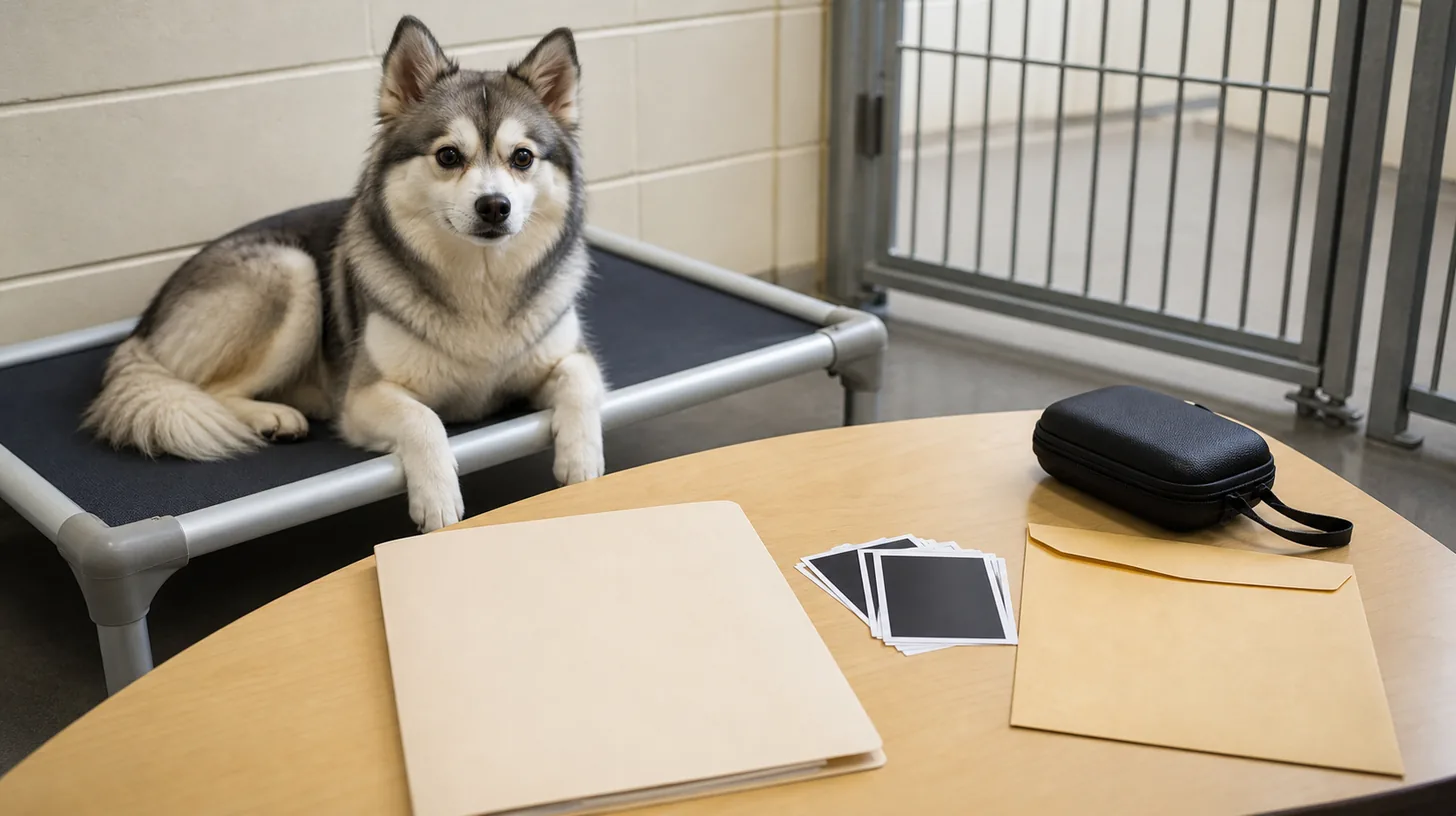
Treat this as one part of the complete routine, not an isolated trick. The surrounding setup is a secure neutral found-dog area with controlled access, official contact routes, a closed scanner case, redacted photo cards, claimant evidence inventory, secure leash or carrier, and return record. A clean transition reduces ambiguity and makes it easier to notice when the dog, equipment, environment, or records differ from the previous attempt. In this routine, step 2 is the notify the responsible authority decision.
The absence of an incident is not proof that the arrangement is sound. Recheck for revealing all identifiers, inviting strangers to inspect the dog, relying on a public photo, deciding disputed ownership, exposing chip data, or performing an uncontrolled curbside handoff. Document found date and location, authority contact, dog description, scan source, claimant identity route, private details supplied, dated photos, veterinary or registry records, equipment, discrepancy, verifier, return time, recipient, and acknowledgement so a later caregiver can distinguish a passed step from one that was skipped. Record the result of notify the responsible authority before continuing.
Limit Public Identity Details
Share enough information to locate a claimant without publishing every marking, chip number, or found location detail.
Pause long enough to inspect the result rather than assuming the action worked. Look at the dog, the physical boundary, and the next movement available to the caregiver. Continue only when the arrangement still supports one safe documented return in which claimant evidence, professional identification, authority requirements, privacy, and physical handoff are reconciled. In this routine, step 3 is the limit public identity details decision.
If the Pomsky cannot remain comfortable or the equipment and environment cannot remain controlled, end the attempt. Do not proceed through revealing all identifiers, inviting strangers to inspect the dog, relying on a public photo, deciding disputed ownership, exposing chip data, or performing an uncontrolled curbside handoff. Capture found date and location, authority contact, dog description, scan source, claimant identity route, private details supplied, dated photos, veterinary or registry records, equipment, discrepancy, verifier, return time, recipient, and acknowledgement before deciding what changes next. Record the result of limit public identity details before continuing.
Arrange an Authorized Scan
Use a recognized professional and keep the complete identifier and registry result private.
A second capable adult can verify the boundary during early practice or higher-risk situations. That person should follow the same sequence and avoid adding prompts, handling, or access that changes the task. The shared standard remains one safe documented return in which claimant evidence, professional identification, authority requirements, privacy, and physical handoff are reconciled. In this routine, step 4 is the arrange an authorized scan decision.
Do not convert this step into a stress test. The principal avoidable risks are revealing all identifiers, inviting strangers to inspect the dog, relying on a public photo, deciding disputed ownership, exposing chip data, or performing an uncontrolled curbside handoff. Write down found date and location, authority contact, dog description, scan source, claimant identity route, private details supplied, dated photos, veterinary or registry records, equipment, discrepancy, verifier, return time, recipient, and acknowledgement; a short factual note is more useful than a reassuring guess. Record the result of arrange an authorized scan before continuing.
Ask the Claimant for Independent Evidence
Request dated photos, veterinary or registry records, equipment details, and nonpublic markings before revealing the comparison answer.
Perform this check before adding the next variable. The target remains one safe documented return in which claimant evidence, professional identification, authority requirements, privacy, and physical handoff are reconciled. Work in a secure neutral found-dog area with controlled access, official contact routes, a closed scanner case, redacted photo cards, claimant evidence inventory, secure leash or carrier, and return record. If the setup cannot preserve that condition, simplify it or stop rather than relying on speed or physical control. In this routine, step 5 is the ask the claimant for independent evidence decision.
Stop when the expected condition is absent or the situation begins to depend on force, luck, or an open boundary. Specifically avoid revealing all identifiers, inviting strangers to inspect the dog, relying on a public photo, deciding disputed ownership, exposing chip data, or performing an uncontrolled curbside handoff. The follow-up record should cover found date and location, authority contact, dog description, scan source, claimant identity route, private details supplied, dated photos, veterinary or registry records, equipment, discrepancy, verifier, return time, recipient, and acknowledgement. Record the result of ask the claimant for independent evidence before continuing.
Compare Timeline and Location
Reconcile when and where the dog went missing, travel possibility, reports, and when the claim was made.
Use an observable pass condition: the relevant item is checked, the boundary is closed, and the Pomsky can remain safe without being used as a test. This protects the main objective, one safe documented return in which claimant evidence, professional identification, authority requirements, privacy, and physical handoff are reconciled, while leaving a clear point at which the caregiver can step back. In this routine, step 6 is the compare timeline and location decision.
The absence of an incident is not proof that the arrangement is sound. Recheck for revealing all identifiers, inviting strangers to inspect the dog, relying on a public photo, deciding disputed ownership, exposing chip data, or performing an uncontrolled curbside handoff. Document found date and location, authority contact, dog description, scan source, claimant identity route, private details supplied, dated photos, veterinary or registry records, equipment, discrepancy, verifier, return time, recipient, and acknowledgement so a later caregiver can distinguish a passed step from one that was skipped. Record the result of compare timeline and location before continuing.
Compare Physical Identity Privately
Review stable markings, sex, approximate size, equipment, scars or features through the responsible authority without crowding the dog.
Keep the sequence repeatable across caregivers. Say what is being checked, complete it, and return equipment and people to neutral before continuing. In this page's context, success means one safe documented return in which claimant evidence, professional identification, authority requirements, privacy, and physical handoff are reconciled; it does not mean proving that a known risk can be tolerated. In this routine, step 7 is the compare physical identity privately decision.
If the Pomsky cannot remain comfortable or the equipment and environment cannot remain controlled, end the attempt. Do not proceed through revealing all identifiers, inviting strangers to inspect the dog, relying on a public photo, deciding disputed ownership, exposing chip data, or performing an uncontrolled curbside handoff. Capture found date and location, authority contact, dog description, scan source, claimant identity route, private details supplied, dated photos, veterinary or registry records, equipment, discrepancy, verifier, return time, recipient, and acknowledgement before deciding what changes next. Record the result of compare physical identity privately before continuing.
Resolve Discrepancies Before Handoff
Document mismatched names, contacts, chip records, photos, dates, or stories and route disputes to the proper authority.
Treat this as one part of the complete routine, not an isolated trick. The surrounding setup is a secure neutral found-dog area with controlled access, official contact routes, a closed scanner case, redacted photo cards, claimant evidence inventory, secure leash or carrier, and return record. A clean transition reduces ambiguity and makes it easier to notice when the dog, equipment, environment, or records differ from the previous attempt. In this routine, step 8 is the resolve discrepancies before handoff decision.
Do not convert this step into a stress test. The principal avoidable risks are revealing all identifiers, inviting strangers to inspect the dog, relying on a public photo, deciding disputed ownership, exposing chip data, or performing an uncontrolled curbside handoff. Write down found date and location, authority contact, dog description, scan source, claimant identity route, private details supplied, dated photos, veterinary or registry records, equipment, discrepancy, verifier, return time, recipient, and acknowledgement; a short factual note is more useful than a reassuring guess. Record the result of resolve discrepancies before handoff before continuing.
Prepare a Controlled Return
Confirm recipient, authority approval when required, safe equipment, neutral location, and one responsible handoff team.
Pause long enough to inspect the result rather than assuming the action worked. Look at the dog, the physical boundary, and the next movement available to the caregiver. Continue only when the arrangement still supports one safe documented return in which claimant evidence, professional identification, authority requirements, privacy, and physical handoff are reconciled. In this routine, step 9 is the prepare a controlled return decision.
Stop when the expected condition is absent or the situation begins to depend on force, luck, or an open boundary. Specifically avoid revealing all identifiers, inviting strangers to inspect the dog, relying on a public photo, deciding disputed ownership, exposing chip data, or performing an uncontrolled curbside handoff. The follow-up record should cover found date and location, authority contact, dog description, scan source, claimant identity route, private details supplied, dated photos, veterinary or registry records, equipment, discrepancy, verifier, return time, recipient, and acknowledgement. Record the result of prepare a controlled return before continuing.
Document Closure
Record the evidence category, verifier, return time, recipient acknowledgement, and privacy handling without publishing sensitive identifiers.
A second capable adult can verify the boundary during early practice or higher-risk situations. That person should follow the same sequence and avoid adding prompts, handling, or access that changes the task. The shared standard remains one safe documented return in which claimant evidence, professional identification, authority requirements, privacy, and physical handoff are reconciled. In this routine, step 10 is the document closure decision.
The absence of an incident is not proof that the arrangement is sound. Recheck for revealing all identifiers, inviting strangers to inspect the dog, relying on a public photo, deciding disputed ownership, exposing chip data, or performing an uncontrolled curbside handoff. Document found date and location, authority contact, dog description, scan source, claimant identity route, private details supplied, dated photos, veterinary or registry records, equipment, discrepancy, verifier, return time, recipient, and acknowledgement so a later caregiver can distinguish a passed step from one that was skipped. Record the result of document closure before continuing.
When to Stop and Escalate
Stop when the Pomsky, caregiver, equipment, records, or environment no longer supports one safe documented return in which claimant evidence, professional identification, authority requirements, privacy, and physical handoff are reconciled. Do not improvise through revealing all identifiers, inviting strangers to inspect the dog, relying on a public photo, deciding disputed ownership, exposing chip data, or performing an uncontrolled curbside handoff. Seek local animal control, shelter, veterinary, registry, law-enforcement, or legal authorities according to location and any ownership dispute. Bring the factual observations already collected rather than recreating the event.
Before another attempt, review found date and location, authority contact, dog description, scan source, claimant identity route, private details supplied, dated photos, veterinary or registry records, equipment, discrepancy, verifier, return time, recipient, and acknowledgement. Resume only after the responsible person, physical setup, and controlling instructions are clear. A stop is part of the protocol: it preserves useful evidence and prevents uncertainty from becoming exposure.
Keep the Routine Current
Recheck the complete setup whenever the dog, household, product, instructions, environment, or purpose changes. The intended outcome remains one safe documented return in which claimant evidence, professional identification, authority requirements, privacy, and physical handoff are reconciled, not a perfect-looking performance. Use the newest primary instruction, retain dated records, and retire superseded assumptions so every caregiver begins from the same current plan.
Sources reviewed
Each source is used only for the claim scopes listed below. None establishes a guaranteed Pomsky outcome or replaces individual professional assessment.
- ASPCA: Finding a Lost Pet - Supports: visible identification; current microchip registration; rapid neighborhood search and notification. Limit: Supports recovery planning after a loss; it does not make any prevention method fail-safe.
- American Animal Hospital Association: Animal Identification and Microchipping - Supports: current microchip registration; visible ID tags; annual chip scan; lost-pet search limits. Limit: Microchips are not GPS devices and do not replace secure containment, a leash, visible ID, or active search.