Written and reviewed by A Pomsky Editorial Team. Published 2023-07-23; last reviewed July 25, 2026.
This article provides general educational information. Individual dogs vary, and health or serious behavior concerns require an appropriate veterinary or qualified behavior professional. Read the editorial policy.
Quick answer: Pomskies may show many colors and patterns inherited from their parent breeds, but color does not prove parentage, quality, temperament, health, or rarity. Appearance should never replace record, welfare, and health verification.
At-a-glance decisions
| Question | Evidence-led answer |
|---|---|
| What colors and patterns can Pomskies have? | Pomskies may display black, white, gray, red, brown, cream, sable, merle, masks, points, and mixed markings, reflecting varied inheritance from the parent lines. |
| Can puppy color change with age? | Puppy coats can lighten, darken, or change contrast as the adult coat develops. |
| What do merle and mask descriptions mean? | Merle describes a pattern, not a quality grade. |
| Does color affect temperament or health? | Coat color does not determine friendliness, intelligence, exercise need, trainability, or household fit. |
| Can color prove a Pomsky is pure or rare? | A color cannot prove that a dog is pure, rare, or correctly labeled as a Pomsky. |
| How should color-based marketing be evaluated? | Evaluate color-based marketing by asking what exactly is being claimed and what evidence supports it. |
What colors and patterns can Pomskies have?
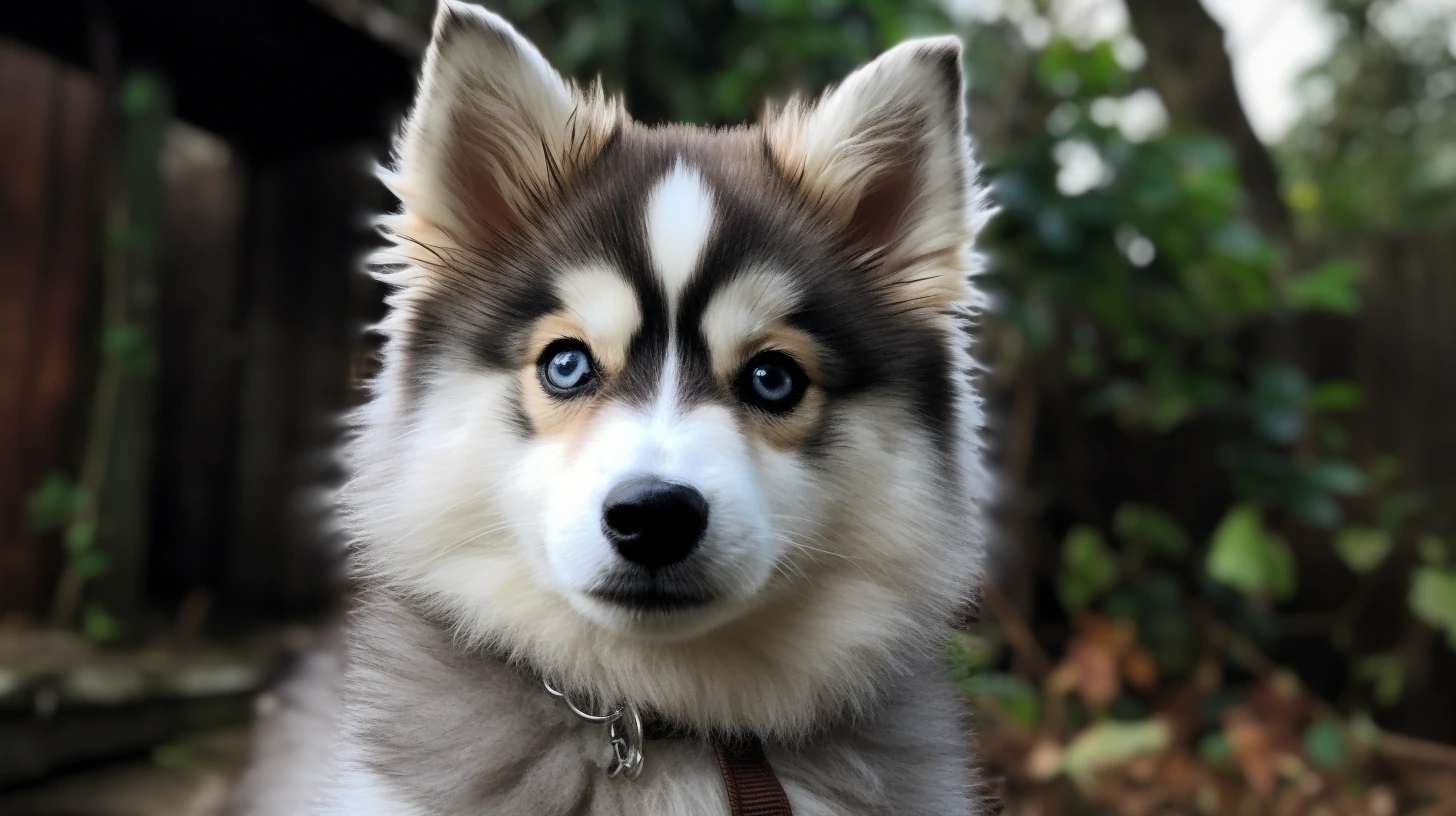
Pomskies may display black, white, gray, red, brown, cream, sable, merle, masks, points, and mixed markings, reflecting varied inheritance from the parent lines. Naming conventions are inconsistent between sellers, and similar coats may be described with different marketing terms.
A color guide should help describe appearance, not create a hierarchy of value or authenticity.
Can puppy color change with age?
Puppy coats can lighten, darken, or change contrast as the adult coat develops. Seasonal coat, grooming, sun exposure, and camera processing can also alter how color appears. A young puppy photograph is not a reliable guarantee of the exact adult shade or pattern.
Ask for current unedited images when appearance matters, while keeping expectations flexible.
What do merle and mask descriptions mean?
Merle describes a pattern, not a quality grade. Because some color-related genetic combinations can have health implications, breeding claims should be supported by appropriate records and professional interpretation rather than internet color charts. Visible pattern alone does not disclose genotype.
Do not use the article to diagnose genetic status. Buyers should request traceable parent and health information.
Does color affect temperament or health?
Coat color does not determine friendliness, intelligence, exercise need, trainability, or household fit. Those claims are stereotypes. Health also cannot be inferred from a common or rare-looking color without relevant clinical and genetic evidence.
Choose the individual dog for welfare, behavior, records, and fit. Color should remain a preference, not a prediction tool.
Can color prove a Pomsky is pure or rare?
A color cannot prove that a dog is pure, rare, or correctly labeled as a Pomsky. Parentage requires credible identity and record evidence. Registration from a private organization may record a claim but does not automatically verify health, ethics, or adult traits.
Be cautious when color language is used to justify missing documentation or urgent payment.
How should color-based marketing be evaluated?
Evaluate color-based marketing by asking what exactly is being claimed and what evidence supports it. Reject guaranteed adult color, temperament tied to color, and price pressure based only on rarity. Verify the dog, source, parent records, contract, and payment safeguards independently.
A rare-looking listing can still be inaccurate or fraudulent. Appearance is not transaction security.
Apply the guide in three common situations
Before you make a choice or change
Start with the first two questions on this page and write down the evidence you can actually verify. Pomskies may display black, white, gray, red, brown, cream, sable, merle, masks, points, and mixed markings, reflecting varied inheritance from the parent lines. Puppy coats can lighten, darken, or change contrast as the adult coat develops. If the available record does not support those points, keep the uncertainty visible instead of replacing it with a Pomsky stereotype.
While you carry out the plan
Use the middle questions to define what you will observe and what you will change. Merle describes a pattern, not a quality grade. Coat color does not determine friendliness, intelligence, exercise need, trainability, or household fit. Keep the setting easy enough for a safe, repeatable response, and change one important variable at a time so the result can be interpreted.
When you review, stop, or escalate
Use the final questions to decide whether the situation remains inside the article's boundary. A color cannot prove that a dog is pure, rare, or correctly labeled as a Pomsky. Evaluate color-based marketing by asking what exactly is being claimed and what evidence supports it. Stop for deteriorating health, serious behavior risk, unsafe conditions, or transaction evidence that cannot be reconciled; route the issue to the appropriate professional or authority.
Use this guide as a practical decision loop
- Measure and photograph consistently rather than comparing with another dog.
- Use hands-on body condition checks beneath the coat.
- Treat color, coat, eye, generation, and size labels as descriptions, not promises.
- Preserve records that link claims to the actual dog and parents.
- Route sudden physical changes or discomfort to a veterinarian.
- Choose equipment and care for the dog's current measurements.
Record the starting conditions, make one controlled change, and observe the same outcome measures afterward. Keep what produces a safe, repeatable improvement and reduce difficulty when the dog cannot respond or recover. This approach is more reliable than a fixed rule based only on a Pomsky label.
Stop when the situation exceeds the article's safety boundary. Medical decisions belong to a veterinarian, serious behavior risk belongs to a qualified professional, and transaction claims require independent verification. A checklist supports judgment; it does not replace it.
Evidence boundaries for this page
- Do not promise adult size, coat, eye color, shedding level, or inherited traits from a label or photo.
- Use ranges and decision criteria; do not invent Pomsky-specific prevalence, survey, price, or outcome data.
- Attribute factual claims to a source whose declared claim scope supports them.
The sources below were selected for the claim scopes declared in the content brief. They do not create Pomsky-specific prevalence data, guarantee an individual result, or substitute for direct records and professional assessment. Where the evidence is parent-breed context, this page labels it as context rather than converting it into a prediction.
Common mistakes to avoid
- Using a photo, color, or generation label to promise an adult result.
- Confusing scale weight with healthy body condition.
- Changing diet to chase an internet growth target.
- Using appearance as proof of parentage, health, or quality.
- Ignoring sudden coat, eye, weight, or movement changes.
Related Pomsky guides
- Topics/Pomsky Appearance And Size
- Pomsky Adult Size What To Expect And How To Prepare
- Faqs About Pomsky Weight
- At What Age Is A Pomsky Full Grown Understanding The Size And Appearance Of Your Pomsky
- Pomsky Fat
Sources reviewed
These sources support only the claim scopes stated in this article. Parent-breed information is context, not proof of an individual Pomsky outcome.
- American Kennel Club: Pomeranian Dog Breed Information - Parent-breed context only; not direct Pomsky outcome evidence.
- American Kennel Club: Siberian Husky Dog Breed Information - Parent-breed context only; not direct Pomsky outcome evidence.
- World Small Animal Veterinary Association: Body Condition Score for Dogs - A visual or at-home check is not a diagnosis.