Written and reviewed by A Pomsky Editorial Team. Originally published 2023-04-16; substantively reviewed July 26, 2026.
Training boundary: Use humane, reward-based methods and protect safety with management. Pain, panic, aggression, a bite history, or serious handling risk requires a veterinarian or qualified behavior professional. Read the editorial policy.
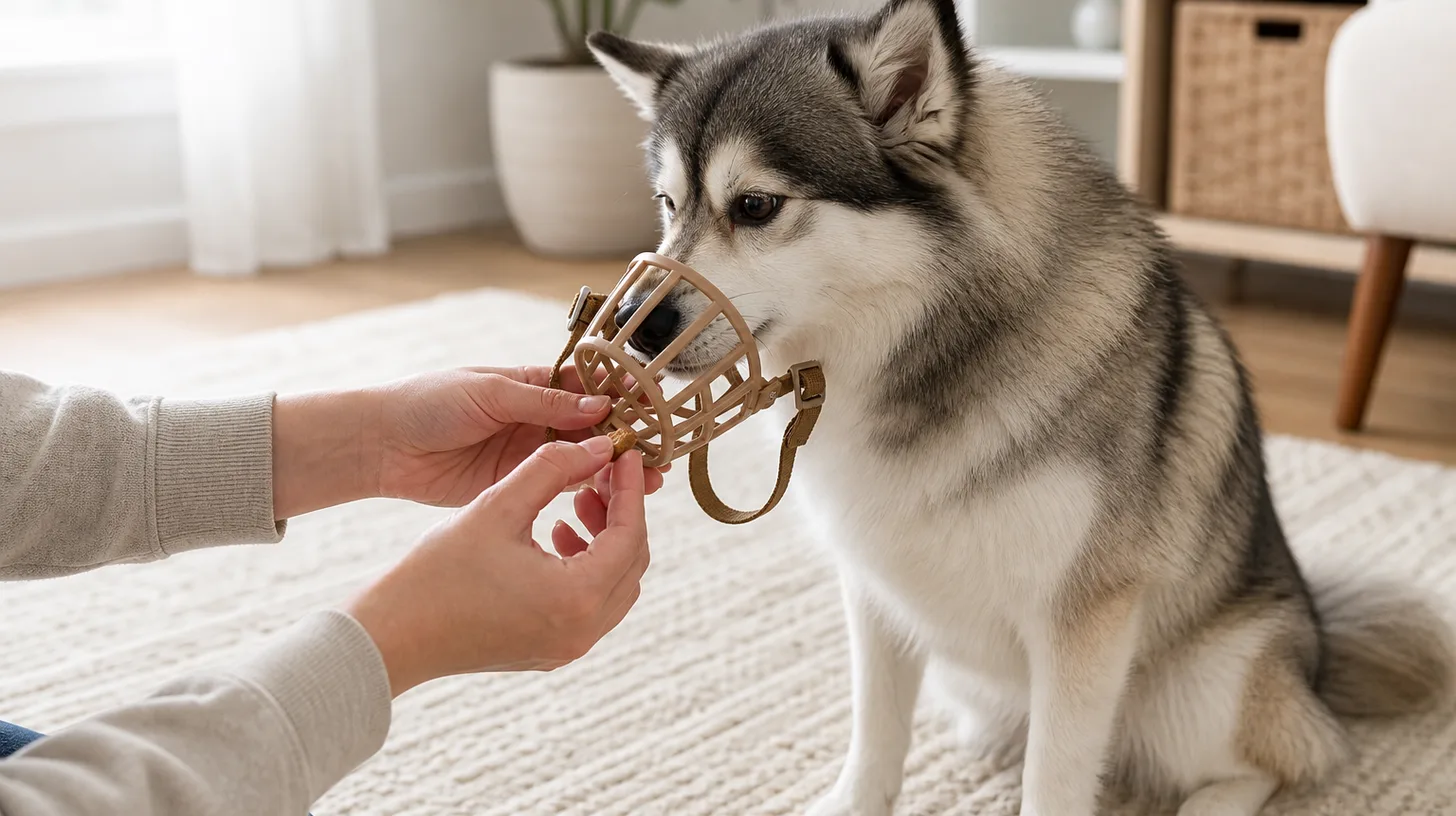
Direct answer: Teach a Pomsky to wear a basket muzzle before it is urgently needed. Select a basket design that permits a full pant, drinking, and treat delivery; reward voluntary nose entry with the straps loose; add duration and fastening in very small steps; and stop or reduce difficulty when the dog shows avoidance or distress. A muzzle is a safety layer, not punishment and not a substitute for distance, management, veterinary care, or behavior treatment.
A basket muzzle can make veterinary care, grooming, transport, behavior work, and unexpected emergencies safer when a dog has been prepared to wear it. It should not be introduced for the first time in the middle of a crisis unless immediate safety requires it. Calm practice at home gives the dog time to learn that the equipment predicts rewards and does not trap or punish.
The aim is comfortable cooperation, not forcing every dog to "love" a muzzle. Some dogs may become enthusiastic when it appears; others may simply learn to wear it without distress. Both can be useful outcomes.
What a basket muzzle can and cannot do
A muzzle is a physical safety layer that reduces the ability to bite. A suitable basket design leaves space for an adequate pant, allows drinking, and lets the handler deliver small treats. The American Veterinary Society of Animal Behavior recommends basket-style equipment for behavior work because of those functions.
A muzzle does not change the emotion driving fear, pain, frustration, or aggression. It does not make a crowded setting appropriate, turn an uncontrolled dog greeting into a safe one, or replace a treatment and management plan. Continue to use distance, barriers, a leash, predictable handling, and professional support.
Do not use a muzzle to punish barking, suppress warning signals, or leave a dog unattended. Do not assume it prevents every injury. A dog can still jump, scratch, body-slam, or strike with the basket. Other people and animals still need space.
Tight fabric or sleeve muzzles that hold the mouth closed may be used briefly by trained professionals for a specific procedure, but they are not suitable for routine walking, exercise, training duration, or warm conditions because the dog cannot pant normally. This guide concerns an open basket muzzle.
Choose a design that allows normal cooling and rewards
Fit is more than matching a package size to body weight. Pomskies can vary in muzzle length, width, coat volume, and head shape. Measure according to the manufacturer's method, then check the actual dog and consult a qualified professional when uncertain.
With the basket in place, verify:
- the dog can open its mouth into a full, functional pant;
- the front does not press on the nose;
- the basket does not ride into the eyes;
- straps do not rub the ears or restrict the throat;
- the dog can drink and receive appropriately sized treats;
- the basket cannot be pushed off easily;
- the material is intact, smooth, and suitable for the intended setting.
Check fit during movement, not only while the dog sits. Coat compression can make a loose-looking strap fit differently than expected, while dense fur can hide rubbing. Recheck after grooming, weight change, growth, or equipment modification.
Do not cut structural parts or alter straps without understanding how the change affects security. If the dog needs a muzzle to prevent scavenging, the design requirements differ from bite-risk management. A professional can help choose a configuration that meets the actual task without blocking normal cooling.
Prepare the training setup
Train in a quiet place where the dog can move away. Use very small, high-value treats that pass safely through the basket, and keep sessions short enough that the dog remains willing to participate. Set the muzzle on a stable surface between sessions instead of following the dog with it.
Before presenting the equipment, observe the dog's baseline body language. A relaxed dog may approach, sniff, take food gently, and return after moving away. Stress can look like freezing, leaning away, repeated lip licking, yawning outside a sleepy context, pinned ears, frantic food taking, refusal of food, hiding, or attempts to leave. Body language must be interpreted in context.
If the dog guards objects, has a bite history, reacts to hands near the face, or has painful ears, teeth, skin, neck, or eyes, do not experiment alone. Start with veterinary and qualified behavior guidance. The Cornell basket muzzle training resource specifically advises professional support for handling sensitivity or a history of biting.
Condition voluntary nose entry
Begin with the straps open and out of the way. Show the muzzle at a comfortable distance, then mark and reward any calm orientation toward it. The dog does not need to touch it on the first repetition.
Next, place a treat at the wide opening so the dog can take it without pushing its face inside. Gradually position treats farther into the basket. Keep your hands still and let the dog withdraw whenever it chooses. Do not move the muzzle onto the dog's face.
When the dog willingly places its nose inside, feed several small treats through the front while the nose remains in position. Then stop feeding and let the dog withdraw before it feels a need to pull away. This teaches that entering and leaving are predictable.
You can add a verbal cue after the behavior is already occurring reliably. Say the cue just before presenting the muzzle, then reward voluntary entry. A cue should describe an opportunity, not announce that the dog is about to be restrained.
Repeat in short sets. End while the dog is still engaged. Progress is measured by relaxed, voluntary repetitions, not by how quickly the strap can be fastened.
Add duration, straps, and movement
Increase nose-in-basket duration by adding one small moment between treats. If the dog pulls out, paws, freezes, or stops returning, the increase was too large. Shorten the duration and rebuild fluency.
Separately condition strap movement. While the dog is not wearing the muzzle, touch or lift the straps and reward. Then, during voluntary nose entry, briefly move a strap near the cheek without fastening it. Progress to touching behind the head, then connecting and immediately releasing the buckle.
The first fastened repetitions should be extremely brief. Feed through the basket, unfasten, and remove it before the dog becomes concerned. Gradually add:
- a few more seconds of calm wear;
- one step beside the handler;
- a simple familiar cue;
- movement around the room;
- a different quiet room;
- short, low-stress real-world practice.
Change one variable at a time. Do not jump from a calm living room to a busy clinic lobby and assume the behavior will transfer. Take the muzzle to enjoyable low-pressure activities so it does not predict only procedures or frightening encounters.
Follow the AVSAB humane training position: use rewards and avoid aversive methods. Tightening, correcting, or holding the dog down may create a negative association and increase handling risk.
Read stress and know when to step back
One brief attempt to rub the face after removal does not automatically mean the dog cannot learn. Persistent pawing, frantic rolling, shutting down, fleeing, growling, snapping, refusing normally valuable food, or escalating distress means the current step is not appropriate.
First check fit and physical comfort. Look for pressure near the eyes, nose contact, strap rubbing, pinched fur, excessive weight, sharp edges, or inadequate pant room. Stop using damaged or ill-fitting equipment.
Then reduce training difficulty. Return to looking at the muzzle, taking food near it, or voluntary nose entry without straps. Increase value and reduce session length. Do not keep the muzzle on in the hope that the dog will "get over it."
Pain can change a dog's response. Sudden resistance after previous comfort, face rubbing, head shaking, chewing difficulty, mouth odor, sensitivity around the ears, or a behavior change deserves veterinary assessment. Muzzle training should not be used to push through a painful condition.
Video a short session from a safe fixed position if a trainer or veterinary behaviorist requests it. The recording should show the dog's whole body and your handling, not only the face. Do not stage a high-risk reaction for the camera.
Use the muzzle safely in real situations
Inspect the muzzle, straps, and attachment points before each use. Confirm the dog can pant and drink in the current fit. Carry a backup plan for distance and exit; the muzzle is not permission to move closer to triggers.
Continue using a secure leash and suitable harness where required. Supervise continuously. Avoid heat, strenuous exercise, and settings where the basket could catch on obstacles. Never leave a muzzled dog alone in a crate, yard, vehicle, or with another animal.
Tell veterinary, grooming, boarding, or training staff that the dog has been conditioned to a particular muzzle and explain how it is put on. Let the professional decide what handling plan is safe for the procedure. The AAHA humane restraint position supports least-stress handling and preparation for basket-muzzle use rather than unnecessary force.
Clean the muzzle according to its material and dry it fully. Check contact points after wear. Record any rubbing or behavior change and adjust before the next session.
For walks, preserve space from people and dogs. A muzzle may cause others to keep distance, but never rely on that. Use clear communication and leave situations that exceed the dog's ability to remain calm.
When professional help is necessary
Seek individualized help before relying on a muzzle for:
- a known or suspected bite risk;
- aggression toward people or animals;
- severe handling sensitivity;
- panic when equipment approaches the face;
- redirected behavior toward the handler;
- a medical procedure involving pain;
- repeated attempts to remove or destroy the muzzle;
- uncertainty about fit for a very short, long, broad, or unusual muzzle shape.
A veterinarian can check for pain and medical contributors. A board-certified veterinary behaviorist or qualified reward-based behavior consultant can build a risk-management and behavior plan. The site's trainer-selection guide can help screen methods and credentials.
If an urgent situation requires restraint before conditioning is complete, follow the veterinary or emergency professional's instructions. Do not delay necessary care to finish a training protocol.
Successful muzzle training is quiet and incremental. The dog learns to approach, place its nose inside, remain comfortable while straps move, wear the basket briefly, and generalize the skill without losing the ability to pant, drink, take rewards, and communicate. The equipment then supports a broader safety plan instead of becoming the plan itself.
Sources reviewed
Each source is used only for the claim scopes listed below. None establishes a guaranteed Pomsky outcome or replaces individual professional assessment.
- Cornell University College of Veterinary Medicine: Basket Muzzle Training - Supports: gradual muzzle conditioning; stress observation; professional referral. Limit: Dogs with bite history, handling sensitivity, or escalating distress need individualized qualified help.
- American Veterinary Society of Animal Behavior: Introducing a Muzzle - Supports: basket muzzle selection; positive muzzle introduction; treat delivery through a muzzle. Limit: A muzzle is a safety layer, not a diagnosis, punishment, or substitute for a behavior plan.
- American Animal Hospital Association: Humane Restraint of Animals - Supports: least-stress handling; basket muzzle preparation; positive behavior modification. Limit: Does not authorize forceful restraint or replace veterinary handling decisions.
- American Veterinary Society of Animal Behavior: Humane Dog Training Position Statement - Supports: reward-based training; aversive-method risk; behavior change principles. Limit: Does not guarantee outcomes for an individual dog.