Everything You Need to Know About the Pomsky Miniature Husky
Welcome to the vibrant world of canine hybrids! If you’re captivated by the charming combination of a fluffy Pomeranian and the striking features of a Siberian Husky, you’ve likely encountered the delightful Pomsky. Among the various sizes this designer dog breed can achieve, the Pomsky Miniature Husky – often referred to simply as the Mini Pomsky – holds a special appeal for many prospective owners seeking a smaller yet still energetic companion. This article delves deep into the specifics of the Mini Pomsky, covering their origins, physical characteristics, temperament, care needs, and training considerations, providing you with a comprehensive guide for your potential new furry friend.
Unraveling the Pomsky Miniature Husky: Origins and Definition
The Pomsky, the breed name for the Pomeranian x Husky cross, is a relatively recent addition to the world of mixed-breed dogs, first appearing in the United States around the early 2000s. Breeders aimed to create a dog with the best traits of both parent breeds: the Husky’s beauty, intelligence, and vocal nature combined with the Pomeranian’s smaller size and energetic coat.
As a designer breed, Pomskies don’t have a single, universally accepted standard like purebred dogs. Their appearance and temperament can vary significantly depending on the specific lineage and the ratio of Husky to Pomeranian genes. This variation naturally leads to different size classifications, including the Pomsky Miniature Husky. These smaller variants are often the result of careful breeding focused on minimizing the contribution of the larger Husky genes or selecting for a naturally smaller lineage.
The Mini Pomsky category typically encompasses dogs that are considerably smaller than the standard Pomsky but still retain many of the defining features of both breeds. Their size makes them suitable for a wider range of living situations, from apartments to houses with yards, though their energy levels remain high regardless of their stature.
Differentiating Pomsky Size Categories
To understand the Mini Pomsky fully, it’s helpful to briefly touch upon the other size categories within the Pomsky spectrum:
- Toy Pomsky: These are the smallest of the three main groups, typically weighing up to 15 pounds (6.8 kg) and standing less than 10 inches (25 cm) tall at the shoulder. They often resemble Pomeranians more closely.
- Mini Pomsky: The Pomsky Miniature Husky falls into this category, generally weighing between 12 and 20 pounds (5.4 – 9 kg) and reaching a height of up to 14 inches (35 cm) at the shoulder. This is the most common size classification for many breeders.
- Standard Pomsky: These dogs are closer in size to a Siberian Husky, typically weighing 30 pounds (13.6 kg) or more and standing taller than 15 inches (38 cm). They are less common as adult dogs but can sometimes be seen as puppies.
It’s crucial to note that size can continue to fill out even after the initial rapid growth phase, often extending into their first year or even later. Prospective owners should be prepared for some variation within the Mini Pomsky category.
Pomsky Miniature Husky Appearance: A Glimpse of Both Worlds
The Mini Pomsky is a visual treat, often possessing a coat that is a delightful blend of the Husky’s distinct features and the Pomeranian’s fluffiness. Understanding their typical appearance helps set realistic expectations.
Grooming Needs: The Double Coat Challenge
Both Pomeranians and Siberian Huskies have double-coated fur, and this trait is typically inherited by their Pomsky offspring. This means a Mini Pomsky will have a dense undercoat providing insulation and a longer, coarser outer coat that acts as a protective layer. This double coat is excellent for insulation against cold weather, which aligns with the Husky’s origins in Siberia, but it also requires regular grooming to prevent matting and tangling. Tiny Teacup Pomsky Puppies: Your Ultimate Guide & Commercial Info
Expect to brush your Mini Pomsky several times a week, possibly more during shedding seasons (spring and fall). A slicker brush and a pin brush are usually effective tools for removing loose hair and working through any mats. Professional grooming may be necessary occasionally, especially if mats become significant, particularly around the ears, eyes, and base of the tail.
Color Palette: Nature’s Canvas
The color variations for Mini Pomskies are incredibly diverse, much like their temperament. They can inherit colors from either parent breed:
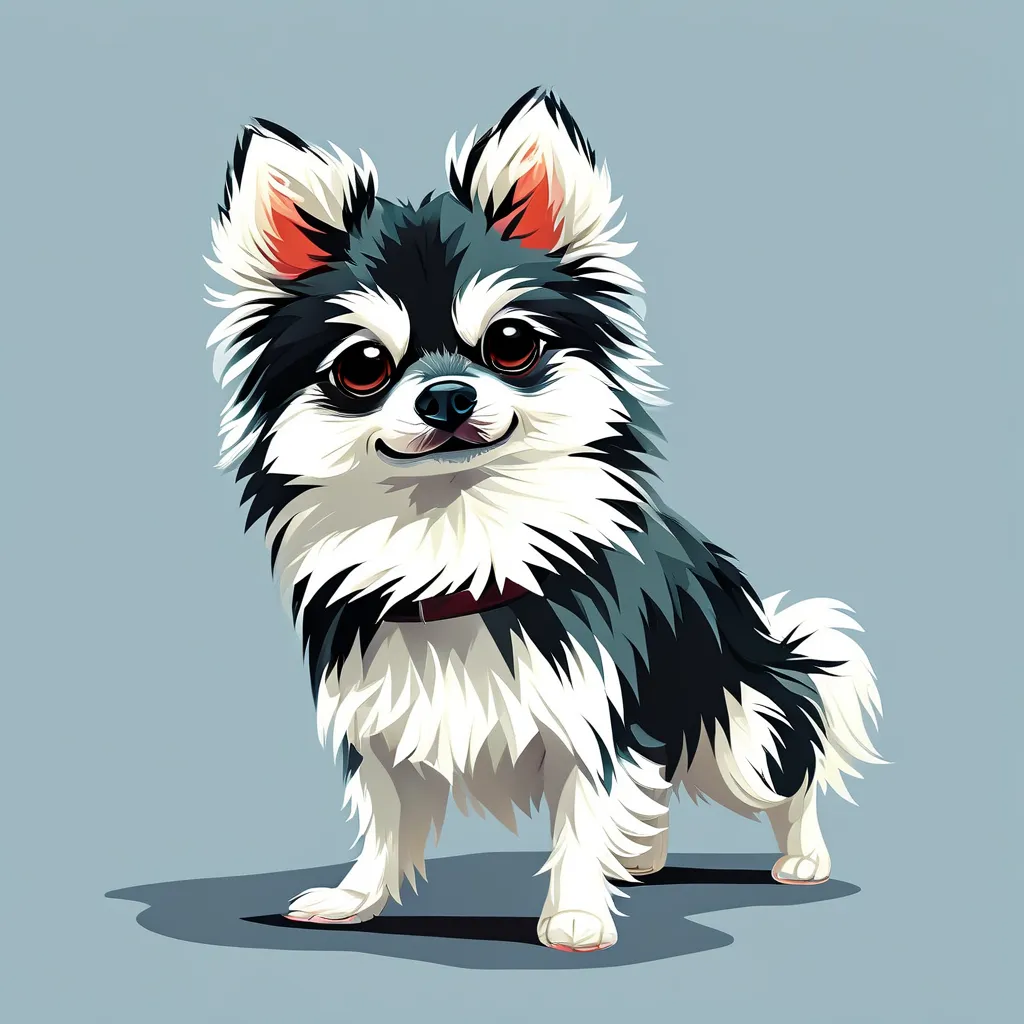
- From the Pomeranian side: White, orange, cream, brown, black, sable, blue, and parti-color (patches of white and color).
- From the Husky side: White, grey, red/brown (rust), black, and often more complex patterns like brindle or solid colors not commonly seen in purebred Pomeranians.
It’s common for Pomskies to have a base color inherited from one parent with markings or color variations from the other. For example, a white Husky base with orange Pomeranian markings, or a cream Pomsky with black Husky points. The specific color combinations are numerous and depend entirely on the genetics of the individual dog and its parents. Newborn Pomsky Informational Guide: Essential Tips for First-Time Owners How Big Does a Pomsky Get? Your Complete Size Guide for the Adventure Awaits
Facial Features: A Combination of Cuteness and Character
The face of a Mini Pomsky often showcases a charming blend of features:
- Muzzle: Typically short and slightly tapered, reminiscent of a Pomeranian, but often with the blue or brown eyes characteristic of Huskies, adding to their expressive look.
- Eyes: One of the most striking features is the eye color. While Pomeranians often have blue or brown eyes, Huskies famously have blue, brown, or heterochromatric (two different colored) eyes. Mini Pomskies can inherit any combination, making eye color a popular point of discussion among owners.
- Ears: Like Pomeranians, Mini Pomskies usually have erect, triangular ears that stand upright, though the shape and size can vary slightly depending on the Husky influence.
- Skull: Often features a slightly domed shape with a defined stop (the groove between the forehead and muzzle), combining elements from both parent breeds.
Overall, the Mini Pomsky’s appearance is often described as “Husky-faced” due to their eye shape and fur pattern, combined with the Pomeranian’s smaller size and fluffier coat texture.
Temperament and Personality: An Active Companion
The temperament of a Mini Pomsky is perhaps as diverse as their appearance, but certain traits are commonly associated with this mix. They inherit a combination of the energetic, intelligent Husky and the alert, sometimes feisty, Pomeranian’s characteristics.
Energy Levels: Keep Them Moving
One of the most important things to understand about the Pomsky Miniature Husky is their high energy level. While they are smaller than a full-grown Husky, they still inherit the need for significant physical and mental stimulation. These dogs are not typically lap dogs suited for a sedentary lifestyle. They require:
- Daily Exercise: Regular walks (ideally at least two walks per day), access to a securely fenced yard for running and playing, and opportunities for vigorous play sessions are essential. Even if apartment living is possible, it must be accompanied by substantial outdoor time.
- Mental Stimulation: Boredom can lead to destructive chewing and excessive vocalization. Puzzle toys, training sessions, and interactive games are vital for keeping their intelligent minds engaged.
Without adequate outlets for their energy, Mini Pomskies can become restless, develop behavioral problems, or simply detract from the harmony of a household. Their agility and high prey drive mean they excel in activities like agility training and earth dog trials.
Vocal Nature: More Than Just Barks
While not the most common sound associated with them, a Mini Pomsky can be quite vocal. They inherit the Husky’s tendency to “talk” rather than bark. This vocalization can include:
- Barking: Of course, they can bark on command or out of excitement.
- Howling: This is a trait strongly associated with Huskies. Mini Pomskies may howl in response to certain sounds (like music or sirens), when they see other dogs or people through a window, or simply for no apparent reason.
- Whining:</
References