Everything You Need to Know About the Pomsky and Husky Mix
The sight of a fluffy, fox-like companion with eyes that seem to hold the intelligence of a wolf and the boundless energy of a sled dog is undeniably captivating. This is the Pomsky, a popular designer dog breed that has surged in popularity in recent years. But what exactly is a Pomsky? More importantly, what can potential owners expect when considering this unique crossbreed? This comprehensive guide delves into the world of the Pomsky and Husky mix, exploring its origins, appearance, temperament, health considerations, care requirements, and the realities of bringing one into your home.
The Pomsky: A Designer Breed in Detail
A Pomsky is, quite simply, a cross between a Pomeranian and a Siberian Husky. This specific combination creates a dog that inherits desirable traits from both parent breeds. While not recognized by all major kennel clubs as a purebred, the Pomsky has become a beloved “designer dog” due to its unique appearance and charming personality.
The term “designer dog” refers to mixed-breed dogs created by intentionally crossing two distinct purebred dogs. In the case of the Pomsky, breeders aim to combine the small size and fluffy coat of the Pomeranian with the intelligence, energy, and striking wolf-like features of the Husky. The resulting breed is often sought after for its hypoallergenic potential (though this varies) and its perceived cuteness factor.
Origins and Genetic Considerations
While the exact origin of the Pomsky is somewhat unclear, it is believed to have emerged in the United States and Canada during the early 2000s. The trend gained momentum as people sought smaller versions of larger sled dogs like the Husky, or dogs with the unique looks of the Husky combined with a more compact size.
It’s important to understand that genetics in mixed breeds can be unpredictable. As mentioned in reference information, a Pomsky puppy inherits traits from both parents randomly. This means that while you might expect a certain combination of looks or characteristics, the actual outcome can vary significantly. A Pomsky could lean more towards looking like a Pomeranian, exhibiting more of its parent’s size and coat type, or it could resemble a Husky more closely in terms of its facial structure, ear shape, or even temperament.
The 50/50 genetic expectation isn’t always accurate in practice. Breeding two distinct purebred dogs creates a unique genetic cocktail, and the expression of traits can be complex and variable. This unpredictability is one of the reasons why responsible breeding practices are so crucial for the breed.
Appearance: A Mosaic of Adorable Features
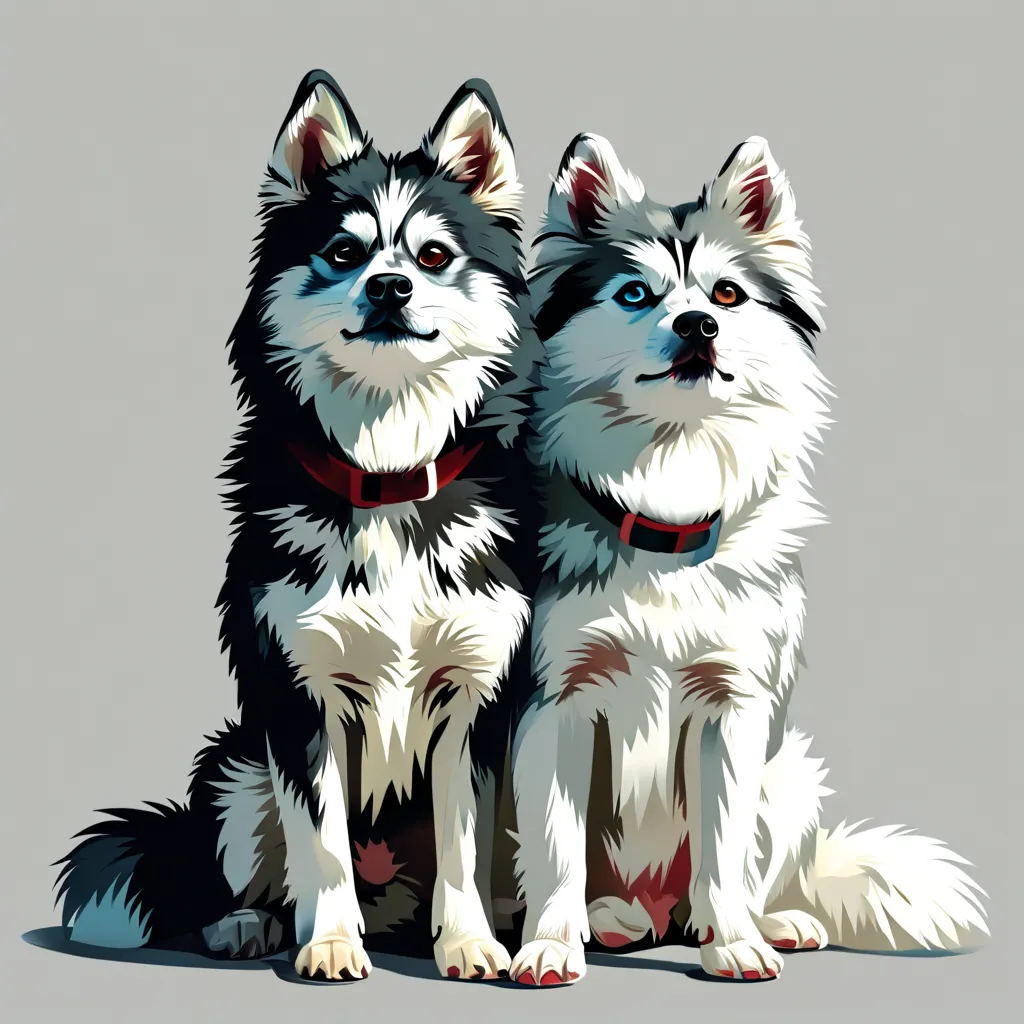
Pomskies are known for their distinctive and often charming appearance. They typically inherit their coat from the Husky side, which is usually thick, fluffy, and comes in a variety of colors including white, black, grey, red, cream, and brindle. Pomeranian influence can be seen in their rounder faces and fluffy undercoat, but the overall look often leans towards the Husky’s more pronounced features.
Size: Pomskies are generally a small to medium-sized breed. Their size can vary significantly depending on the genetics inherited. Males typically weigh between 10-20 pounds (4.5-9 kg) and stand 10-14 inches (25-35 cm) tall at the shoulder. Females are usually slightly smaller, weighing 8-15 pounds (3.6-6.8 kg) and standing 9-13 inches (23-33 cm) tall.
Coat: The coat is often described as “double” or “plush.” It usually consists of a soft, dense undercoat and a coarser outer coat. The texture and density can range from quite fluffy (reminiscent of a Pomeranian) to moderately thick (more akin to a Husky). Regular grooming is essential to prevent mats and tangles.
Face and Ears: Pomskies often have expressive eyes, which can be blue, brown, or heterochromatic (different colored eyes). Their ears are typically long and floppy, a trait inherited from the Pomeranian, but sometimes they can have the prickly ears characteristic of Huskies if they inherit that gene.
Overall Look: The most striking feature for many is the wolf-like appearance, a nod to the Husky lineage. This includes their large, almond-shaped eyes and sometimes slightly tapered muzzle. They are undeniably cute, with a look that often stops strangers in their tracks.
Temperament: A Combination of Playfulness and Intelligence
Understanding the temperament of a Pomsky is crucial for any potential owner. They are known for being playful, intelligent, and affectionate dogs. However, their temperament is a blend of the Pomeranian and Husky traits.
Playful and Energetic: Like the Pomeranian, Pomskies inherit a playful spirit. They enjoy games and interactive activities. From the Husky side comes a high level of energy and stamina. These dogs need regular physical exercise and mental stimulation to prevent boredom and destructive behavior. Daily walks, playtime, and puzzle toys are essential.
Intelligent and Trainable: Both parent breeds are highly intelligent. This makes Pomskies generally trainable, but they also have independent thinking skills. They can be clever about figuring out shortcuts or rules they want to bend. Consistent, positive reinforcement training is key. They enjoy learning tricks and engaging in activities like agility or nose work. Discover Pomsky Puppies: Your Complete Guide to This Popular Designer Breed
Social Nature: Pomskies are typically social dogs and thrive on human companionship. They are affectionate and enjoy being close to their families. While generally good with its own family members, their compatibility with other dogs and pets requires careful introduction and supervision, as they may inherit a bit of the Husky’s prey drive or possess strong herding instincts.
Vocalization: One trait often associated with Huskies is their tendency to howl or yodel, especially in response to certain sounds or situations. Pomskies can inherit this trait, making them quite vocal. They may also bark or whine to communicate their needs or desires. Pomsky Size Information: Full Grown Adult Size, Weight & Height Guide
Guarding Instincts: Despite their small size, Pomskies can have a protective streak. They are alert and aware of their surroundings, potentially making them decent watchdogs due to their vocal nature and tendency to alert their owners to perceived intruders. However, they are not typically guard dogs due to their size.
Health, Care, and Living Environment
Like all dogs, Pomskies have specific health needs and care requirements that potential owners must be prepared for. Luxury Pomsky Puppies: Designer Breed Guide & Commercial Information
Health Considerations
Since the Pomsky is a relatively new designer breed, comprehensive health data is still limited compared to purebred dogs with long histories of registration. However, they can inherit health issues from either the Pomeranian or Husky lineage. Responsible breeders screen for common genetic conditions.
Pomeranian Potential Health Issues: Potential concerns include patellar luxation (kneecap dislocation), tracheal collapse (especially in very small individuals), eye problems like Progressive Retinal Atrophy (PRA), and dental issues common to small breeds.
Husky Potential Health Issues: Common health problems associated with Huskies include hip dysplasia, elbow dysplasia, certain eye diseases (like cataracts), and potentially a predisposition to certain skin conditions or digestive issues. Huskies are also known to have a higher risk of bloat (Gastric Dilatation-Volvulus – GDV) in deep-chested breeds, although Pomskies are not typically deep-chested.
It’s crucial to obtain a Pomsky from a reputable breeder who performs health clearances on the parent dogs and provides documentation. Regular veterinary check-ups, a balanced diet, and preventative care (vaccinations, parasite control) are essential for maintaining your Pomsky’s health.
Grooming Needs
The Pomsky’s double coat requires significant grooming to prevent mats, tangles, and skin problems.
Frequency: Aim for grooming sessions at least 2-4 times per week, depending on the individual dog’s coat type and activity level. Professional grooming every 4-6 weeks is highly recommended.
Grooming Tasks: Brushing is essential daily or several times a week to remove loose hair and prevent matting, especially around the legs, belly, and ears. Regular nail trimming, ear cleaning, and dental care are also vital components of their grooming routine.
Hypoallergenic Myth: While often marketed as hypoallergenic, no dog breed is truly hypoallergenic. Allergies are typically triggered by proteins found in a dog’s saliva, skin flakes (dander), and urine. Regular grooming helps reduce d
References
- Pomeranian Husky (Pomsky): What You Need to Know Before Buying
- Pomsky: All About this Pomeranian Husky Mix
- The Pomsky: A Complete Guide to the Husky & Pomeranian Mix
- The "Pomsky". The result of breeding a Husky and a Pomeranian.
- This is a Pomsky, a Pomeranian Husky Mix. I must say, I did not think …