Everything You Need to Know About the Full Grown Miniature Pomsky
The **full grown miniature Pomsky** is a captivating canine companion that has rapidly gained popularity in the world of designer dogs. As a relatively new breed, the Pomsky, a cross between a Pomeranian and a Siberian Husky, offers a unique combination of looks and temperament. Understanding what a **full grown miniature Pomsky** looks like, how big they get, their personality, and their care needs is essential for potential owners considering bringing one of these delightful dogs into their home. This comprehensive guide delves into all aspects of the **full grown miniature Pomsky**, providing you with the detailed information you need.
What Exactly is a Full Grown Miniature Pomsky?
Before diving into the specifics of the “full grown” stage, it’s important to understand the foundation. A Pomsky is a **designer dog**, resulting from the crossbreeding of a Pomeranian and a Siberian Husky. The term “miniature” typically refers to a Pomsky that leans more towards the smaller end of the size spectrum, often inheriting traits more closely resembling the Pomeranian parent.
The concept of a “full grown” Pomsky signifies the dog reaching its final adult size and maturity. This process usually involves the completion of skeletal and dental development, as well as the stabilization of their coat and overall physical appearance.
Distinguishing Miniature from Standard Pomskies
While all Pomskies share common ancestry, the term “miniature” is often used to differentiate those that are significantly smaller than the average Pomsky. This can be due to:
- Genetics: Some Pomskies naturally inherit smaller genes from their Pomeranian parent.
- Mating Practices: Breeders sometimes mate smaller Pomeranians with smaller Huskies or carefully select breeding pairs known for producing smaller offspring.
- Coat Density: A “miniature” Pomsky might sometimes refer to a Pomsky with a less dense coat compared to its standard counterpart, although this isn’t a universally accepted definition.
It’s crucial to note that the term “miniature” is not a formally recognized breed standard for Pomskies by major kennel clubs. It’s primarily a descriptive term used by owners and breeders.
The Appearance and Size of the Full Grown Miniature Pomsky
The **full grown miniature Pomsky** typically possesses a striking and charming appearance that blends features from both parent breeds. Their size, however, can vary, and understanding the typical range is key.
Size Expectations
The size of a **full grown miniature Pomsky** generally falls on the smaller side compared to a typical Pomsky. Based on common observations and breeding practices aiming for smaller size: Teacup Pomsky: A Complete Guide to Health, Care, and Personality
- Height: Usually stands between 10 to 14 inches (25 to 35 cm) tall at the shoulder.
- Length: Typically measures around 12 to 16 inches (30 to 40 cm) from nose to base of tail.
- Weight: Usually weighs between 10 to 20 pounds (4.5 to 9 kg). Some sources might list up to 25 pounds for larger miniatures, but generally, the 10-20 pound range is more common for the true “miniature” designation.
It’s important to remember that individual variation exists. While a **full grown miniature Pomsky** aims for a smaller stature, they can still vary slightly. Comparatively, a standard Pomsky might reach 12-17 inches and weigh 15-30 pounds, while a full-grown Husky can be 20-23 inches and weigh 35-60 pounds. The **full grown miniature Pomsky** sits comfortably within the smaller range. Full-Grown Mini Pomsky: A Complete Guide to Size, Care, and Temperament
[IMAGE_PLACEHOLDER: A photo of a small, full-grown miniature Pomsky sitting on a couch, looking alert.]
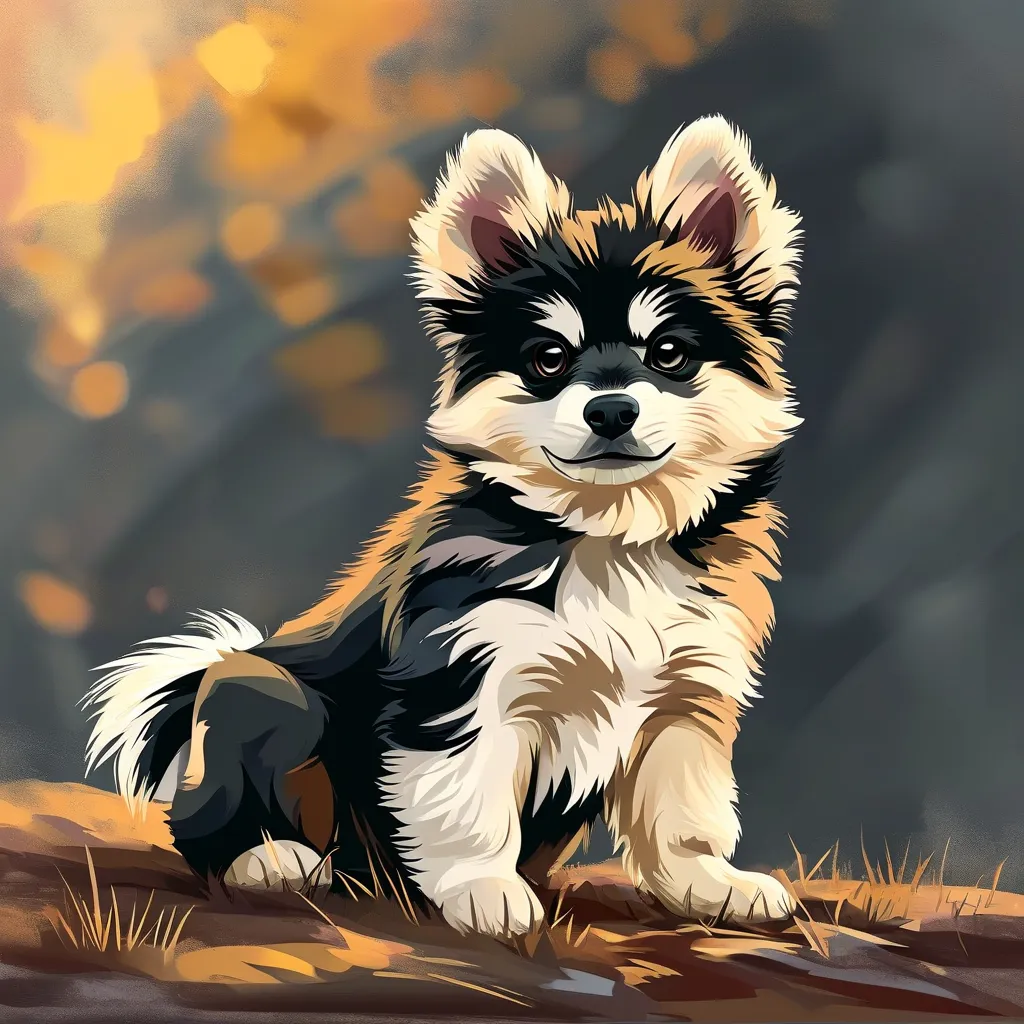 Adorable Teacup Pomsky Guide: Cute Tiny Pup Information
Physical Characteristics
Physically, the **full grown miniature Pomsky** often retains many endearing features:
- Head: Possesses the characteristic wedge-shaped head reminiscent of the Pomeranian, often with a slightly longer muzzle compared to a purebred Pomeranian.
- Coat: One of the most defining features is their coat. Pomskies typically have a double coat. The **full grown miniature Pomsky** will have a dense undercoat and a longer, coarser outer coat. Colors vary widely and can include black, white, grey, brown, cream, and parti-color patterns (patches of color). The coat texture can range from soft and fluffy to slightly rougher, depending on the lineage.
- Size Proportion: They generally have a sturdy yet agile build, combining the spitz-like elegance of the Pomeranian with the more robust appearance of the Husky, albeit on a smaller scale.
- Eyes: Often inherit the expressive, intelligent eyes of the Husky, which can be various shades of brown, blue, or heterochromia (different colored eyes). Their eyes are usually large and captivating.
- Tails: Tail length can vary. Some Pomskies have the long, fluffy tail of the Husky, while others might have a shorter, Pomeranian-like tail. In colder climates, tail docking might be performed by some breeders, though this is controversial and not standard for the breed.
Temperament and Personality of the Full Grown Miniature Pomsky
The temperament of a **full grown miniature Pomsky** is a fascinating blend inherited from both their Pomeranian and Husky ancestors. This mix often results in an energetic, intelligent, and sometimes mischievous companion.
Key Traits
- Intelligence: Both parent breeds are known for their intelligence. Pomskies are quick learners but can also become independent thinkers, requiring mental stimulation to prevent boredom-related issues.
- Playfulness: The Husky influence brings a playful and sometimes clownish personality. Expect your **full grown miniature Pomsky** to enjoy games and often seek attention and playtime.
- Sociability: Generally, Pomskies are social dogs. They usually get along well with children and other pets, inheriting a friendly disposition from the Pomeranian, while the Husky contributes a more laid-back, tolerant nature. Early socialization is key to ensuring they are well-adjusted.
- Alertness: Like Huskies, they can be quite alert and vocal, potentially barking at strangers, other animals, or unusual noises. They make decent guard dogs in terms of alertness, but they are not typically guarding breeds.
- Energy Levels: They are an active breed. The **full grown miniature Pomsky** needs regular exercise and mental engagement to stay happy and healthy. Short walks, playtime, and puzzle toys are essential.
- Attachment: They often form strong bonds with their human families and enjoy being part of things. They are generally not left alone for extremely long periods without potential separation anxiety.
[IMAGE_PLACEHOLDER: A happy **full grown miniature Pomsky** playing fetch in a park.]
Potential Challenges
While generally friendly, the **full grown miniature Pomsky** can inherit certain traits that require careful management:
- Destructiveness: If bored or left alone for too long, their energy can lead to chewing or destructive behavior.
- Huskies can be stubborn: Training requires patience and positive reinforcement methods, as they can be independent thinkers.
- Escape Artist Tendencies: Especially if they inherit Husky wanderlust, ensure they are securely contained if not properly supervised.
Caring for Your Full Grown Miniature Pomsky
Proper care is essential for ensuring a **full grown miniature Pomsky** lives a happy and healthy life. This involves attention to diet, exercise, grooming, training, and veterinary care.
Diet and Nutrition
Feeding a **full grown miniature Pomsky** the right food is crucial. They are small dogs and can be prone to overeating, which can lead to health issues like obesity.
- Quality Dog Food: Choose high-quality commercial dog food appropriate for small to medium breeds and their life stage (puppy, adult, senior). Look for formulas rich in protein and essential fatty acids.
- Portion Control: Measure food
References