The Ultimate Guide to the Stunning Pomsky Red: Colors, Facts & Care
Welcome, dog lovers and prospective pet owners! If you’re captivated by the unique charm of a Pomeranian crossed with the striking features of a Siberian Husky, you’ve likely encountered the delightful Pomsky. Among the most sought-after and visually stunning variations of this popular designer breed are the Pomskies sporting a beautiful red coat. This guide delves deep into the world of the Pomsky Red, exploring the genetics behind their unique color, providing essential facts about the Pomsky breed itself, and offering crucial care information to ensure these bundles of joy live their best lives. Whether you’re dreaming of bringing a red Pomsky into your home or simply fascinated by this specific color variation, we’ve got you covered.
Unraveling the Genetics: Why is a Pomsky Red?
The color red in Pomskies is a fascinating topic, primarily governed by genetics. It’s important to understand that the red coat is a **recessive color trait**. This means that for a Pomsky to exhibit a solid red coat, it must inherit two copies of the specific recessive allele responsible for red, often denoted in relation to the B locus (where ‘b’ represents the red allele). For a dog to express a true red coat, its genotype must be **bb** (homozygous recessive) at the B locus.
The B Locus Explained
In canine coat color genetics, the B locus controls the production of eumelanin (black/brown pigment). There are different alleles at this locus:
- B: Dominant allele. Produces normal black/brown pigment. A dog with at least one B allele (BB or Bb) will have a coat with some black/brown shades, depending on other genes.
- b: Recessive allele. Produces a lack of black/brown pigment, leading to red or fawn colors. Only when a dog has two copies of this allele (bb) does it express a red or similar coloration.
Think of it like having a red pocket in a deck of cards. You need two red pockets for the card to be red, not one red and one black. This is why breeding two carriers (Bb) has a chance (25%) of producing red offspring (bb), but breeding a red (bb) with a non-red (B_) will always produce either red or a non-red carrier, never another true red if the non-red is BB.
What Does “Pomsky Red” Look Like?
A true Pomsky Red typically refers to a dog with a predominantly red or fawn-colored coat, often solid or with very minimal markings. The shade can vary, ranging from a light, champagne-like fawn to a deeper, rustier red. Crucially, a true red Pomsky **should not** have black or brown hairs present, as this indicates they carry the dominant B allele or other modifying genes are influencing the color.
It’s also essential to differentiate between true red and variations like cream, orange, or parti-color that might sometimes be mistakenly referred to as red. True red is defined by the complete absence of black/brown pigment, resulting in the characteristic reddish or fawn hue.
Pomsky Facts: Beyond the Red Coat
The Pomsky is a relatively recent phenomenon in the canine world, emerging primarily as a result of crossing Pomeranians and Siberian Huskies in North America during the late 1990s and early 2000s. While the specific origins are often shrouded in mystery, the breed quickly gained popularity due to its unique combination of looks and temperament.
Mixing Two Unique Breeds
Understanding the parent breeds is key to appreciating the Pomsky:
- Pomeranian: Originating from Germany, these small dogs are known for their fox-like appearance, dense undercoat, curled tail (“topknot”), and often boast erect ears. They come in various colors but are generally alert, intelligent, and can have a proud, sometimes independent, personality.
- Siberian Husky: Hailing from Russia, Huskies are medium-sized working dogs known for their endurance, striking blue or heterochromatic eyes, dense double coat, and friendly, outgoing nature. They possess a strong prey drive inherited from their working past and are known for their vocalizations (“snow dogs”).
The initial goal of crossing these two breeds was often to create a smaller version of the Husky or to combine the Pomeranian’s coat with the Husky’s temperament. The result is the Pomsky, a small yet energetic companion.
The Pomsky Phenotype: What They Look Like
Pomskies are small dogs, typically weighing between 10 to 30 pounds (4.5 to 13.6 kg) and standing about 10 to 14 inches (25 to 36 cm) tall at the shoulder. Their size can vary significantly depending on which parent breed they inherit more traits from. The Ultimate Guide to Pomsky Prices: Everything You Need to Know
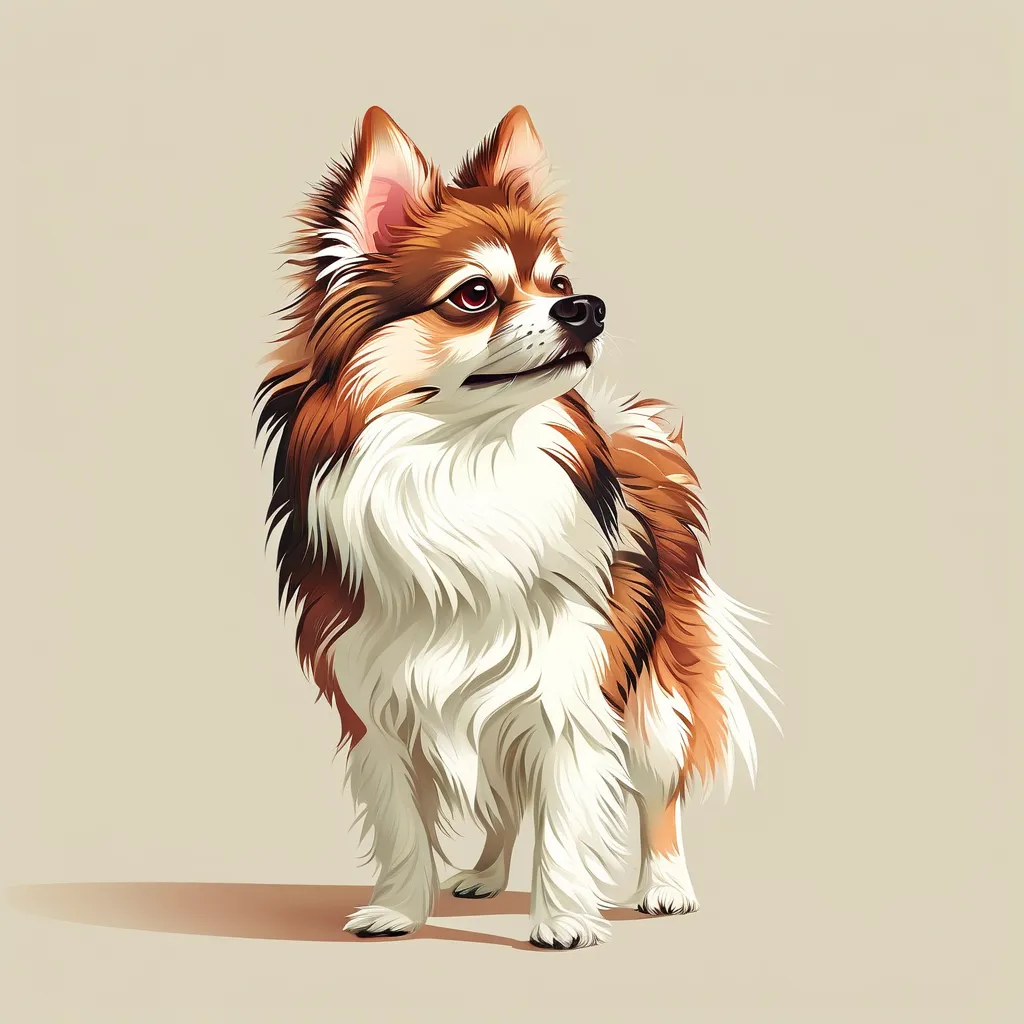
Physically, Pomskies often inherit the characteristic “doll-like” features from their Pomeranian parent, such as a wedge-shaped head, bright eyes, and sometimes a curled tail, combined with the Husky’s broader muzzle and floppy ears. Their coat is usually a double coat, essential for insulation, and can be found in various textures and lengths. Common coat colors include white, parti-color (patches of white and color), black and white, orange, brown, and, of course, the sought-after red variations. Pomsky Price: Your Complete Guide to Costs and Commercial Options
Temperament and Personality
One of the most appealing aspects of the Pomsky is their personality. They are generally described as: The Ultimate Guide to Pomsky Prices: Everything You Need to Know
- Playful and Energetic: Inheriting energy from both parents, Pomskies require regular exercise and mental stimulation to prevent boredom and destructive chewing.
- Intelligent and Trainable: Their intelligence makes them eager learners, though their independent streak (from the Pomeranian) can sometimes make training a fun challenge.
- Sociable and Affectionate: Pomskies typically thrive on human companionship and form strong bonds with their families. They are often good with children and other pets if socialized early, although their Husky lineage gives them a moderate-to-high prey drive.
- Vocal: Like Huskies, they can be quite vocal, barking, howling, or whining to alert their owners or express themselves.
- Stubborn (sometimes): A trait often associated with the Pomeranian, requiring owners to be patient and consistent.
It’s crucial to remember that individual personalities can vary greatly depending on the specific genetics inherited from each parent. They require experienced owners who can provide firm but gentle leadership and consistent training.
Caring for Your Pomsky Red: Health, Grooming, and Lifestyle
Welcoming a Pomsky Red into your home is a rewarding experience, but it comes with responsibilities. Proper care is essential for their health, happiness, and longevity.
Health Considerations
While generally healthy, Pomskies, being a relatively new designer breed, can inherit health issues from their parent breeds. Responsible breeding is key, but potential health concerns might include:
- Dental Problems: Small breeds often suffer from dental disease. Regular dental check-ups and at-home care are vital.
- Hip Dysplasia: A joint condition more common in larger breeds, but possible in Pomskies. Choosing responsible breeders who screen for this is important.
- Hypothyroidism: An endocrine disorder affecting metabolism.
- Patellar Luxation: Knee dislocation, more common in small breeds.
- Progressive Retinal Atrophy (PRA): A leading cause of blindness in dogs. Breeding from dogs tested clear for PRA is recommended.
- Allergies: Like many breeds, Pomskies can suffer from environmental and food allergies.
- Eye Problems: Cataracts or other eye issues can occur.
Always inquire about the health history of the puppy’s parents and choose a breeder who performs health clearances. Regular veterinary check-ups are non-negotiable.
Grooming Needs
One of the most significant aspects of Pomsky care is grooming, primarily due to their double coat:
- Brushing: Essential daily or at least several times a week. A double coat is prone to mats, especially around the legs
References