Pomsky Blue Merle: A Complete Guide to This Stunning Breed
The canine world is constantly evolving, and one relatively new addition that has captured the hearts of dog lovers everywhere is the Pomsky. A delightful blend of the spirited Pomeranian and the energetic Siberian Husky, this designer breed is known for its unique appearance and charming personality. Among the most visually striking variations of the Pomsky is the Blue Merle. This guide delves deep into the world of the Pomsky Blue Merle, exploring its origins, distinctive features, temperament, care requirements, and what potential owners need to consider.
Origins and Development: The Pomsky Ancestry
The Pomsky breed is relatively young, emerging as a designer dog in the early 2000s. Its creation was the result of a natural mating between a Pomeranian and a Siberian Husky. The resulting offspring, the first-generation Pomsky (F1), often displayed traits and coat colors from both parent breeds. Dedicated breeders began working with these F1 Pomskies, strategically pairing them to develop the Pomsky into a distinct breed with consistent characteristics, including the sought-after Blue Merle coat pattern.
It’s important to understand that the Pomsky is not a formally recognized breed by major kennel clubs like the American Kennel Club (AKC). Instead, it exists as an unofficial designer breed, which means breed standards and registration requirements can vary significantly depending on the breeder or the specific organization involved. This lack of formal recognition doesn’t diminish the breed’s appeal, however.
Appearance and Coat: The Pomsky Blue Merle’s Distinctive Look
The Pomsky Blue Merle possesses a truly captivating appearance that sets it apart. It inherits physical traits from both its Pomeranian and Husky ancestors, resulting in a unique package.
The Blue Merle Coat Pattern
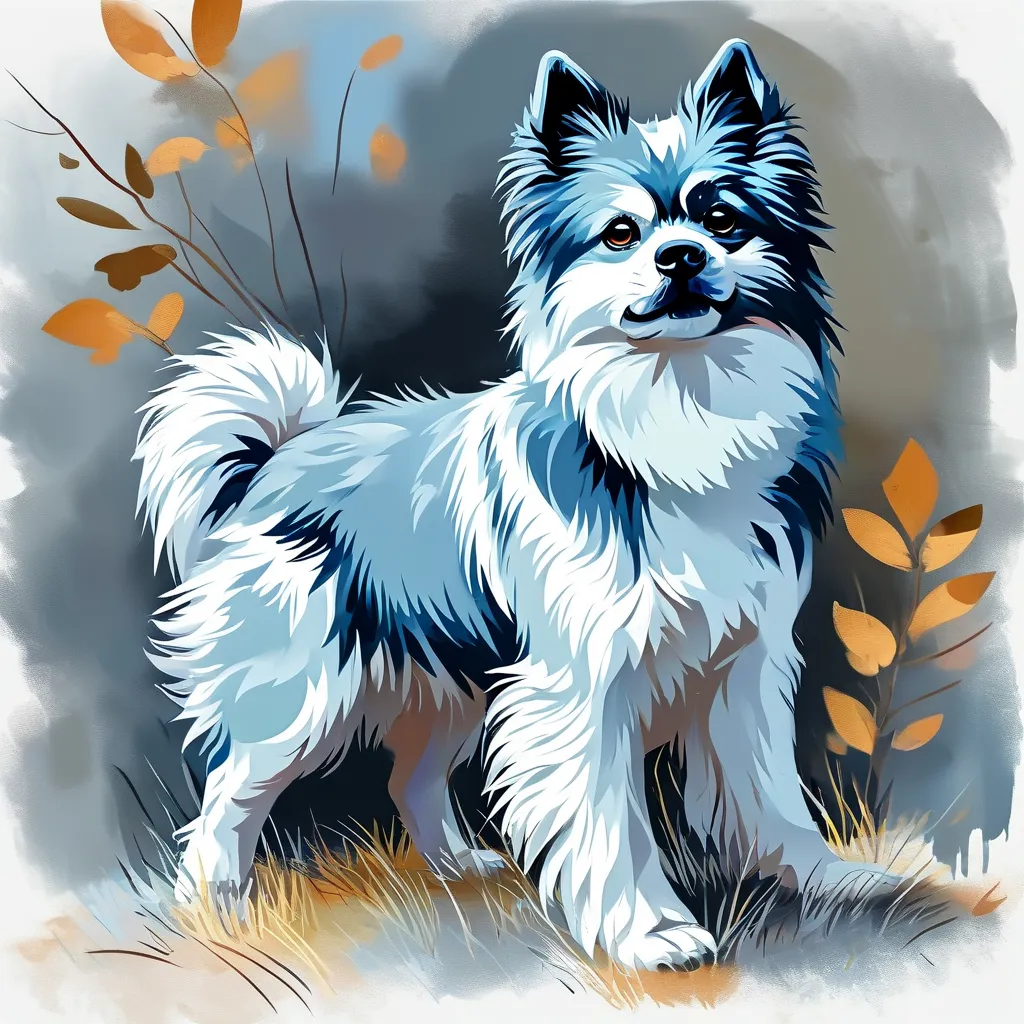
The “Blue Merle” refers specifically to the dog’s coat color and pattern. In the context of the Pomsky Blue Merle:
- Blue: This is a dilution of black pigment. In a Blue Merle coat, the underlying black pigment is diluted to a steel-blue or slate-gray base.
- Merle: This is a pattern modifier. It creates a mottled or speckled effect on a portion of the dog’s coat, typically on the head, back, legs, and tail tip. The areas of the merle pattern usually appear in shades of gray, brown, or black, scattered against the base coat color.
The combination results in a coat that features a base color of blue, with distinct patches or speckles of darker color (often black, brown, or grizzle) scattered throughout. This creates a stunning, often asymmetrical pattern that is highly sought after. It’s crucial to note that the merle pattern is a co-dominant gene. Breeding two merle carriers can unfortunately produce double merle puppies, which often suffer from serious health and vision problems. Reputable breeders screen for the merle gene and avoid breeding two carriers together.
The Pomsky Blue Merle’s coat is generally dense, fluffy, and weather-resistant, typical of its Husky lineage, but often with a softer, slightly longer undercoat and a fluffier topcoat compared to a pure Husky. The Pomeranian influence is evident in the characteristic “topknot” or curled tail, although this can vary, and the overall compact, fox-like appearance. Their eyes are typically large and expressive, often strikingly blue or one blue and one brown (“wall eye”), a trait inherited from the Husky parent.
Size and Build
Pomskies are generally smaller than their Husky parent but larger than a Pomeranian. They come in two size categories: What Can You Expect to Pay for a Pomsky Puppy? A Complete Price Guide
- Teacup/Senior Pomsky: Typically weighs 10-20 pounds and reaches maturity earlier.
- Miniature Pomsky: Usually weighs 15-30 pounds.
Regardless of size, the Pomsky Blue Merle possesses a sturdy, agile, and balanced build, combining the elegance of the Pomeranian with the endurance and slightly elongated frame of the Husky. Their height at the shoulder generally ranges from 9 to 18 inches, depending on the size variation.
Temperament: An Energetic and Affectionate Companion
One of the most endearing aspects of the Pomsky is its temperament. They are known for being:
- Loyal and Attach Quickly: Pomskies form strong bonds with their families and thrive on human companionship.
- Outgoing and Social: They generally get along well with people and are often described as friendly and approachable.
- Mischievous: Their Husky ancestry brings a playful and sometimes mischievous streak, enjoying puzzle toys and interactive play.
- Friendly: They are typically good-natured and adaptable.
- Alert: Inheriting Husky alertness, they can make decent guard dogs by barking at strangers or unusual noises, although they are not typically protective guard dogs.
Despite their generally friendly nature, early and consistent socialization is crucial for any Pomsky, including the Blue Merle variation, to ensure they grow into well-adjusted adults comfortable with various people, animals, and environments. **Explore Adorable Pomsky Puppy Images: Your Ultimate Visual Guide**
It’s also important to remember that the Pomsky is a high-energy breed. They inherit the boundless energy of the Siberian Husky, requiring significant daily exercise and mental stimulation. Without enough activity, they can become bored and develop destructive behaviors. Regular walks, runs, playdates, and engaging puzzle toys are essential for their physical and mental well-being.
The Pomsky Blue Merle’s vocal nature is another characteristic to consider. Like Huskies, they can be quite vocal and may bark, howl, or yap to express themselves or alert their owners to perceived events.
Care and Maintenance: Keeping Your Pomsky Blue Merle Happy and Healthy
Owning a Pomsky Blue Merle requires commitment, particularly regarding their coat, exercise, and training needs. The Complete Guide: Pomsky Full Grown Size, Weight & Appearance
Grooming Needs
The Pomsky Blue Merle inherits the heavy shedding tendencies of both its parent breeds. They are not hypoallergenic. Regular grooming is essential to manage shedding and maintain coat health.
- Brushing: Daily brushing is recommended to remove loose undercoat hairs, prevent mats, and distribute natural oils. A slicker brush and a pin brush work well.
- Bathing: Bathe only when necessary, using a dog-specific shampoo. Over-bathing can strip the coat of its natural protective oils.
- Nail Trimming: Regularly trim nails to prevent overgrowth and splitting.
- Dental Care: Like many breeds, dental health is crucial. Regular tooth brushing or professional cleanings are recommended.
Exercise Requirements
As descendants of two active breeds, Pomskies need substantial daily exercise:
- Minimum Exercise: Aim for at least 1-2 hours of vigorous exercise daily. This could include brisk walks, runs (Pomskies can be good running companions), hiking, or playtime.
- Mental Stimulation: Combine physical exercise with mental challenges. Puzzle toys, training sessions, and learning new commands provide essential mental engagement.
Training and Socialization
Pomskies are intelligent dogs, but they can also be stubborn, inheriting a bit of the Husky independence. Consistent, positive reinforcement training methods work best. Early and ongoing socialization with various people, dogs, and environments helps prevent potential issues later in life.
Health Considerations
While generally healthy, the Pomsky Blue Merle, being a relatively new breed, may be prone to certain health issues common to its parent breeds. These can include:
- Dental Diseases
- Hip Dysplasia
- Progressive Retinal Atrophy (PRA)
- Epilepsy
- Patellar Luxation
- Husky Syndrome (a behavioral disorder characterized by excessive barking, destructiveness, fearfulness, and hyperactivity)
</ul