The Complete Guide: Pomsky Full Grown Size, Weight & Appearance
Welcome to the world of the Pomsky! This enchanting designer dog breed, a cross between a Pomeranian and a Siberian Husky, has captured the hearts of dog lovers worldwide. Known for their striking looks and affectionate nature, many people are drawn to these unique companions. However, one common question that arises, especially for new owners or those considering bringing a Pomsky puppy into their home, is: **What does a Pomsky look like when it reaches full maturity?**
This comprehensive guide delves deep into the subject, providing you with detailed information about the **Pomsky full grown** size, weight, and appearance. Understanding the final dimensions and physical characteristics of your potential new family member is crucial for proper care, training, and ensuring they have a suitable living environment. We’ll explore the typical measurements, the variations you might encounter, their coat types and colors, and other features that define a mature Pomsky.
Understanding the Pomsky Breed
Before we dive into the specifics of the fully grown Pomsky, it’s helpful to understand the breed’s origins. The Pomsky is a relatively new designer breed, first appearing in the early 2000s. Breeders aimed to create a smaller version of the popular American Eskimo Dog by crossing a Pomeranian with an Siberian Husky. The result is a dog that inherits the fluffiness and alertness of the Pomeranian and the striking eyes, coat texture, and energy levels of the Husky.
The Pomsky’s appeal lies significantly in its unique combination of features. They are often described as intelligent, playful, and surprisingly vocal dogs, making them wonderful companions but also alert guard dogs. Their size, however, is a significant factor for potential owners, which brings us directly to the topic of their adult size.
Pomsky Full Grown Size: Height and Length
When people search for information on **Pomsky full grown** size, they are typically curious about how tall and long these dogs become as adults. It’s important to note that the Pomsky is a small to medium-sized breed, significantly smaller than its parent breeds. Their size can vary based on lineage, genetics, gender, nutrition, and overall health.
According to various sources and breed standards, a fully grown Pomsky generally stands between **9 to 15 inches (23 to 38 cm)** tall at the shoulder. This range can be broken down further: **Explore Adorable Pomsky Puppy Images: Your Ultimate Visual Guide**
- Smaller Pomskies: These might reach the lower end of the height spectrum, closer to 9-11 inches (23-28 cm).
- Average Pomskies: Most mature Pomskies fall somewhere in the middle, typically ranging from 11 to 14 inches (28 to 35.5 cm).
- Larger Pomskies: The upper end of the spectrum, usually reserved for males or those with a heavier Husky lineage, can reach up to 14-15 inches (35.5-38 cm).
It’s also worth considering length. While height is often the primary measurement for small breeds, the body length (from shoulder to base of tail) is equally important. A typical adult Pomsky might have a body length roughly proportional to their height, but individual variations exist. They are generally compact dogs, not overly elongated.
Pomsky Full Grown Weight: What to Expect
Weight is another critical aspect of determining a **Pomsky full grown** dog’s size. Unlike height, which often follows a relatively predictable range, weight can be more variable and is heavily influenced by factors like diet, activity level, and muscle mass. What Size Will Your Pomsky Grow Into? An Essential Guide to Pomsky Size
The general consensus, supported by many breeders and references, places the ideal adult weight range for a Pomsky between **10 to 25 pounds (4.5 to 11.3 kg)**. However, like the height range, this can be nuanced:
- Typical Range: Many Pomskies, when healthy and properly cared for, settle comfortably within the **15 to 20 pounds (6.8 to 9 kg)** bracket.
- Upper Range: Larger males or those with slightly different breeding lines might approach or exceed the **20-25 pounds (9-11.3 kg)** mark.
- Lower Range: Some Pomskies, particularly females or those with a stronger Pomeranian influence, might remain closer to **10-15 pounds (4.5-6.8 kg)** and still be considered healthy.
It is crucial to understand that the **Pomsky full grown** weight range provided (10-35 pounds) mentioned earlier seems overly broad and includes some outliers. The most commonly cited and generally accepted healthy weight range is **10 to 25 pounds (4.5 to 11.3 kg)**, with the ideal being closer to **15-20 pounds (6.8-9 kg)**. Always consult with your veterinarian to determine the appropriate weight for your specific Pomsky. Discover Pomsky Images: Your Ultimate Guide to This Unique Breed
Factors Influencing Adult Size: Several elements play a role in how large or small a Pomsky becomes:
- Breeder and Lineage: The specific Pomeranian and Husky lines used in the breeding significantly impact the potential size of the offspring. Some breeding pairs consistently produce larger or smaller individuals.
- The note about later generations being more consistent in size is interesting but requires careful interpretation. It likely refers to the fact that breeders, through selective breeding, are gradually refining the size traits towards a more predictable outcome within their specific lines.
- Gender: Generally, male Pomskies tend to be slightly larger and heavier than females, although the difference is not always dramatic.
- Genetics: Individual genetic predispositions inherited from the parents play a major role in reaching a certain size potential.
- Nutrition: Proper diet during the puppy’s growth phase is critical. Overfeeding can lead to excessive weight gain and potentially strain developing joints. Underfeeding can impede healthy growth. Quality puppy food appropriate for small breeds is key.
- Exercise: Regular physical activity helps develop muscle mass correctly and maintains a healthy weight.
- Health: Overall health, including proper development of bones and joints, can influence final size.
Pomsky Full Grown Appearance: Beyond Size
While size is a primary concern when wondering about a **Pomsky full grown**, their appearance encompasses much more than just height and weight. Their unique looks are one of their most defining features.
Coat Type and Texture
The Pomsky typically inherits a coat that is a delightful blend of its parents’. Expect a fluffy, somewhat dense double coat. This usually consists of:
- A **topcoat** that is straight to slightly wavy, providing protection and contributing to the breed’s distinctive look.
- A **undercoat** that is soft, insulating, and often slightly wavier than the topcoat.
The coat requires regular grooming to prevent matting and to keep it healthy and looking its best.
Coat Colors and Markings
Pomskies come in a stunning variety of colors and markings, which is another reason they are so popular. Their coat colors are a result of the genetics inherited from the Pomeranian and Husky parents. Common colors include:
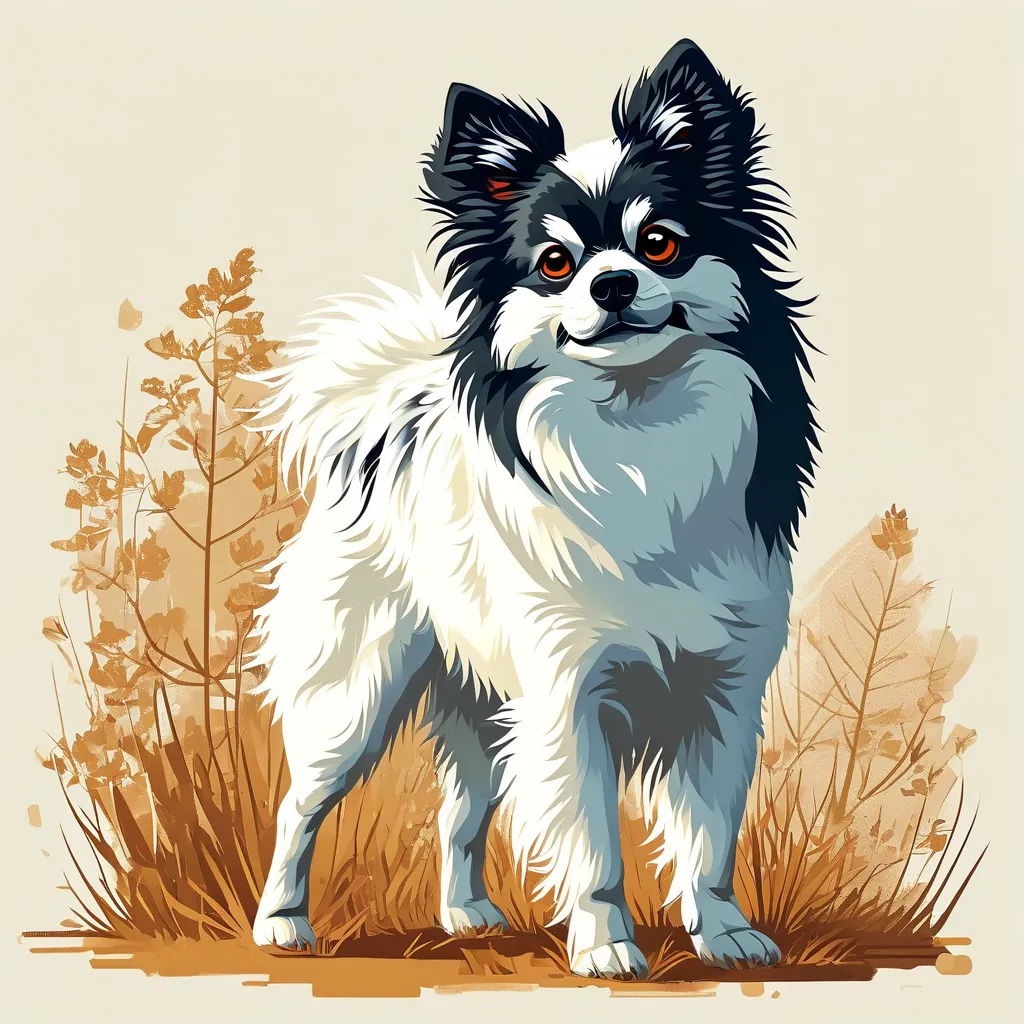
- Bicolor: Often white with a colored “mask” on the face. This is perhaps the most common pattern.
- Tricolor: A more complex pattern featuring white, black, and a third color (often orange or red).
- Merle: A popular pattern characterized by patches of color on a background of diluted color (often white or cream).
- Solid: Less common, but Pomskies with a uniform solid color (like black, white, orange, or red) can also be found.
One of the most captivating features of a mature Pomsky is their eye color. As mentioned, they can inherit a wide range of eye colors, often reflecting their Husky heritage:
- Brown
- Ambertone (hazel or golden)
- Green
- Blue
- Gray
Interestingly