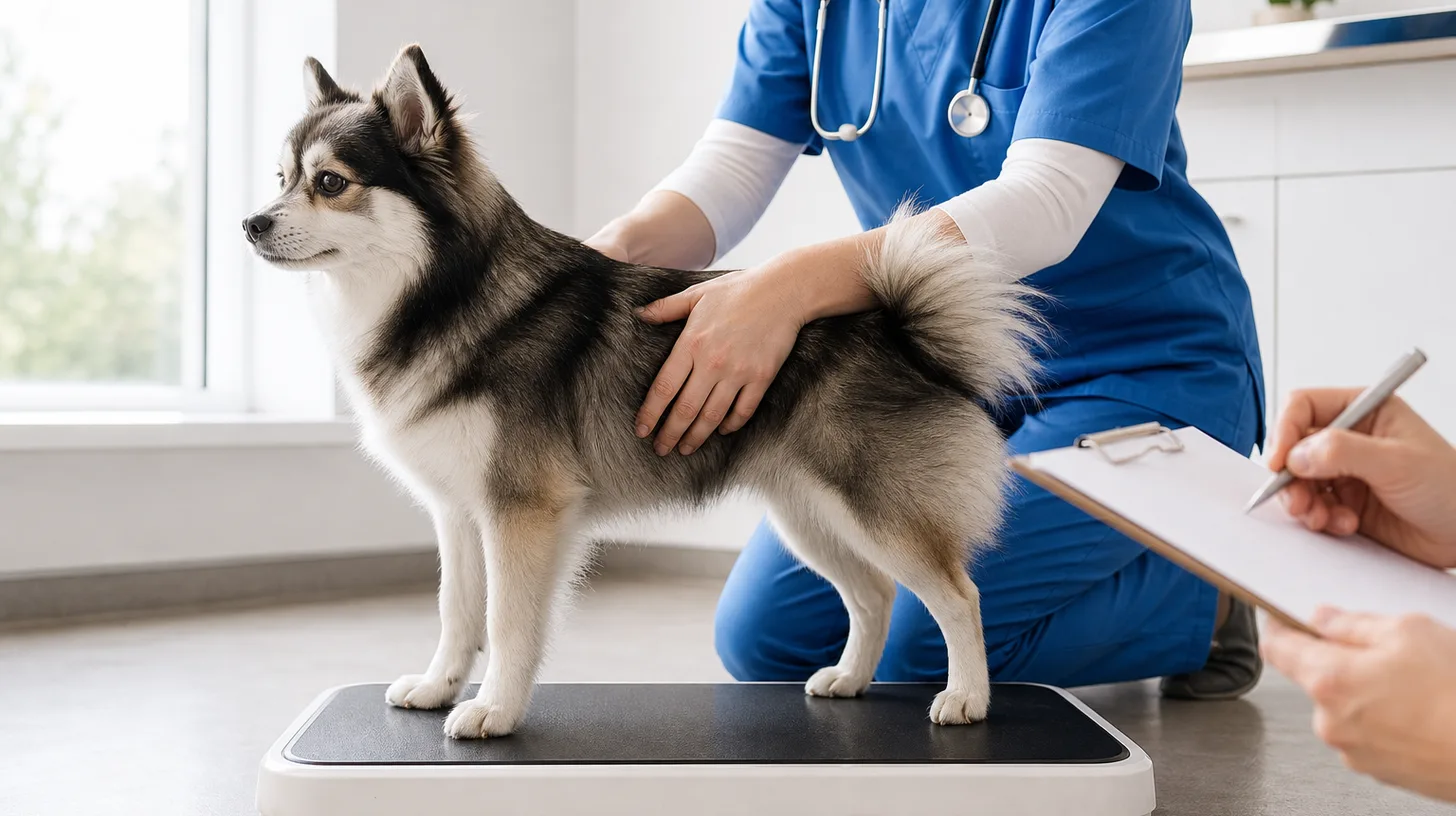
Written and reviewed by A Pomsky Editorial Team. Originally published 2023-04-11; substantively reviewed July 26, 2026.
Safety boundary: This guide is educational and cannot diagnose, treat, or replace veterinary, medical, public-health, emergency-dispatch, animal-control, or jurisdiction-specific legal guidance. Use the health disclaimer and contact the appropriate professional for the actual situation.
Direct answer: Treat unexplained Pomsky weight loss as a health finding, not a breed quirk. Reweigh consistently, record food intake and accompanying signs, and contact a veterinarian promptly. Seek urgent help for collapse, breathing trouble, repeated vomiting or diarrhea, severe weakness, a swollen painful abdomen, or inability to keep water down. Do not try to solve an unexplained loss simply by adding calories before the cause is assessed.
Unexpected weight loss is different from a planned, veterinarian-supervised weight reduction program. It means a dog is becoming lighter without an intentional change designed to produce that result. The first useful step is not to guess a diagnosis. It is to confirm the trend, look for accompanying changes, and give a veterinarian an accurate record.
A Pomsky's thick coat can conceal changes in fat and muscle, and a mixed-breed label does not provide one ideal number for every adult. Use repeatable measurements and hands-on condition checks instead of comparing your dog with photos or another Pomsky.
Confirm that the change is real
Start by repeating the measurement under similar conditions. Use the same reliable scale when possible, weigh at roughly the same time of day, and note whether the dog has eaten, eliminated, or is wearing heavy equipment. A single household-scale reading can be affected by movement or technique. A downward pattern across repeat measurements is more useful than one isolated number.
Record the date, weight, and who took the measurement. If a veterinary clinic has previous weights, ask for the history rather than relying on memory. The trend can show whether the change is recent, gradual, or part of a longer pattern.
Scale weight is only one part of the assessment. The WSAVA body condition score tool uses features such as the ribs, waist, and abdominal tuck to help veterinary teams assess fat stores. Muscle condition is a separate issue. A dog may lose muscle while the scale changes only slightly, or lose body fat under a coat that still looks full. An at-home check can help you notice change, but it is not a diagnosis and should not replace a physical examination.
Take consistent side and overhead photographs for your records. Do not use them to assign a disease or a precise body condition score from appearance alone. Their value is comparison over time.
Five areas to review without self-diagnosing
These five areas are preparation categories, not a list of the five most common diseases. More than one may apply, and the same visible sign can have very different causes. The AAHA nutrition and weight management guidelines treat unexplained weight change as a nutritional risk factor that can justify a more complete evaluation.
1. Actual food intake may have changed
Write down what the dog truly eats, not only what is offered. Measure the main food, treats, chews, table food, training rewards, toppers, and supplements. Note a recent formula change, a new bag, altered feeding instructions, missed meals, competition with another pet, a feeder malfunction, or a household member who stopped or started feeding.
A dog can approach the bowl yet consume less because the food is stale, difficult to chew, or associated with discomfort. Appetite can also vary when routines, homes, caregivers, or stressors change. Do not assume that a dog who accepts treats is eating a complete daily amount.
Bring the food label or a clear photograph of it to the appointment. Include the product name, life-stage statement, calories if listed, portion size, and how long the current bag has been open. This lets the veterinary team compare reported intake with the dog's individual needs without relying on a generic "cups per day" rule.
2. Energy needs or daily activity may have shifted
A change in routine can alter the balance between intake and expenditure. Examples include longer walks, more active play, a new yard, daycare, work with a dog walker, cold-weather activity, or sustained pacing caused by stress. Growth, aging, reproductive status, and recovery from illness can also change nutritional needs, but the direction and size of change are individual.
Do not automatically add a large amount of food because activity increased. First record what changed, when it changed, and how the weight trend relates to it. The WSAVA nutrition guidelines emphasize an individualized nutritional assessment rather than a diet chosen only by breed name.
3. Eating or chewing may be uncomfortable
Reduced intake can be associated with mouth pain, swallowing difficulty, nausea, pain elsewhere in the body, fear around the feeding area, or a learned aversion after an unpleasant event. Clues can include dropping food, chewing on one side, approaching and leaving the bowl, eating only soft items, excessive drooling, pawing at the mouth, or taking longer to finish.
These observations do not identify the cause. Avoid forcing the mouth open or attempting a painful home examination. Note what you see and arrange veterinary assessment. If your dog cannot swallow normally, has trouble breathing, is choking, or is rapidly deteriorating, use emergency care.
4. Nutrients may not be digested, absorbed, or retained normally
Vomiting, diarrhea, unusually large or frequent stools, blood, persistent gas, a major stool-color change, or weight loss despite an apparently normal appetite can point the veterinary team toward digestive or absorption questions. Parasites and other gastrointestinal problems are among many possibilities, but an article cannot distinguish them.
Record stool frequency and appearance without delaying care to build a perfect log. Tell the clinic about travel, scavenging, diet changes, raw food exposure, new treats, contact with other animals, and the dog's preventive-care history. Bring a sample only if the clinic requests one and tells you how to collect and store it.
Do not start several foods, supplements, dewormers, or over-the-counter remedies at once. Uncoordinated changes can create risk and make the history harder to interpret.
5. A medical condition or loss of muscle may be involved
Weight loss can accompany many medical processes, including conditions outside the digestive system. Increased thirst or urination, coughing, reduced stamina, fever, weakness, pain, behavior change, a new lump, poor wound healing, or loss of muscle are useful observations to report. They are not a home diagnostic checklist.
Age matters to the evaluation, but "getting older" should not be used to dismiss ongoing loss. Senior dogs can experience changes in muscle and nutritional needs, while dogs of any age can become ill. Medications can also affect appetite, digestion, thirst, activity, or body composition. Give the veterinarian a complete list of prescriptions, preventives, supplements, and recent changes. Do not stop or alter a prescribed medication unless the prescribing clinician directs you.
Warning signs that change the urgency
Contact a veterinary practice promptly whenever weight loss is unexplained or continuing. The clinic can decide how quickly the dog should be seen after hearing the trend and associated signs.
Use emergency veterinary care for collapse, severe weakness, breathing difficulty, repeated unproductive retching, a swollen or painful abdomen, uncontrolled bleeding, repeated vomiting or diarrhea with deterioration, inability to keep water down, seizures, profound disorientation, or suspected poisoning. A puppy, very small dog, senior dog, pregnant or nursing dog, or dog with a known medical condition may have less reserve, so describe that context when you call.
Reduced appetite becomes more concerning when it occurs with pain, dehydration, vomiting, diarrhea, lethargy, or rapid change. Do not wait for a specific percentage of body weight or a fixed number of days if the dog looks unwell. The right urgency depends on the individual and the complete picture.
Build a useful record for the veterinary visit
A concise, accurate history is more useful than a long list of internet diagnoses. Prepare:
- dated weights and the scale or clinic used;
- a measured food, treat, chew, and supplement log;
- photographs of food labels and lot information when relevant;
- appetite, water intake, urination, stool, and vomiting observations;
- changes in activity, sleep, breathing, mobility, and behavior;
- current medications and preventives;
- recent travel, boarding, daycare, scavenging, or exposure changes;
- side and overhead body photographs taken consistently;
- previous medical records if the clinic does not already have them.
Use ordinary descriptions. "Ate half the measured breakfast three days in a row" is clearer than "poor appetite." "Drank two full bowls when one usually lasts all day" is more useful than "very thirsty," even if you did not measure the exact volume.
The veterinarian may recommend a physical examination, nutritional review, or diagnostics based on the history. The appropriate choices cannot be determined from a general article.
What not to do while waiting for advice
Do not try to reverse unexplained loss by suddenly doubling food, adding rich human foods, or combining multiple supplements. A large abrupt diet change can create gastrointestinal problems and may be inappropriate for the underlying condition.
Do not use an online calorie calculator as a treatment prescription. Calculators can be starting tools for healthy dogs, but illness, life stage, current body and muscle condition, activity, and the food's energy density all matter.
Do not withhold food to "reset" the stomach, force-feed, or syringe-feed unless a veterinarian has given instructions for this individual dog. Do not give human medication or a medication prescribed to another pet.
Keep normal access to fresh water unless a veterinarian specifically instructs otherwise. If the dog cannot keep water down, has trouble swallowing, or is deteriorating, contact emergency care instead of repeatedly offering food or supplements.
Why a Pomsky's coat and mix label can mislead
Pomskies can differ substantially in adult size, frame, coat, and body composition. Parentage labels and generation terms do not establish one healthy target weight. Use your dog's verified history and veterinary assessment, not a number copied from another Pomsky.
A double or plush coat can keep the outline looking rounded as ribs, spine, hips, or muscle become more prominent underneath. Run flat hands gently over the body during normal handling, provided this is comfortable for the dog. Compare with the dog's own baseline. Sudden sensitivity, flinching, swelling, or pain is a reason to stop and report what happened.
For expected growth and adult ranges, use the site's Pomsky weight guide. For excess body condition, use the separate Pomsky body-condition guide. Neither page replaces evaluation of unplanned loss.
A practical monitoring plan after the examination
Follow the veterinary team's measurement and follow-up schedule. Use the same scale and method when possible, and record food and observable signs consistently. If the plan includes a diet change, confirm how to transition, what amount to feed, what counts as a treat, and what changes should trigger a call.
Track function as well as weight: appetite, comfort, stool, hydration, activity, sleep, and recovery after exercise. A number moving in the desired direction does not automatically mean the underlying issue is resolved.
Keep the record simple enough to maintain. A dated line for weight, measured intake, key signs, and instructions is often sufficient. Bring the log to follow-up visits and report new or worsening signs earlier rather than waiting for the next scheduled check.
The goal is not to make an internet category fit. It is to give the veterinary team reliable evidence, protect the dog from unsafe trial-and-error changes, and monitor the response to an individualized plan.
Sources reviewed
Each source is used only for the claim scopes listed below. None establishes a guaranteed Pomsky outcome or replaces individual professional assessment.
- American Animal Hospital Association: 2021 AAHA Nutrition and Weight Management Guidelines - Supports: nutrition screening; weight and body-condition monitoring; unexplained weight change as a risk factor; extended nutritional evaluation. Limit: A general article cannot diagnose the reason for weight loss or prescribe calories, diets, tests, or treatment.
- World Small Animal Veterinary Association: Global Nutrition Guidelines - Supports: nutrition assessment; body condition; individual feeding review. Limit: Not a brand endorsement and not a fixed ration calculator.
- World Small Animal Veterinary Association: Body Condition Score for Dogs - Supports: body condition scoring; rib and waist checks. Limit: A visual or at-home check is not a diagnosis.